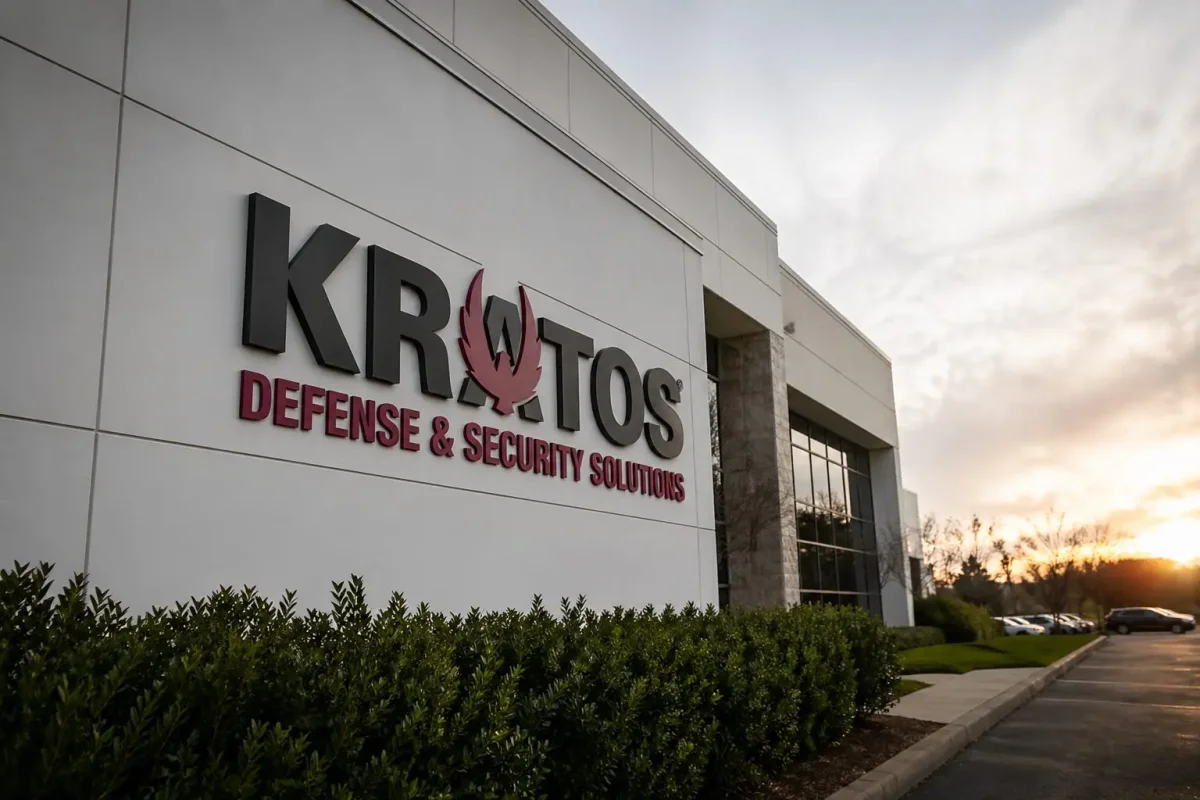
Kratos Defense & Security Solutions experienced a 6.5% decline in its stock price during the latest U.S. trading session, closing at $61.26. This drop reduced the company's market capitalization to approximately $10.6 billion, as investors expressed skepticism regarding the speed at which recent contract wins will translate into tangible profits. The broader defense sector also faced headwinds, with AeroVironment falling 2.8%, while L3Harris and Northrop Grumman recorded losses of 3.9% and 2.1%, respectively.
The current market sentiment reflects a critical juncture for Kratos, which is transitioning from its historical focus on specialized defense technologies to large-scale production of unmanned aircraft, missile systems, and space-to-ground infrastructure. This strategic shift requires significant capital investment, efficient factory operations, and reliable Pentagon contracts to succeed.
On April 21, Kratos announced the successful completion of the initial flight series for its Mk1 Firejet, a J85 engine-powered variant of its Firejet unmanned aerial system. The company is targeting a price point below $500,000, betting that the tactical jet drone's affordability will stimulate larger orders and broader adoption. CEO Eric DeMarco emphasized that "affordability is a technology," noting that Kratos has invested its own funds in military-grade jet engines and Firejet integration. Steve Fendley, head of Kratos Unmanned Systems, highlighted that the updated model utilizes a U.S.-made engine with domestic components, delivering improvements in range, endurance, speed, and climb rate.
In February, Kratos executed a public offering priced at $84 per share, selling 14.3 million shares to raise approximately $1.17 billion in net proceeds. The company plans to allocate these funds toward capital expenditures, product development, balance sheet strengthening, and financing acquisitions, including the Nomad acquisition and the pending Orbit deal, as well as other strategic opportunities.
Jefferies analyst Sheila Kahyaoglu upgraded Kratos to a buy rating on April 6, setting a price target of $85. She cited strength in the Government Solutions segment, advancements in hypersonics, the Prometheus missile-propulsion partnership, and increased Valkyrie drone production for the U.S. Marine Corps, U.S. Air Force, and foreign buyers. Her analysis suggests that Government Solutions revenue could grow at a compound annual rate exceeding 30% through 2028.
Kratos continues to secure significant contracts. On April 8, it announced a Space Systems Command deal valued at up to $446.8 million, assuming all options are exercised, for ground management and integration on the U.S. Space Force's Resilient Missile Warning and Tracking program. Northrop Grumman will join the Kratos-led team on this initiative. Additionally, in March, Kratos received a contract from the Naval Surface Warfare Center, Port Hueneme Division, covering up to 36 Oriole solid rocket motors and three thrust-vector-control nozzle kits, with a total value of approximately $39.1 million for the rockets and an option worth about $10.1 million for the nozzle kits.
On the international front, Reuters reported in February that Kratos and Taiwan's military tested the Mighty Hornet IV, a new jet-powered attack drone, after Kratos engineers in Oklahoma City cleared a Taiwanese mission payload. The goal is to supply Taiwan with more affordable drones amid rising military pressure from Beijing near the island.
Kratos's most recent annual report reveals that U.S. government contracts accounted for approximately 68% of total revenue in 2025. As of December 28, the backlog stood at $1.57 billion, with $1.23 billion funded. The company projected that about 54% of the remaining backlog would be recognized as revenue in 2026. However, the company cautioned that government contracts are subject to delays, changes, or cancellations for convenience. Fixed-price contracts represented roughly 69% of projected 2025 revenue, exposing Kratos to cost overruns if labor, materials, or technical expenses increase. Margins were pressured in 2025, particularly in the unmanned systems segment, due to unrecoverable labor and material costs on some multi-year fixed-price contracts.
Kratos finds itself in a familiar position for defense stocks: orders continue to accumulate for its drones, missiles, and space sensing equipment, but investors remain unconvinced, seeking concrete evidence that higher production volumes will translate into sustainable profits. Based on the stock's performance, that evidence has yet to materialize.