Private capital continues to flood into AI infrastructure, with Blackstone Inc. and Related Digital locking down financing for a massive $16 billion Oracle data center campus in Saline Township, Michigan. The deal, one of the largest U.S. AI infrastructure builds to date, underscores the surging demand for computing power but also highlights growing friction over resource use and regulatory oversight.
The financing package combines equity from Related Digital and Blackstone-linked funds with long-term, fixed-rate debt anchored by funds and accounts managed by PIMCO. According to sources, PIMCO snapped up roughly $10 billion in bonds, Bank of America offloaded $14 billion, and Blackstone contributed around $2 billion in equity. Bank of America also served as structuring agent and financial adviser, with Goldman Sachs and Wells Fargo advising Related Digital.
Scale and Scope of the Project
The campus, closely tied to Oracle's partnership with OpenAI, will feature three single-story data center buildings with a total capacity exceeding one gigawatt—equivalent to 1,000 megawatts. That scale makes securing adequate power a core financial and operational challenge. Blackstone expects the project to generate over 2,500 union construction jobs, more than 450 onsite positions, and upwards of 1,500 additional jobs across the county.
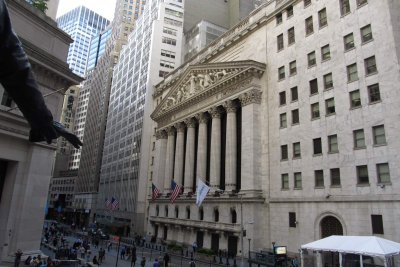
Nadeem Meghji, global head of Blackstone Real Estate, described demand for digital infrastructure as moving at 'a breathtaking pace,' driven by AI and the broader digital transformation. Blackstone is doubling down on this trend; just this month, its Digital Infrastructure Trust filed for a planned IPO aimed at holding stabilized, recently constructed data centers. If it proceeds, the trust would trade on the New York Stock Exchange under the ticker BXDC.
Local and Regulatory Pushback
Despite the financial firepower, the project is not without controversy. Local groups and regulators have raised concerns over electricity consumption, water use, and transparency. Michigan Attorney General Dana Nessel has challenged DTE Energy contracts linked to the facility, arguing that heavily redacted filings fail to substantiate claims about what customers will ultimately pay.
Resistance is gaining momentum beyond Michigan. On Friday, Maine's governor vetoed a bill that would have imposed the nation's first state-level freeze on large new data centers. Roughly a dozen states are now weighing restrictions tied to worries about power, costs, air quality, and water use. Such political complications could bog down deals that appear straightforward on paper.
Market Context and Competition
The race to build AI infrastructure is intensifying. Bain Capital is reportedly looking to offload at least 40% of Bridge Data Centres, targeting a $5 billion valuation. In February, a KKR-Singtel consortium struck a $5.2 billion deal for full ownership of ST Telemedia Global Data Centres. Private equity is now making data centers a core bet, not a peripheral play.
Blackstone's broader financial results reflect the push. The firm posted a 25% jump in distributable earnings for the first quarter, reaching $1.76 billion, or $1.36 per share. Its credit and insurance business attracted $37 billion in new money, while private equity picked up $20.4 billion. However, Blackstone's main private credit vehicle, BCRED, saw $3.7 billion pulled out in Q1, producing net outflows. CEO Stephen Schwarzman insisted that institutional and insurance clients continued to deploy capital 'despite the external noise.'
Blackstone shares slipped 0.56% to close at $121.65 on Friday, as investors weigh concerns over private credit stress against the promise of the AI infrastructure trade.