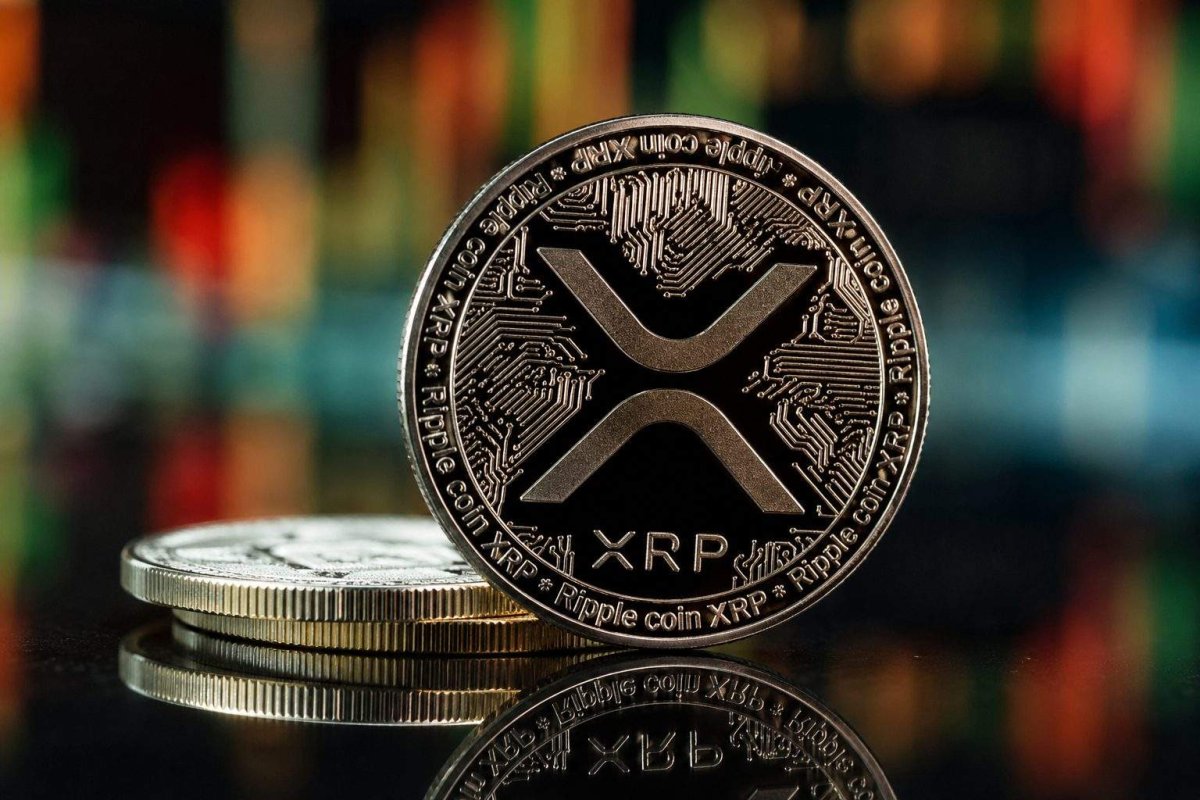
XRP edged down 2.7% to approximately $1.39 on Monday, despite Ripple's announcement of a new banking partnership with South Korea's K Bank. The market's muted response underscores that the pilot project does not involve XRP as a bridge asset, instead relying on stablecoin-based settlement. Trading volume for XRP reached $2.37 billion, and the token maintained its fourth-place ranking by market capitalization at $85.9 billion, according to CoinMarketCap.
The broader cryptocurrency market also faced headwinds, with bitcoin trading near $76,960 and ether at $2,292. Solana slipped to $84, reflecting a general risk-off tone across digital assets. Analysts pointed to bitcoin's rapid ascent since early February as a catalyst for profit-taking, with Trade Nation's David Morrison noting the move below $80,000 triggered selling.
K Bank Pilot: Stablecoins, Not XRP
K Bank announced a proof-of-concept trial with Ripple to test blockchain-based cross-border remittances targeting corridors to the United Arab Emirates and Thailand. The first phase involves recording transactions directly on a blockchain, while the second phase incorporates Ripple's Palisade software wallet. Crucially, the pilot uses stablecoins—tokens pegged to fiat currencies—for settlement, not XRP itself. K Bank has not provided a timeline for a commercial rollout.
K Bank CEO Choi Woo-hyung said the partnership strengthens the lender's edge in blockchain-powered remittances. Ripple's Asia-Pacific chief, Fiona Murray, called K Bank "a standard-setter for digital banking in Korea." The project remains at the pilot stage, and XRP holders face the risk that the bank may never transition to using XRP as a bridge asset, especially if South Korean regulators delay stablecoin policy.
Regulatory Landscape and Ripple's SEC Case
Ripple's regulatory challenges have eased but remain a factor. In August 2025, the SEC concluded its case against Ripple, with the company paying a $125 million fine and facing an injunction on institutional XRP sales. The court previously ruled that XRP sold on public exchanges did not constitute securities transactions. This resolution removed a major overhang, but the token's price has struggled to break through key resistance levels.
Ripple continues to expand in South Korea. On April 15, the company announced a deal with Kyobo Life Insurance to enable tokenized government bond settlement through Ripple Custody. Murray described Korea's institutional financial market as "at an inflection point."
Technical Resistance and Market Sentiment
XRP has repeatedly stalled below the $1.44-$1.46 resistance zone, a level traders have tracked closely. The token's inability to break higher despite positive partnership news highlights the market's focus on whether these pilots will eventually drive demand for XRP itself or remain limited to Ripple's software. The broader crypto market's decline, with bitcoin slipping below $80,000, has also weighed on sentiment.
XRP operates on the XRP Ledger, an open-source blockchain launched in 2012. Ripple, a private technology firm, develops payment and liquidity solutions using the ledger, but XRP itself is traded on a permissionless network. The token's future demand hinges on whether banking pilots like K Bank's transition from stablecoin trials to full-scale XRP-based settlement.