Shares of Yangzijiang Shipbuilding (Holdings) Ltd advanced significantly during Tuesday's trading session in Singapore, closing 3.4% higher at S$3.35. The move reflected a broader improvement in sentiment toward the shipbuilding sector, driven by fresh indications of long-term demand from major global shipping operators.
Maersk Order Signals Confidence in Future Fleet Needs
The positive momentum followed an announcement from Danish shipping giant A.P. Moller-Maersk regarding a substantial new vessel contract. The company has placed an order for eight large container ships with China's New Times Shipbuilding, with deliveries scheduled for 2029 and 2030. A key feature of these vessels is their dual-fuel engine capability, allowing them to operate on either conventional bunker fuel or liquefied natural gas, aligning with the industry's push toward decarbonization.
This order is particularly noteworthy as it provides visibility into shipyard demand several years into the future. The shipbuilding industry operates on long lead times, making every major newbuild contract a critical data point for investors assessing the sector's pricing power and future revenue streams. The deal suggests that despite near-term market volatility, leading carriers are still planning for fleet renewal and expansion to meet anticipated long-term trade flows.
Mixed Signals from Freight Markets and Trade Data
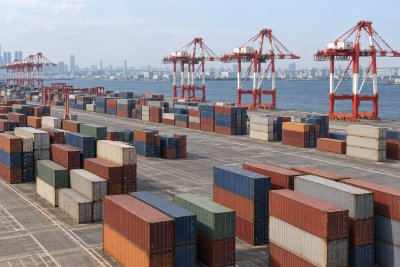
Investor focus remains sharply attuned to underlying freight rates and cargo volumes, which ultimately drive carrier profitability and their willingness to order new ships. Recent data presents a nuanced picture. According to Descartes Systems Group, U.S. seaports handled 2,318,722 twenty-foot equivalent units (TEUs) of container imports in January. This figure represents a 6.8% decline compared to the same month last year, though volumes remained above the historical average for January.
Industry commentators highlight the challenging forecasting environment. Ben Hackett, founder of Hackett Associates, noted that shifting tariff policies are creating significant difficulty in predicting trade patterns, adding a layer of uncertainty to demand projections.
Concurrently, shipping lines continue to report pressure on freight rates. In a recent preliminary report, German carrier Hapag-Lloyd disclosed an estimated EBIT of $1.1 billion for 2025. Notably, an 8% decline in average freight rates completely offset the benefit of an 8% increase in transport volumes. The company is scheduled to release its full annual results and provide its outlook for 2026 on March 26, a date market participants have circled on their calendars.
Competitive Landscape and Broader Risks
Yangzijiang's immediate challenge is whether the flow of major orders from liner companies will be sustained and what profit margins such contracts will yield. The company's diverse portfolio, which includes various types of commercial vessels, exposes it not only to the container shipping cycle but also to shifts in broader global trade and commodity flows.
The competitive environment remains intense. Chinese shipyards continue to secure significant contracts for large vessels, while South Korean builders maintain a strong position in the technically complex ship segments, aggressively pursuing projects involving alternative fuels and exercising discipline on delivery schedules. This global competition directly influences where new orders are ultimately placed.
Persistent risks to the sector are well-known. A sustained downturn in cargo volumes, coupled with a further deterioration in freight rates, could lead carriers to postpone or cancel newbuild orders, potentially delaying vessel deliveries and squeezing cash flow throughout the maritime supply chain. Trade policy continues to act as a wildcard, with shipping lines frequently warning that abrupt changes in routes or tariffs can cause significant quarterly swings in volume.
The market's next cues will likely come from further fleet order announcements by Maersk or other carriers, upcoming U.S. import data, and the detailed guidance from Hapag-Lloyd in late March. For now, the Maersk order has provided a tangible sign that long-term planning and investment in new tonnage remain active considerations for the world's largest shipping operators.