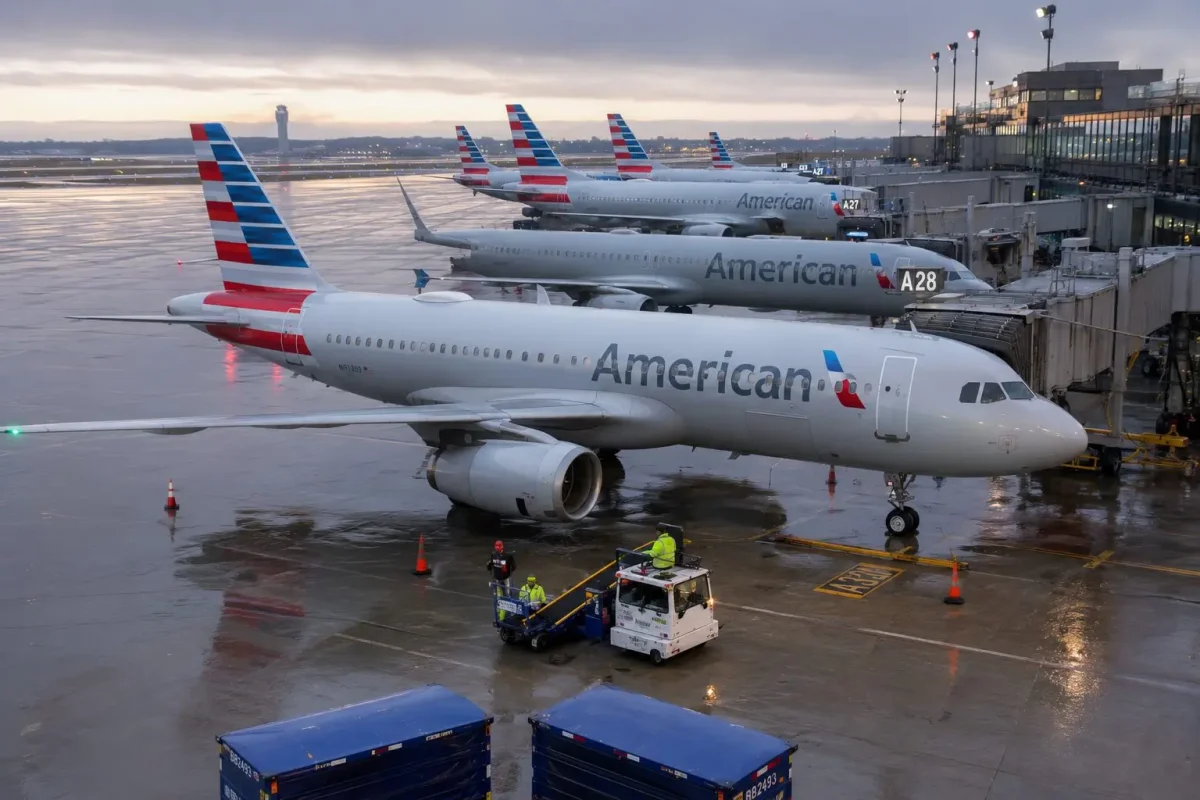
NEW YORK, July 23, 2026, 04:18 EDT — Operational issues involving American Airlines (NASDAQ:AAL) flight AA108 have cast a spotlight on the carrier's maintenance spending just ahead of its second-quarter earnings report. The flight, which operates between Boston and London, experienced one cancellation and two diversions across two scheduled departures on July 19 and 20, according to Flightradar24 data. While the disruptions affected a tiny fraction of American's daily operations—less than 0.02% of its more than 6,000 daily flights—they come at a time when investors are increasingly sensitive to cost pressures.
Maintenance Costs on the Rise
In the first quarter, American's maintenance, materials, and repairs expenses climbed 6.5% year-over-year to $982 million, representing 7.1% of total revenue. The increase of $60 million was driven by more extensive inspections, parts repairs, engine overhauls, and higher material costs, the company said. Although the AA108 incidents occurred after the June quarter and will not affect Thursday's earnings report, analysts expect the earnings call to focus on current maintenance trends and the outlook for the remainder of the year.
Financial Impact and Market Reaction
A preliminary estimate suggests the $60 million quarterly increase in maintenance costs translates to roughly nine cents per share before tax and one-off items, based on 661.2 million weighted shares. American has projected adjusted EPS for the second quarter in a range from a loss of 20 cents to a profit of 20 cents, meaning nine cents is close to half of either margin from breakeven. The comparison does not attribute the quarterly rise to AA108 but illustrates why maintenance discussions may carry more weight than the number of flights on a single route.
Shares of American ended Wednesday at $14.79, down 3.2%, while the NYSE Arca Airline Index fell 1.8%. The stock had already underperformed the prior week, dropping 11.6% versus the index's 8.3% decline, before the AA108 issues emerged. The steeper fall on Wednesday signals heightened sensitivity, though no direct causal link has been established.
Peer Performance and Operational Context
American's results come amid a mixed backdrop for major U.S. carriers. Delta Air Lines (NYSE:DAL) posted an 8.8% adjusted operating margin and $1.56 in adjusted EPS, while United Airlines (NASDAQ:UAL) delivered a 4.8% adjusted pre-tax margin and $1.99 in adjusted EPS. United also reported its strongest on-time departures for any second quarter since 2021 and its lowest rate of seat cancellations outside of the pandemic period. American, by contrast, has guided for record revenue but modest profit. CEO Robert Isom stated in April that the company remained "on track for another record in the second quarter," with revenue growth forecast between 13.5% and 16.5% and adjusted EPS expected near zero.
Investor Focus on Earnings Call
American's earnings call is scheduled for 7:30 a.m. Central time on Thursday. Investors are expected to scrutinize the carrier's full-year adjusted EPS outlook, which spans from a 40-cent loss to a $1.10 gain. Attention will also be on maintenance costs and the stability of the 777 schedule. The AA108 incidents involved three distinct 777-200ER aircraft, with one flight cancelled due to a mechanical issue, another diverting after the landing gear failed to retract, and a substitute aircraft returning to Boston due to an engine problem. Flight records indicated that subsequent flights arrived at Heathrow without further issues, supporting the view of isolated occurrences, though no shared cause has been identified.
Risks exist in both directions. Additional technical issues or cancellations could increase expenses for repairs and rebookings. Conversely, consistent guidance and regular flight operations would reinforce the perspective that the AA108 disruptions were an isolated incident. As the market awaits American's report, maintenance costs and operational reliability remain key themes for investors.