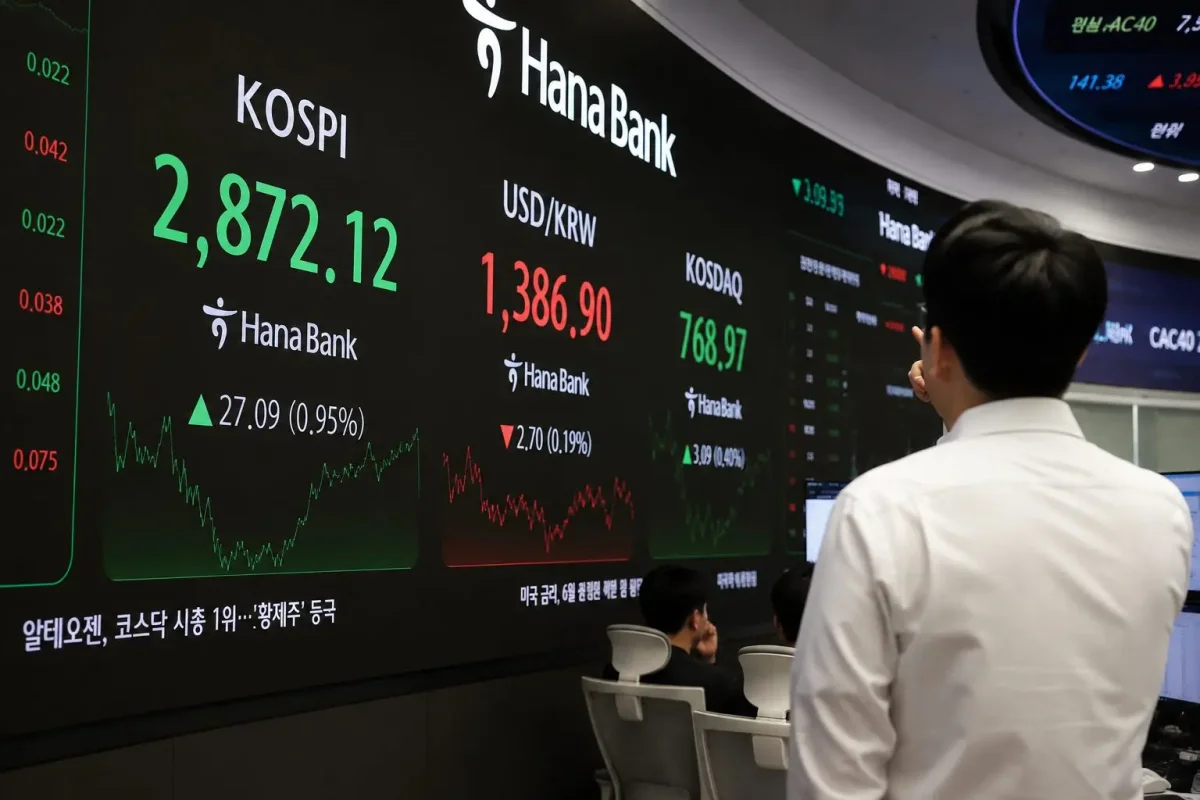
Asian equities held firm on Tuesday, with technology shares leading gains as investor appetite for artificial intelligence stocks remained strong. Hong Kong's Hang Seng index surged 2.28%, while the Shanghai Composite added 0.43%, helping offset a modest 0.3% decline in Japan's Nikkei 225. The regional MSCI Asia-Pacific index excluding Japan edged up 0.4% after a choppy session.
The AI trade continued to draw buyers, even as geopolitical risks in the Middle East kept oil prices elevated near $94 per barrel. Markets are caught between rising AI spending and the drag from higher energy costs, which pressure airlines, consumers, and central banks. "This isn't a re-rating of the AI trade; it's profit-taking after a blistering run," said Fabien Yip, market analyst at IG in Sydney, as reported by Reuters.
Anthropic, the developer of the Claude AI model, has confidentially filed for a U.S. initial public offering, moving ahead of rival OpenAI in the race to bring frontier AI companies to public markets. The filing follows a late May fundraising round that valued the company at $965 billion. Kat Liu, a vice president at IPOX, noted that the timing allows Anthropic to capitalize on "strong investor interest in AI and growth stocks" while market conditions remain favorable.
Nvidia continued to dominate the chip trade in Asia. CEO Jensen Huang told a crowd in Taipei that the company has "secured supply for very robust growth," but added that Nvidia is "still supply constrained." The launch of its new AI PC chip intensifies competition with AMD and Intel, while Huang described the Vera data-centre processor as a top growth driver.
Alphabet outlined the scale of its AI investment, announcing plans to raise $80 billion in equity, including $10 billion from Berkshire Hathaway, to fund AI infrastructure. Bill Stone, chief investment officer at Glenview Trust Company, said Berkshire's participation signals confidence that Alphabet will "earn a reasonable return" on its AI spending, which will flow into data centers, chips, and equipment.
South Korea's consumer price index rose 3.1% in May from a year earlier, the fastest pace since March 2024, driven by a 24.2% jump in petroleum products. Park Sang-hyun, economist at iM Securities, said a Bank of Korea rate hike in July is now certain, with the outlook hinging on the Iran war and oil price developments. The data sent Korean stocks lower after an initial rise, adding to cautious sentiment across the region.
The risk of further inflation remains if Middle East ceasefire talks break down and oil prices climb further. Stephen Innes warned that crude shortages are now moving into "the fuels that actually power economies," such as gasoline, diesel, and jet fuel, which would likely hit Asian importers first.
Wall Street provided some support, with the S&P 500 closing up 0.26% on Monday and the Nasdaq gaining 0.42%, both near all-time highs. The latest ISM manufacturing index rose to 54.0 in May from 52.7, indicating expansion. Traders are watching whether AI demand spreads beyond the largest stocks, and whether a lasting calm in the Middle East could draw buyers back to local equities. However, any renewed oil price spike could shrink the rally and complicate central bank policy.