Alphabet Inc. (GOOGL) shares edged up 1.17% to close at $368.03 on Thursday, capping a holiday-shortened week with a 2.3% gain. The broader Nasdaq Composite added 2.4% for the week, with U.S. exchanges closed on Friday for Juneteenth. The modest rise came as investors weighed the departure of two prominent AI researchers against the company's aggressive push into commercial artificial intelligence.
Key AI Leaders Depart
John Jumper, a Nobel Prize-winning scientist and co-creator of the groundbreaking AlphaFold protein-folding model, announced Friday he is leaving Google DeepMind after nearly nine years to join rival Anthropic. His exit follows that of Noam Shazeer, a Google engineering vice president who co-led the Gemini model development, who is moving to OpenAI. Shazeer had returned to Google less than two years ago as part of a reported $2.7 billion deal that brought him and other Character.AI researchers back to the company.
These departures come at a critical juncture for Alphabet as it seeks to transform its deep research capabilities, custom chip designs, and cloud infrastructure into a dominant commercial AI business. The loss of senior talent raises questions about the technical execution of that strategy, even as the company embarks on a massive capital expenditure program.
Market Reaction Muted So Far
Alphabet shares barely moved on Thursday, suggesting the market views the personnel changes as a longer-term competitive challenge rather than an immediate threat to earnings, according to D.A. Davidson analyst Gil Luria. Speaking to Barron's, Luria noted that Google remains well positioned but acknowledged that "the race at the frontier right now appears between Anthropic and OpenAI."
The first real test of investor sentiment will come on Monday when trading resumes in full force. A muted reaction would indicate that the market remains focused on growth metrics such as cloud revenue and TPU adoption, while a sharper decline would signal that talent retention is becoming a material risk factor for the stock.
TPU Strategy Gains Traction
Providing a counterbalance to the negative headlines, The Wall Street Journal reported Friday that Google is leveraging financing guarantees and customer partnerships to boost adoption of its Tensor Processing Units (TPUs). These custom AI chips position Google more directly against Nvidia in the semiconductor space and offer a potential return on Alphabet's massive infrastructure investments.
Google Cloud posted a 63% surge in revenue to $20 billion in the first quarter. CEO Sundar Pichai stated, "Our enterprise AI solutions have become our primary growth driver for cloud for the first time." The company has also begun selling some TPUs directly to customers, not just through its cloud platform, expanding its addressable market.
Capital Spending and Dilution Risks
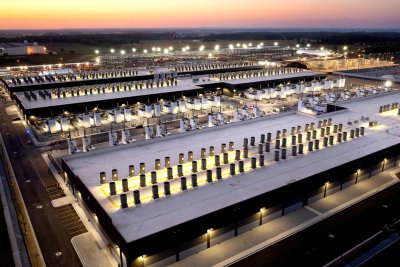
Alphabet's ambitious plans carry significant financial risk. The company projects capital expenditures between $180 billion and $190 billion for the current year, encompassing data centers, servers, and related equipment. To fund this, Alphabet priced an $84.75 billion equity sale this month, which will dilute existing shareholders.
The success of this strategy hinges on sustained growth in cloud and chip revenue. However, frequent talent losses to well-funded competitors like OpenAI and Anthropic could undermine the technical expertise needed to deliver on those promises. The coming weeks will reveal whether investors view these departures as a temporary setback or a more fundamental challenge to Alphabet's AI ambitions.