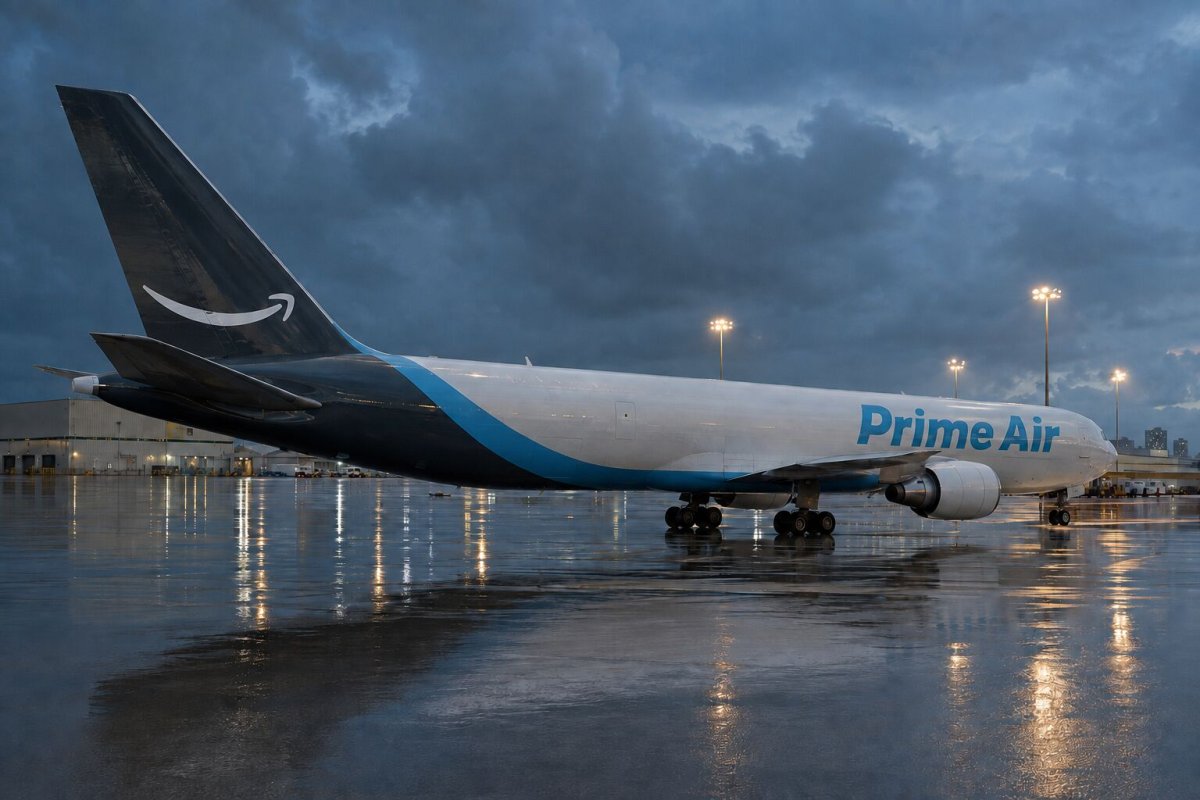
A tragic aviation accident unfolded in Miami on Sunday when a Boeing 767 cargo aircraft, painted in Amazon's distinctive livery, failed to stop on the runway, resulting in the deaths of five people. Five others were injured, three critically, according to Miami-Dade County officials cited by the Associated Press. The aircraft, operating as 21 Air Flight 7598, had just arrived from San Juan, Puerto Rico.
The visual branding of the aircraft strongly suggested Amazon's involvement, but the operational reality is more layered. Amazon.com Inc. (NASDAQ: AMZN) confirmed that the plane was operated by 21 Air, a cargo carrier that provides air freight services for Amazon's logistics network. The Federal Aviation Administration (FAA) also identified the flight as 21 Air Flight 7598. This distinction is crucial because the ownership, operation, and branding of an aircraft often reside with different entities.
A Complex Web of Responsibilities
According to FlightRadar24's ADS-B data, the aircraft, a 1994 Boeing 767-33A registered as N1997A, touched down at 1:53 p.m. EDT and overran the runway at a speed of 112 knots. While this speed measurement is notable, it does not alone determine the cause of the accident. Investigators will need to examine touchdown position, braking performance, weather conditions, and the aircraft's mechanical state.
The public record reveals a multi-party structure: Amazon is the network customer and visible brand, having confirmed 21 Air's operation of the flight. 21 Air is the operating carrier named by the FAA, making it the first focus of operational scrutiny. The registered owner of N1997A is Andromeda Leasing II LLC, according to FAA records. Boeing Co. (NYSE: BA) is the manufacturer of the airframe, but no mechanical issue has been identified as a cause.
Financial and Market Implications
The crash occurred after the close of U.S. equity markets on Friday, September 6, and with U.S. markets closed on Monday for Labor Day, investors will have their first chance to react on Tuesday. Amazon shares closed Friday at $258.51, down 0.15%, and were trading at $258.26 in after-hours. The immediate financial impact on Amazon is likely to be minimal given its scale—the company reported $200.61 billion in second-quarter sales and $29.63 billion in fulfillment expenses. However, the incident could have broader implications for Amazon's air cargo operations.
Key factors that could influence Amazon's earnings outlook include a potential fleet-wide grounding or inspection order for similar aircraft, which could constrain Amazon Air's capacity. An oversight finding related to crew scheduling, maintenance, or contractor management could also draw Amazon's carrier-management practices into the investigation. Additionally, quantified claims from insurance, indemnities, and litigation will only become relevant once ownership and control are matched to the applicable contracts.
Amazon's own risk disclosures in its latest 10-Q filing warn that problems at shipping companies or within its transportation systems can adversely affect operating results and customer experience. This language highlights the channel through which such an event could impact the company, though it provides no basis for estimating the magnitude of this specific incident.
Investigation Underway
The National Transportation Safety Board (NTSB) has launched a Go Team and is scheduled to hold its first briefing on September 7. The investigation is in its early stages, and no cause has been assigned. Investors will be listening for any fleet-wide recommendations, details on maintenance control, and whether the crew reported any issues before landing.
While the Amazon logo creates reputational exposure, the investigation will determine the full scope of the incident. For now, the market's focus will be on Tuesday's trading session to gauge investor sentiment and any potential impact on Amazon's stock or its logistics partners.