Amazon.com, Inc. (NASDAQ:AMZN) has secured a countrywide distribution partner for its Leo satellite broadband network in South Africa, even as the company has only launched a fraction of its planned constellation. The deal with Herotel, the largest fixed internet provider in the country, positions Amazon to challenge SpaceX's Starlink without needing to match its competitor's extensive satellite fleet.
Herotel plans to rebrand its residential internet business under the name "evry" starting in 2027, powered by Amazon's Leo technology. The company serves over 350,000 customers across more than 550 towns and maintains 120 local offices for installation and support. While these customer numbers don't guarantee immediate adoption, the partnership provides Amazon with a ready-made distribution channel and service network.
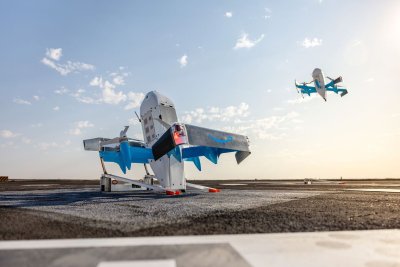
As of July 2, Amazon had 394 Leo satellites in orbit, representing approximately 12% of its planned first-generation fleet of over 3,200 units. In contrast, SpaceX's Starlink operates nearly 10,000 satellites, giving it a roughly 25-to-1 advantage in fleet size. Amazon has booked around 100 launches with a minimum value of $82 billion to build out its constellation.
Timing is critical for Leo, which remains a cash drain without significant commercial revenue. Amazon raised $25 billion in bonds last week for general corporate purposes, including future capital spending, though it did not specifically earmark funds for Leo. The company's free cash flow over the trailing 12 months dropped to $1.2 billion from $25.9 billion a year earlier, driven by a $59.3 billion increase in property and equipment spending largely for artificial intelligence infrastructure.
Under the agreement, Herotel gains exclusive residential distributor status for Leo in South Africa, using its existing teams and offices for terminal installations and customer support. Amazon's head of legal and global affairs, David Zapolsky, described the deal as a way to "break down barriers and unlock opportunity." Herotel CEO Van Zyl Botha said evry aims to "reach the customers that even fiber and fixed wireless cannot serve," positioning the service as a rural connectivity solution rather than a replacement for Herotel's existing network.
Amazon does not disclose Leo's financial performance separately, making it difficult to track the project's expense and revenue. AWS delivered $14.2 billion in operating income in the first quarter, accounting for 59% of Amazon's total. The company's July bond sale followed a $37 billion raise in March, and launch contracts worth at least $82 billion span multiple years.
Leo CEO Chris Weber said earlier this month that Amazon has sufficient launches booked to begin initial service later this year, with more launches planned to expand coverage and capacity. South Africa's planned 2027 rollout gives time for Amazon to improve coverage near the equator. However, the late start means the Herotel deal is unlikely to generate meaningful revenue in the near term.
The partnership allows Amazon to bypass the need to build its own consumer sales and service operations in South Africa, potentially accelerating the path from coverage to revenue. But key financial details remain undisclosed: neither company has revealed pricing, revenue sharing terms, subscriber targets, or minimum volume commitments. Delays in satellite launches could tighten capacity, while Starlink already offers broad service across 160+ countries and approximately 24 African markets.
Amazon shares rose 2.8% to $254.39 during U.S. trading, while SpaceX slipped 0.9% to $134.85. The diverging stock moves highlight the contrasting financial positions: Amazon can leverage profits from its cloud and retail businesses to support Leo, but both companies face the challenge of making their massive space investments profitable.