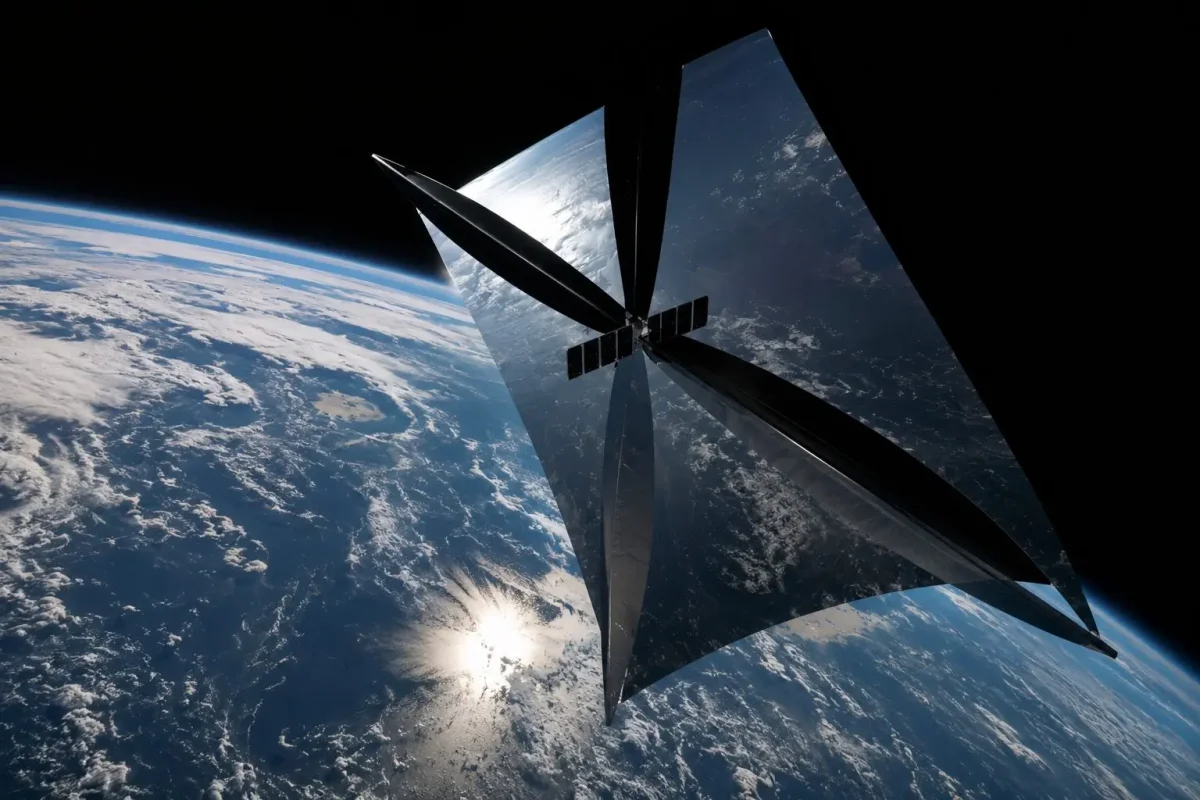
Reflect Orbital has secured a Federal Communications Commission license for its Eärendil-1 test satellite, a milestone that clears a near-term regulatory hurdle. However, the company's ambitious roadmap to deploy a commercial constellation of over 50,000 satellites by 2035 shifts the focus from regulatory approval to the daunting challenges of mass production and financing.
The license, granted on July 9, 2026, covers a single satellite operating at an altitude of 625 kilometers for a two-year term. It is explicitly a "limited, short-duration technology test exercise," not an endorsement of the full commercial system. CEO Ben Nowack described it as a "first step toward rigorously testing" the system and its safeguards.
Reflect Orbital's published targets outline a rapid scaling plan: from 2 satellites in 2026 to over 5,000 by 2030 and more than 50,000 by 2035. This implies an average deployment rate of 9,000 satellites per year between 2031 and 2035, or roughly 24.7 per day. To put that in perspective, SpaceX launched a record 3,180 Starlink satellites in 2025, meaning Reflect's planned pace is 2.8 times faster. As of July 8, 2026, there were 16,234 active satellites in orbit, including 10,736 Starlinks. A 50,000-satellite fleet would be 3.1 times the current total and 4.7 times the number of active Starlinks.
The FCC's order requires Reflect to post a surety bond by August 10, launch no later than July 9, 2032, and operate under a two-year license once Eärendil-1 is activated. The company's test satellite is designed to unfold an 18-meter-by-18-meter reflector and cast light over an area roughly 5 to 6 kilometers wide. Using NASA's solar irradiance figure of 1,361.6 watts per square meter, an ideal reflector of that size could intercept at most about 0.44 megawatts before losses. Even under that generous ceiling, supplying 50 watts per square meter across the same area would require roughly 2,200 such reflectors pointing at once, and the 2035 target of 300 watts would need about 13,400. These calculations highlight the gap between a moonlight demonstration and a viable energy product.
Beyond the manufacturing challenge, the regulatory path is uncertain. While the FCC approved the test, it declined to address concerns about optical astronomy, noting they were outside its review. More than 1,800 people submitted comments during the proceeding, with Betty Kioko of the European Southern Observatory calling the concept "an existential threat" to optical astronomy. This jurisdictional gap could lead to a slower, more political process for any future multi-satellite deployment.
Reflect has stated that its motorized reflector can be steered away from observatories and switched off by changing the satellite's angle. The company has also committed to providing advance position data, conducting independent reviews, and limiting where and when light is directed. It said it is "willing to change course if the evidence does not support deployment." These safeguards will carry more weight once tested in orbit.
For investors, the next key checkpoints are a launch later this year, successful reflector deployment, measured brightness and spot size, pointing accuracy, and evidence that production costs can support thousands of units. The FCC ruling opens a test window, but the economics still have to fit through it. Reflect Orbital does not have publicly traded shares, so the ruling creates no direct equity catalyst. However, the comparison with SpaceX's manufacturing and launch capabilities highlights the sheer scale of the task ahead.