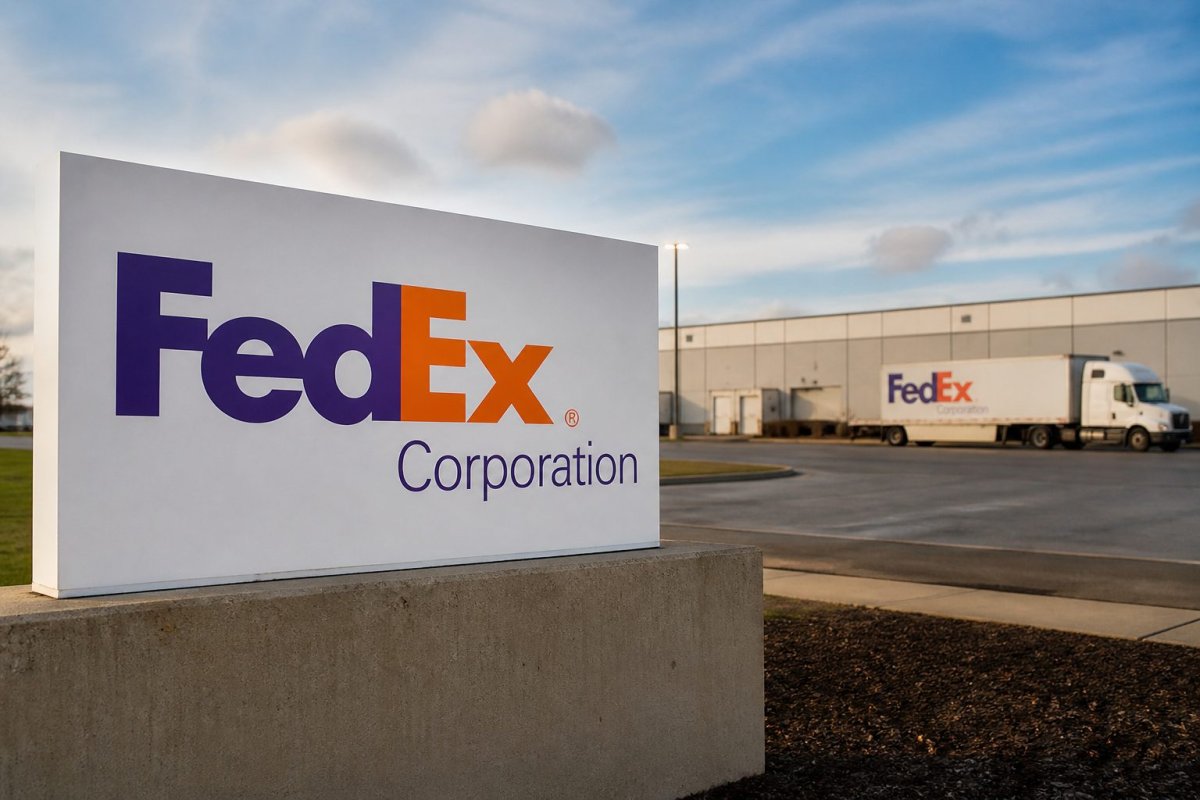
Amazon.com Inc. has officially opened its logistics network to external businesses with the launch of Amazon Supply Chain Services (ASCS), a move that sent shockwaves through the parcel delivery industry on Monday. FedEx Corp. shares tumbled roughly 9%, while United Parcel Service Inc. fell nearly 10% as investors reassessed the competitive landscape.
Amazon's Logistics Network Now Open to All
The e-commerce giant's new service offers freight, warehousing, fulfillment, and parcel shipping to companies across multiple sectors, including healthcare, automotive, manufacturing, and retail. Early clients include Procter & Gamble, 3M, Lands' End, and American Eagle Outfitters, according to Amazon. The company is leveraging its massive infrastructure—over 80,000 trailers, 24,000 intermodal containers, and more than 100 aircraft—originally built for its own retail operations but now available to third-party customers.
Peter Larsen, vice president of Amazon Supply Chain Services, described the offering as a supply-chain counterpart to Amazon Web Services, which similarly started as an internal tool before becoming a dominant cloud platform. “Amazon’s infrastructure, intelligence, and scale are now available to outside businesses,” Larsen said.
Market Reaction and Investor Concerns
FedEx shares were trading at $357.66 as of 11:46 a.m. EDT, down 9.1% from the previous close. UPS dropped 9.7%, while Amazon shares edged up 1.1%. The selloff comes just weeks before FedEx’s planned June 1 spinoff of its freight unit, FedEx Freight, which specializes in less-than-truckload shipping for bulky shipments.
Investors had been rewarding FedEx for cost-cutting measures, improving U.S. package volumes, and the planned freight spinoff. However, Amazon’s entry into the logistics market for external businesses changes the calculus. If one of the world’s largest shippers starts selling excess logistics capacity to FedEx’s target business clients, it could pressure FedEx’s pricing power.
Amazon's Growing Parcel Volume
Amazon’s footprint in the U.S. parcel market has been expanding rapidly. According to Pitney Bowes, Amazon shipped 6.3 billion parcels in 2024, second only to the U.S. Postal Service and surpassing both UPS and FedEx in total volume. The company’s logistics network now handles freight via ocean, air, ground, and rail, along with bulk storage and fulfillment.
Reuters described the move as “a potential shift” in the U.S. logistics space, where FedEx and UPS have long dominated. Equisights Research CEO Parth Talsania called it “a structural warning shot” for the parcel giants, highlighting Amazon’s advantage on e-commerce-heavy lanes where it has its own volume and data.
FedEx's Recent Performance and Spinoff Plans
FedEx has shown some recent progress. In March, the Memphis-based company posted fiscal third-quarter revenue of $24.0 billion and raised its full-year fiscal 2026 earnings forecast, citing gains from stronger yields on U.S. domestic and international priority packages, cost-cutting moves, and a bump in U.S. domestic package volume. The company insists its FedEx Freight spinoff remains on track for June 1, with the unit focusing on margin growth, free cash flow, and stricter capital discipline once independent.
Implications for the Logistics Sector
The Amazon risk is not immediate or straightforward. Large corporate shippers typically spread their business across multiple carriers, weighing factors like service quality, geographic reach, claims processing, and reliability—not just price. If Amazon focuses its network on absorbing excess capacity, FedEx could face targeted pressure on certain routes rather than across the board.
However, the risk grows if Amazon continues to bring in more freight and parcel business from third parties and leverages its scale to push costs down. That could squeeze pricing in business-to-business shipping, which is typically denser and less costly than residential delivery. These B2B routes are where investors see the most value for FedEx and UPS.
FedEx retains its global air and ground footprint, a large base of industrial clients, and a restructuring plan. But Monday’s selloff was clear: investors are no longer viewing Amazon as just a customer or a last-mile competitor. They now see it as a full-scale logistics rival.