Amazon.com Inc. shares closed Friday's trading session at $198.79, marking a 0.4% decline as the e-commerce and cloud computing giant continues to face investor skepticism regarding its massive artificial intelligence investment strategy. The stock has now retreated approximately 13.9% since the beginning of 2026, representing a staggering $343 billion reduction in market capitalization that brings Amazon's total valuation down to approximately $2.13 trillion.
Substantial Capital Expenditure Announcement
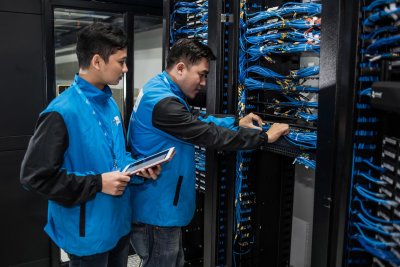
The primary driver behind this significant market value erosion stems from Amazon's recent disclosure of plans to allocate around $200 billion toward capital expenditures this year. This substantial investment will primarily fund artificial intelligence infrastructure development, including data centers, servers, and specialized equipment. The announcement, made alongside quarterly earnings on February 6, triggered an immediate 9% single-day decline in Amazon's share price as market participants digested the scale of the planned spending.
Analysts at MoffettNathanson characterized the expenditure blueprint as "materially greater than consensus expected," while AJ Bell investment director Russ Mould observed that market sentiment appears to be shifting away from companies where positive surprises may prove difficult to achieve. The capital expenditure forecast accompanied Amazon's projection for first-quarter operating income between $16.5 billion and $21.5 billion, with approximately $1 billion of that amount connected to the company's satellite internet initiative.
Cloud Division Under Scrutiny
Amazon Web Services, the company's cloud computing division, remains central to the investment thesis despite generating a smaller portion of total revenue. AWS contributes more than 60% of Amazon's operating profit, with the segment achieving 24% year-over-year growth on a $142 billion annualized run rate. Chief Executive Officer Andy Jassy has emphasized the distinction between Amazon's scale and that of smaller cloud providers, while simultaneously reorganizing key AI and semiconductor operations under AWS oversight.
According to weekend reports from the Financial Times, Jassy has consolidated Amazon's artificial intelligence and chip development initiatives, directing the majority of investment toward AWS data centers and proprietary silicon like Trainium and Graviton processors. "We have deep experience understanding demand signals in the AWS business," Jassy stated, arguing that Amazon possesses the expertise to translate this infrastructure scale into sustainable profitability.
Market Concerns and Competitive Landscape
Dave Wagner, portfolio manager at Aptus Capital Advisors, highlighted growing market apprehension regarding the substantial capital expenditure required to fuel Amazon's growth ambitions. The fundamental question facing investors is whether AWS demand can accelerate sufficiently to utilize newly created capacity without negatively impacting free cash flow—the capital remaining after operational expenses and investment spending.
The competitive environment presents additional challenges, with both Microsoft Corporation and Alphabet Inc. undertaking significant artificial intelligence capital expenditure programs of their own. As corporate clients maintain the flexibility to transfer workloads between cloud providers, pricing leverage diminishes across the industry, particularly as operational expenses continue rising.
Immediate Market Context
U.S. equity markets remained closed Monday in observance of Presidents Day, with trading scheduled to resume Tuesday. This creates a compressed trading week that could amplify volatility as market participants reassess positions in technology companies with substantial capital expenditure requirements. The immediate focus will center on whether investors continue divesting from "capex stories" or determine that Amazon's spending initiative will ultimately generate sufficient returns for AWS over the longer term.
A clear risk exists that if artificial intelligence demand moderates or project timelines extend, Amazon could find itself burdened with expensive excess capacity and accelerated depreciation on recently acquired data center equipment. Market analysts note that any deceleration in AWS growth would likely exert greater downward pressure on Amazon's stock price than a comparable slowdown in the company's retail operations.
Upcoming Catalyst: Nvidia Earnings
The artificial intelligence sector faces its next significant test on February 25, when Nvidia Corporation reports quarterly earnings. This update will provide crucial insight into demand for data-center chips that power hyperscale cloud providers like Amazon. Should Nvidia's results disappoint market expectations, attention could swiftly refocus on Amazon's aggressive spending strategy and its implications for future profitability.
As trading resumes Tuesday, investors will closely monitor whether Amazon's stock reflects excessive pessimism regarding its artificial intelligence investments or appropriately prices the uncertainty surrounding returns on this unprecedented $200 billion capital commitment. The coming weeks will prove critical for determining whether market participants maintain patience with Amazon's long-term infrastructure build-out or demand more immediate evidence of financial returns.