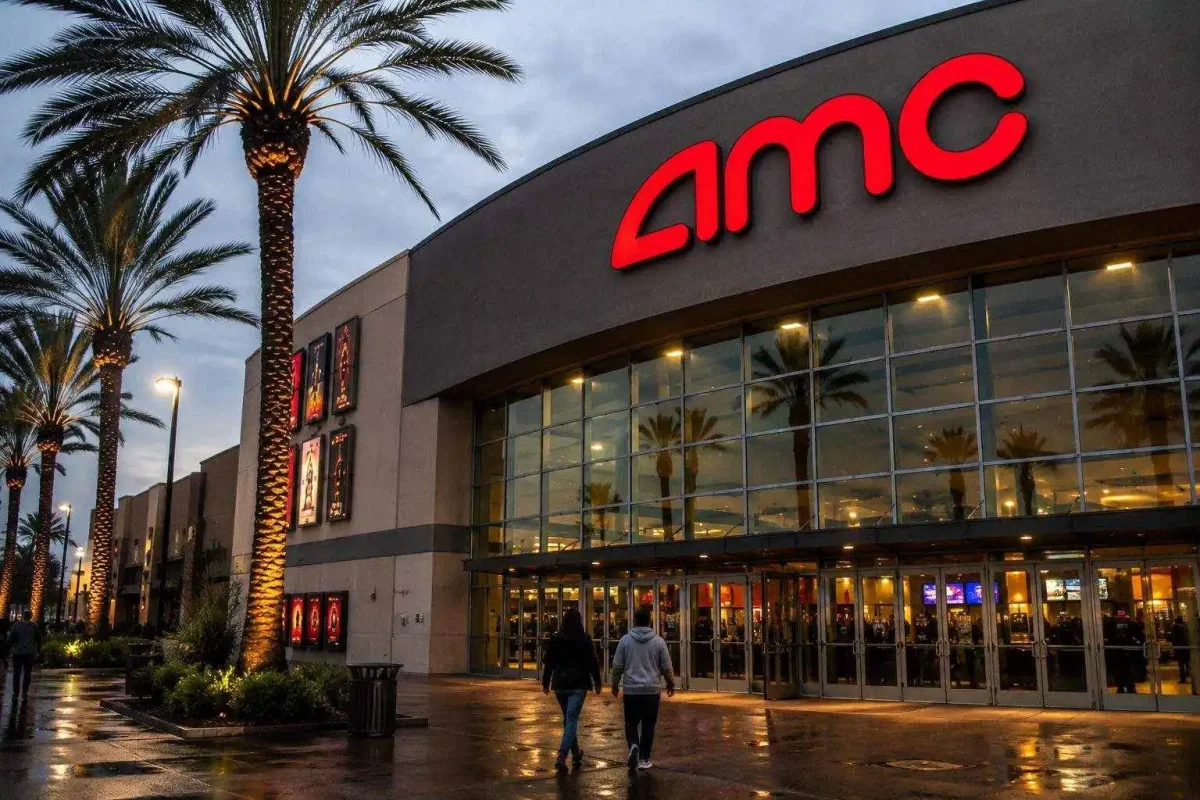
AMC Entertainment Holdings (NYSE:AMC) saw its shares climb 6.4% in premarket trading on Monday, reaching $3.00, following a blockbuster weekend driven by the latest Spider-Man film. The company reported that over 10.2 million guests visited AMC and ODEON theaters between Wednesday and Sunday, setting all-time highs for admissions, food-and-beverage sales, and total weekend revenue.
The weekend's performance underscores a strategic shift at AMC, where management is focusing on maximizing productivity per screen rather than expanding theater counts. In the second quarter, AMC's average number of screens declined 1.6% year-over-year to 9,249, yet attendance per screen surged 15.4% to 7,708. This trend was further amplified by the recent five-day stretch, which saw attendance per screen at least 2.6 times higher than the Q2 average.
Revenue per average screen jumped 16.1% to $172,600 in Q2, while adjusted EBITDA per screen soared 72.4% to $34,800. The company's adjusted EBITDA margin expanded by 6.6 percentage points to 20.1%, as revenue grew 14.2% and adjusted EBITDA climbed 69.6%. Average ticket prices edged down just 0.2%, indicating that volume and concession sales were the primary growth drivers.
The record weekend was fueled by two major releases: "Spider-Man: Brand New Day" and "The Odyssey." Together, they accounted for approximately 94% of the North American box office total, which reached $406 million. Spider-Man alone brought in $355 million, setting a record for Dolby Cinema weekend attendance, while The Odyssey added $51 million with strong IMAX interest and 70mm screenings running all day in New York. The films targeted different premium formats, reducing competition within AMC's network.
AMC has not disclosed its exact weekend box office revenue, but using Q2's per-patron revenue of $22.40, the reported attendance suggests an estimated total of around $228 million. This provisional run-rate calculation is not an official forecast and could vary based on ticket pricing and film mix.
The strong fixed-cost leverage was already evident in Q2, as AMC's operating metrics improved across the board. However, the company's balance sheet remains a concern. Interest expense for the quarter represented 42.3% of adjusted EBITDA, compared to 10.6% for competitor Cinemark Holdings (NYSE:CNK). AMC's net debt stood at $3.14 billion as of June 30, 2026, while its market capitalization was approximately $2.68 billion based on the current share price and June's share count.
To strengthen its financial position, AMC issued significant new equity in the first half of the year, boosting its cash position by 81.7% to $778.4 million and reducing principal debt by 2.7% to $3.914 billion. However, shares outstanding increased by 74% to 892.6 million, diluting existing shareholders. The company also reported a working-capital deficit of $901 million, which narrowed by $189.6 million from the end of 2025.
CEO Adam Aron hailed the weekend as "a powerful and unmistakable reminder" of demand for cinemas, echoing similar record results from Cinemark, which reported its highest-ever domestic weekend for ticket sales and premium formats. However, analysts remain cautious. Ross Benes, senior TV and streaming analyst at eMarketer, noted that while strong performances can repeat, "the industry's struggles will remain."
The key test ahead is whether this momentum can be sustained. If the Spider-Man film continues to perform well over the coming weeks, it could provide a significant boost to Q3 results. Yet, even a strong quarter may not fully address AMC's per-share balance sheet challenges, given its substantial debt load and ongoing dilution from equity offerings.