Advanced Micro Devices (NASDAQ:AMD) saw its shares surge 4.9% on Tuesday, closing at $479.18, after Raymond James issued a bullish upgrade and raised its long-term outlook for the server CPU market. The investment bank's analyst, Simon Leopold, lifted his rating on AMD from Outperform to Strong Buy and boosted his price target from $565 to $641, implying a potential upside of approximately 33.8% from the previous close.
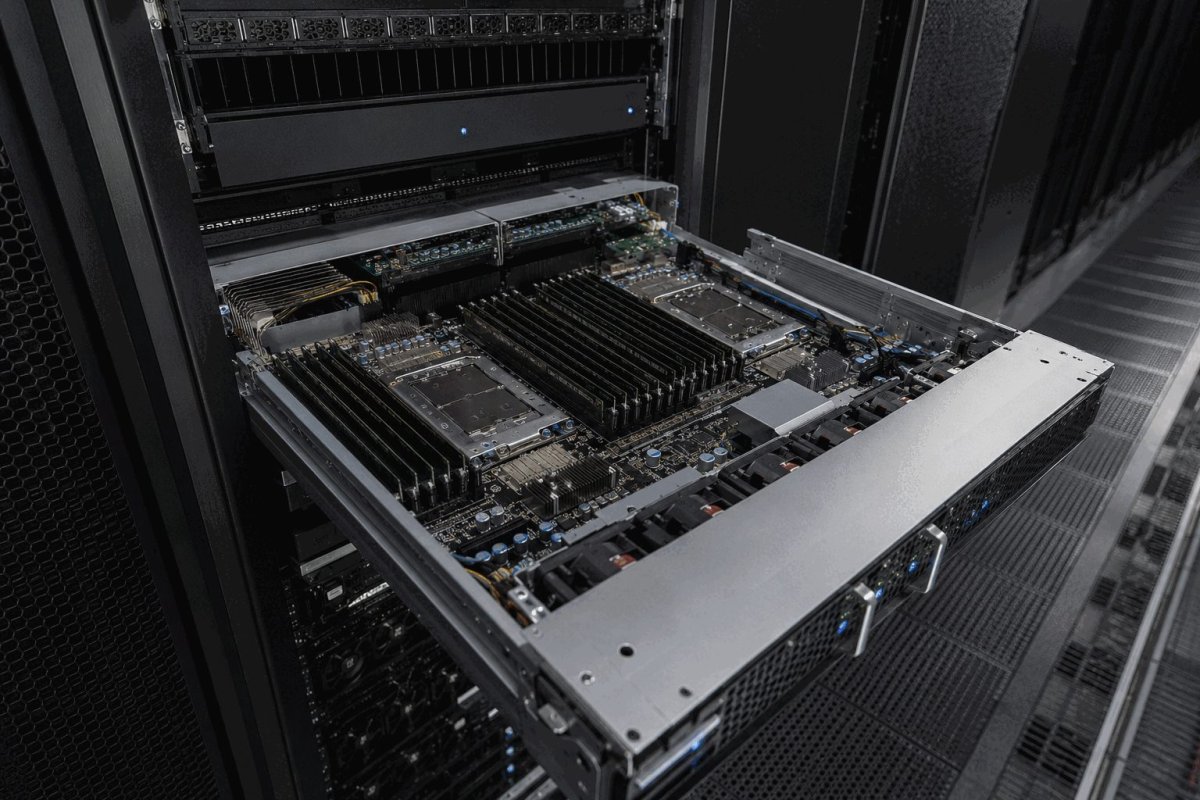
The upgrade was driven by a revised forecast for the server CPU market, which Raymond James now expects to reach $201 billion by 2030. This represents an increase of $37 billion from its previous estimate. The firm attributes this growth primarily to AI-related workloads, projecting that $168 billion of the total will come from AI applications. Leopold argues that CPUs play a critical role in AI architectures, managing accelerators, memory, and networking components, making them an essential part of the AI infrastructure stack.
The market responded enthusiastically, with AMD's market capitalization increasing by approximately $37 billion on the day. Trading volume reached 19.0 million shares, reflecting heightened investor interest. The surge was notable because it was triggered by an analyst's call rather than company-specific news, underscoring the influence of Wall Street sentiment on the stock.
AMD's operational performance has been robust, with the company reporting record revenue of $11.5 billion in the second quarter of 2026, a 50% year-over-year increase. Data Center revenue surged to $6.7 billion, accounting for 58% of total revenue and more than doubling compared to the prior year. Client revenue grew 23% to $3.1 billion, while Embedded revenue rose 19% to $977 million. Gaming revenue, however, declined 31% to $779 million, reflecting ongoing weakness in semi-custom products.
The company's non-GAAP gross margin stood at 56% in Q2, aligned with its Q3 forecast. For the third quarter, AMD expects revenue of $13.0 billion, plus or minus $300 million, surpassing analyst consensus of $12.52 billion. The company also guided for an adjusted gross margin of 56%.
Market share data supports the bullish narrative. In the first quarter, AMD captured 33.2% of x86 server unit shipments and accounted for 46.2% of server CPU revenues. The disparity between unit share and revenue share indicates that AMD's EPYC processors are being adopted in higher-end, premium deployments, which bodes well for profitability.
Despite the positive momentum, some caution is warranted. Following the surge, AMD's market capitalization stood at roughly $795 billion, with a trailing price-to-earnings multiple near 123. The average analyst price target of $553.72 leaves less room for upside compared to Raymond James's more optimistic projection. Competition remains intense, with Intel maintaining its lead in server shipments and Nvidia entering the CPU market with its Vera chip. Arm-based processors are also increasing competition in the x86 segment.
The next major catalyst for the sector will be Nvidia's earnings report, due after the close on Wednesday. Elevated hyperscaler spending would reinforce AMD's demand outlook, while tighter customer budgets could reveal how much optimism is already priced into shares. Risks to AMD's growth include competition, supply constraints, reliance on a limited number of large clients, and potential downturns in the gaming cycle. Additionally, AMD depends on external foundries for advanced manufacturing processes, which could pose operational challenges.
Overall, AMD's strong execution and expanding server CPU market opportunity have attracted bullish sentiment, but investors should weigh the high valuation and competitive pressures when considering the stock.