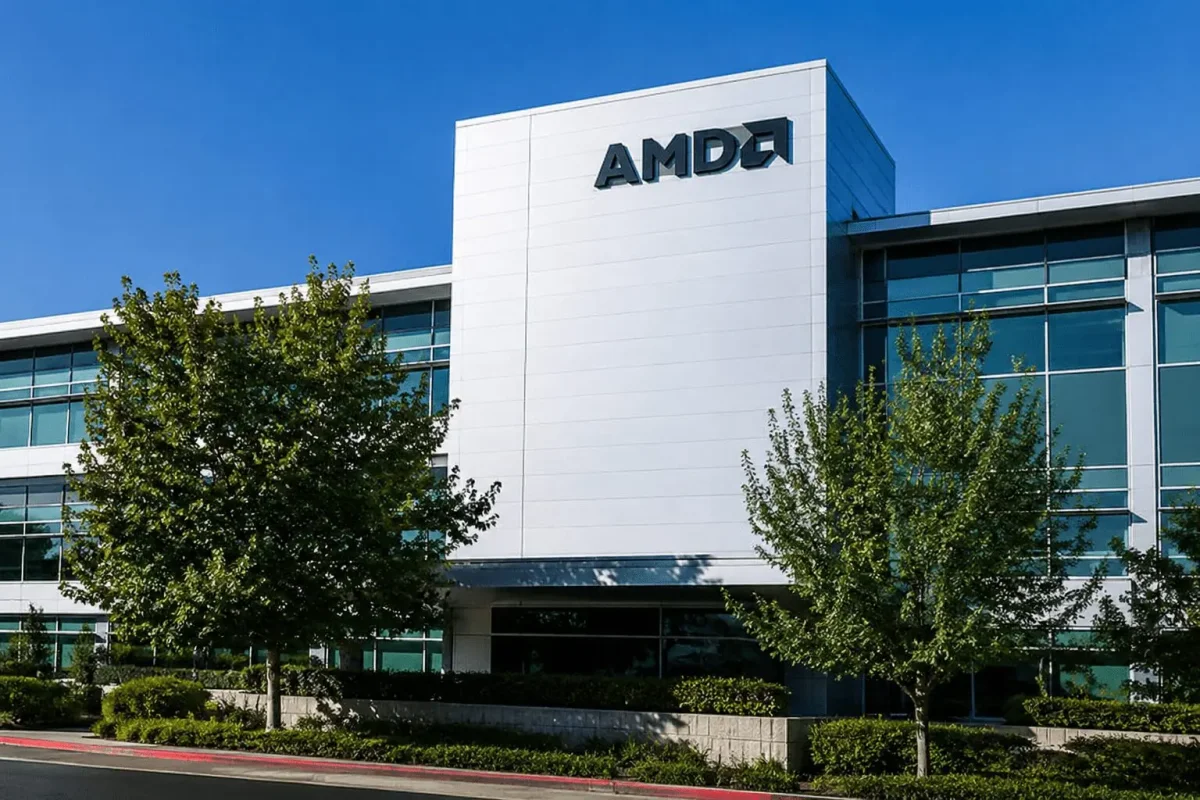
Advanced Micro Devices (AMD) suffered a sharp setback on Friday, with shares tumbling 10.86% to close at $466.38 before slipping further in after-hours trading to $458.66. The decline was part of a broader rout in semiconductor stocks that erased approximately $1.3 trillion in market value from U.S.-listed chip companies, following disappointing guidance from Broadcom (AVGO) on artificial intelligence chip demand.
Market-Wide Sell-Off
The PHLX Semiconductor Index dropped 10.3%, its steepest single-day decline since March 2020. Nvidia (NVDA) lost roughly 6%, Micron Technology (MU) fell 13%, and AMD's nearly 11% plunge was among the hardest hits. The sell-off weighed heavily on the broader market: the Nasdaq Composite slid 4.2% to close at 25,709.43, ending the week down 4.7%. The S&P 500 shed 2.6% on Friday, pressured by a stronger-than-expected May jobs report that pushed bond yields higher and reignited concerns the Federal Reserve could maintain elevated interest rates for longer.
Investor Crossroads
With U.S. equity markets closed on Sunday, traders must wait until Monday's regular session to assess whether Friday's plunge represents a buying opportunity or the start of a deeper correction in AI-related stocks. Dennis Dick, a proprietary trader at Triple D Trading, told Reuters, "You've had a lot of people here that were just blindly buying the dip." Ohsung Kwon, chief equity strategist at Wells Fargo, described the semiconductor sector as "way overbought" but added, "I don't think it's the end of the bull market."
AMD's Fundamentals Remain Strong
Despite the sharp sell-off, AMD's underlying business narrative has not changed. The company reported first-quarter revenue of $10.3 billion, a 38% year-over-year increase, driven by a 57% surge in data-center sales. The growth was fueled by demand for EPYC processors and Instinct GPUs, which are used for AI model training and inference. CEO Lisa Su has identified data centers as the primary driver of AMD's revenue and profitability. However, the stock's valuation reflects expectations of becoming a second major winner in AI hardware alongside Nvidia, making it sensitive to any signs of weakness in the sector.
Broader Implications
Friday's sell-off was triggered by Broadcom's AI chip guidance, which fell short of market expectations. This raised concerns that cloud computing companies may be tempering their AI spending, a risk that directly impacts AMD's growth outlook. The company's next major event is the "Advancing AI 2026" conference scheduled for July 22-23 in San Francisco, leaving sector flows, interest rates, and last Friday's sell-off as the primary focus for traders in the interim.
Outlook
Whether AMD's stock can recover will depend on several factors: stabilization in the bond market, fresh orders from key customers, and renewed buying interest in Nvidia and other chip names. If yields continue to climb or more cloud firms signal a pullback in AI investment, Friday's drop may prove to be more than a temporary blip, potentially signaling a broader revaluation of AI chip stocks. For now, all eyes are on Monday's open.