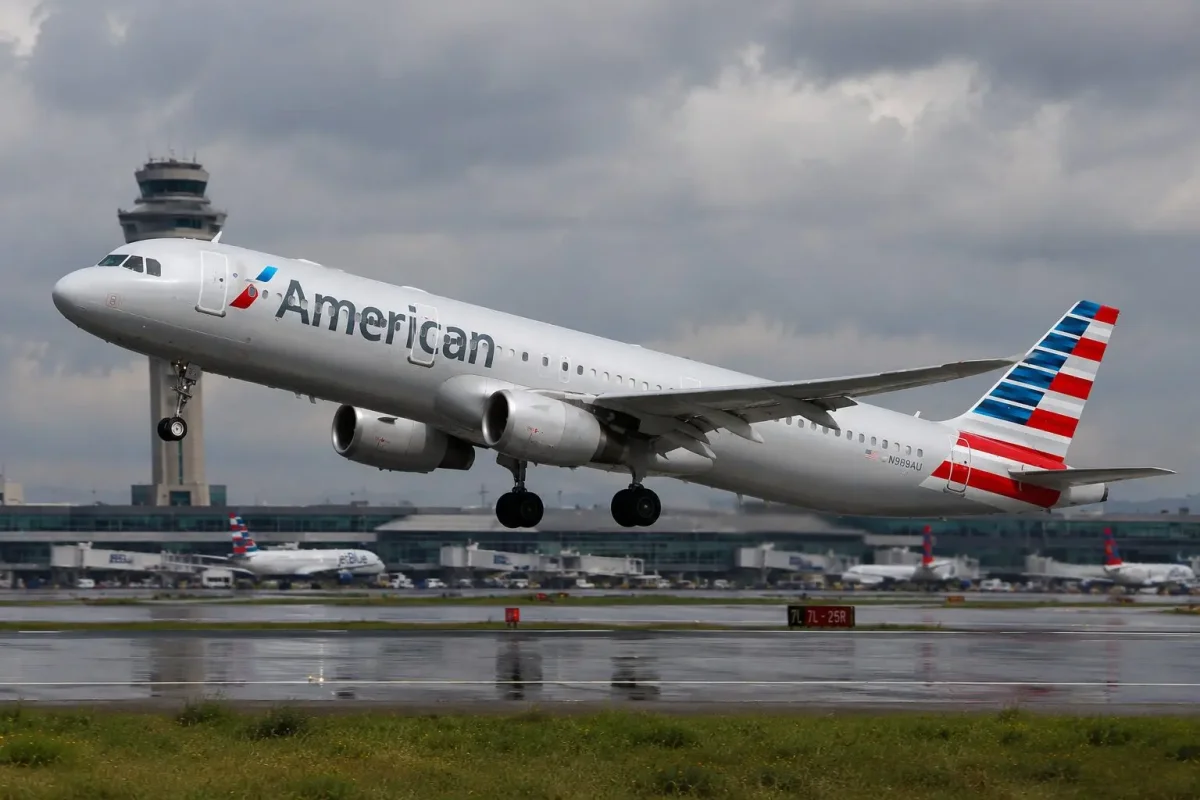
American Airlines Group Inc. (NASDAQ: AAL) saw its shares tick up 0.3% in premarket trading to $16.60 on Wednesday, extending a two-session rally that had lifted the stock by 8.4%. The advance comes as Brent crude oil prices surged past $80 per barrel, a development that underscores the carrier's heavy exposure to fuel costs.
According to the company's second-quarter filing, fuel expenses accounted for 94.7% of its year-over-year revenue growth. Revenue rose by $2.343 billion, while fuel costs climbed by $2.218 billion. This stark contrast highlights how much of the airline's top-line expansion was consumed by higher energy prices.
The financial impact of fuel price movements is substantial. A sustained 10-cent increase in fuel prices would cost American approximately $115 million per quarter, representing about 25.8% of its operating income in the second quarter. This sensitivity makes the airline particularly vulnerable to oil price volatility.
On Tuesday, oil prices had dropped 5%, but Wednesday's rebound to $80.17 per barrel, a 1.0% gain, has reignited concerns. Priyanka Sachdeva of Phillip Nova noted that the overall supply outlook still "warrants caution," suggesting that further price swings could be on the horizon.
American's second-quarter operating income fell 60.7% to $446 million, with operating margin contracting to 2.7% from 7.9% a year earlier. The airline managed to increase passenger yield by 11.9% to 22.33 cents, but load factor declined by 1.5 points to 83.2%, indicating that pricing, not utilization, drove the revenue growth.
Chief Executive Robert Isom touted "year-over-year revenue growth of more than 16%" for the quarter, with premium passenger unit revenue up 13.4% and managed corporate revenue rising 26%. However, the fuel cost burden has eroded much of those gains.
Compared to peers, American's fuel recovery rate is weaker. Delta Air Lines recouped roughly 60% of added fuel costs, while United Airlines recovered close to 50%. American's margin was less than half of United's and below a third of Delta's, making every oil price change more significant for AAL investors.
Devon May, American's Chief Financial Officer, said the fuel-recovery rate is still evolving. "It depends on the day for spot prices," he told Reuters, indicating that the airline's ability to pass on costs remains uncertain.
Analyst sentiment is mixed. Of 14 analysts surveyed, eight recommend buying, five suggest holding, and one advises selling. The consensus price target is $19.79, implying a potential 19.5% upside from Tuesday's close. However, short-term profit forecasts have turned bearish, with the average projection for the third quarter swinging from a 16-cent profit to a 20-cent loss over the past month.
Investors will be watching Brent prices, Friday's U.S. payrolls data, and any fare adjustments in the coming sessions. American is scheduled to release its next quarterly results on October 15. The airline reported $28.9 billion in current and long-term debt and finance leases as of June 30, adding to its financial strain.
For now, American Airlines remains primarily a fuel play, with its margin recovery story taking a backseat to oil price dynamics. The company must maintain robust pricing power to weather the current environment, but with fuel costs consuming the bulk of revenue growth, the path forward is fraught with challenges.