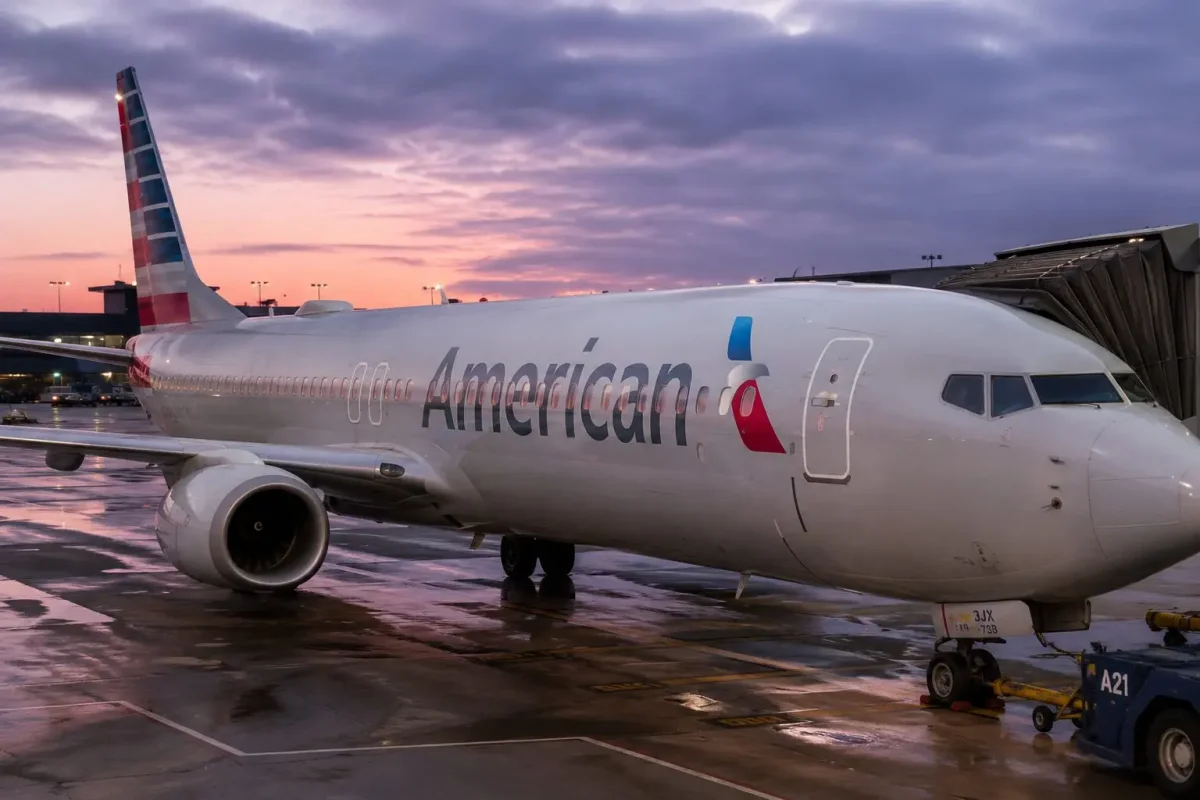
American Airlines Group Inc. (NASDAQ: AAL) is facing heightened scrutiny over its profit margins after its stock tumbled 11.6% last week, far outpacing the S&P 500's 1.6% decline. The carrier's shares slipped another 0.4% in premarket trading Monday to $14.92, as investors brace for second-quarter earnings set for release Thursday at 7:30 a.m. CT.
Revenue Growth Not Enough
While revenue expansion remains robust—the company forecasts second-quarter growth between 13.5% and 16.5%—the focus has shifted to the bottom line. American estimates adjusted profit to be at or near zero, with revenue projected between $16.3 billion and $16.8 billion. Based on last year's base of $14.392 billion, this translates to a range of $16.33 billion to $16.77 billion, though the figures remain provisional.
The airline projects adjusted earnings per share in a range from a loss of 20 cents to a gain of 20 cents, implying a net profit or loss of roughly $132 million. The estimated adjusted net margin hovers between minus 0.8% and plus 0.8%, a razor-thin range that underscores the pressure on profitability.
Peer Comparison Highlights Margin Gap
American's margin outlook pales in comparison to rivals. United Airlines Holdings Inc. (NASDAQ: UAL) reported an adjusted pretax margin of 4.8% on 16% revenue growth, while Delta Air Lines Inc. (NYSE: DAL) achieved 7.7% on 14% growth. Both carriers demonstrated that strong revenue gains can translate into positive margins, setting a higher bar for American.
United CEO Scott Kirby noted that higher fares had caused "minimal to no damage" to demand, a statement that amplifies expectations for American's own fare recovery efforts. In April, American disclosed that it had recouped nearly 50% of its increased second-quarter fuel expenses, with plans to recover 75% to 85% in the third quarter.
Fuel Costs and Debt Burden
Fuel price volatility remains a key risk. Brent crude fell to $87.96 on Monday after touching $91.42, its highest since June 11. The carrier's ability to pass on fuel costs will be a central theme in Thursday's earnings call.
Beyond margins, American's balance sheet looms large. The company ended the March quarter with $34.7 billion in total debt, approximately 3.5 times its equity value of $9.91 billion as of Friday. High leverage amplifies the impact of each margin point on common shareholders, making profitability even more critical.
What to Watch Thursday
Investors will zero in on the full-year outlook, which ranges from a loss of 40 cents to a profit of $1.10 per share. Key areas of focus include fuel cost recovery, unit costs excluding fuel, and any updates on demand trends. While sales growth is already showing robust results, the path to sustainable profitability remains the primary concern.
Risks to the outlook include prolonged declines in oil prices, which could boost margins faster than expected, versus surges in fuel costs or weakening demand that could hinder recovery. Thursday's report will be a pivotal moment for American Airlines as it seeks to reassure investors about its financial trajectory.