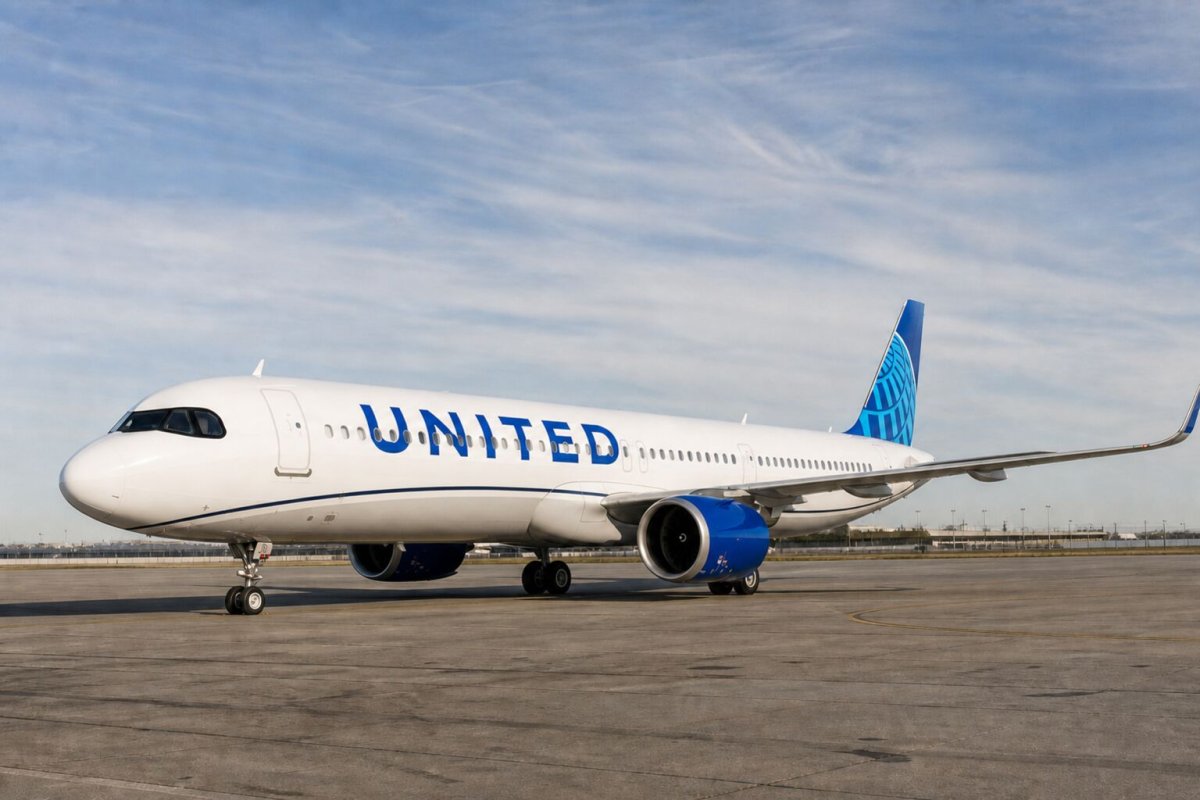
United Airlines Holdings Inc. (NASDAQ: UAL) saw its shares decline 3.1% on Tuesday, closing at $104.63, as investors weighed the carrier's aggressive international expansion against the challenge of keeping unit revenue growth ahead of escalating costs. The stock edged up 0.4% to $105.00 in premarket trading on Wednesday, recovering only a fraction of the prior session's losses.
The centerpiece of United's strategy is Newark Liberty International Airport, where the airline has scheduled 14 additional or reinstated routes through June 2027. According to Cirium schedule data cited by Simple Flying, average daily departures and arrivals at Newark are projected to reach 797 movements in mid-January, a 14% increase compared to the same period in 2026.
Newark Route Expansion Details
The new routes will be phased in over the next year. In September 2026, United will launch flights to Seoul, Charlottesville, Knoxville, Omaha, and Northwest Arkansas. October brings St. Croix, followed by Luxembourg in April 2027. The summer of 2027 will see four new European destinations—Ljubljana, Olbia, Catania, and Ibiza—with Valencia, Marseille, and Terceira added in June.
Notably, eight of the ten recently revealed destinations are not currently served by any other U.S. airline, according to a company release. This first-mover advantage allows United to tap into underserved markets with lower competitive pressure.
A321XLR: The Premium Workhorse
A key element of United's plan is the deployment of the Airbus A321XLR narrowbody on several transatlantic routes, including Luxembourg, Ibiza, Valencia, and Marseille. The aircraft features 32 premium seats—20 Polaris business class and 12 Premium Plus—which is double the premium capacity of the Boeing 757-200 it replaces. This configuration boosts revenue per departure while avoiding the higher capacity and costs of a widebody jet.
However, the airline's ability to execute this plan hinges on aircraft deliveries. Patrick Quayle, United's network chief, acknowledged "a few teething issues" but expressed confidence that the carrier will have enough jets to meet its schedule, according to Reuters.
Financial Performance and Cost Pressures
United's second-quarter results provided some optimism. Total revenue grew 16.0% year-over-year, while total revenue per available seat mile (TRASM) advanced 12.1%. This outpaced the 6.1% increase in ex-fuel unit costs (CASM-ex), giving the airline a cushion to fund expansion.
European operations were particularly strong, with passenger revenue up 10.2% despite a slight 0.2% dip in capacity, resulting in a 10.4% unit revenue gain. This demonstrates the potential of the premium-focused strategy.
Nevertheless, fuel costs remain a significant headwind. The airline paid $4.19 per gallon in the second quarter, driving fuel expenses up 84.1% to $5.11 billion. This reduces the margin for error and underscores the importance of maintaining robust unit revenue growth.
Risks and Investor Sentiment
The market's reaction reflects broader concerns. Aircraft delivery delays could force schedule adjustments or require more expensive aircraft substitutions. Softer fares, increased airport congestion, and volatile fuel prices could erode the unit-revenue advantage. Investors are looking for consistent pricing power and a strong premium mix, not just an expanded network.
United's strategy is a high-stakes bet that premium-heavy narrowbody operations can deliver superior returns without the cost burden of widebodies. The early data from Europe is encouraging, but the next few quarters will be crucial in proving that the model can scale across the new Newark routes.
As the airline industry continues to recover from the pandemic, United is positioning itself as a leader in premium travel. However, with cost pressures mounting, the market will be watching closely to see if the airline can maintain its financial discipline while pursuing aggressive growth.