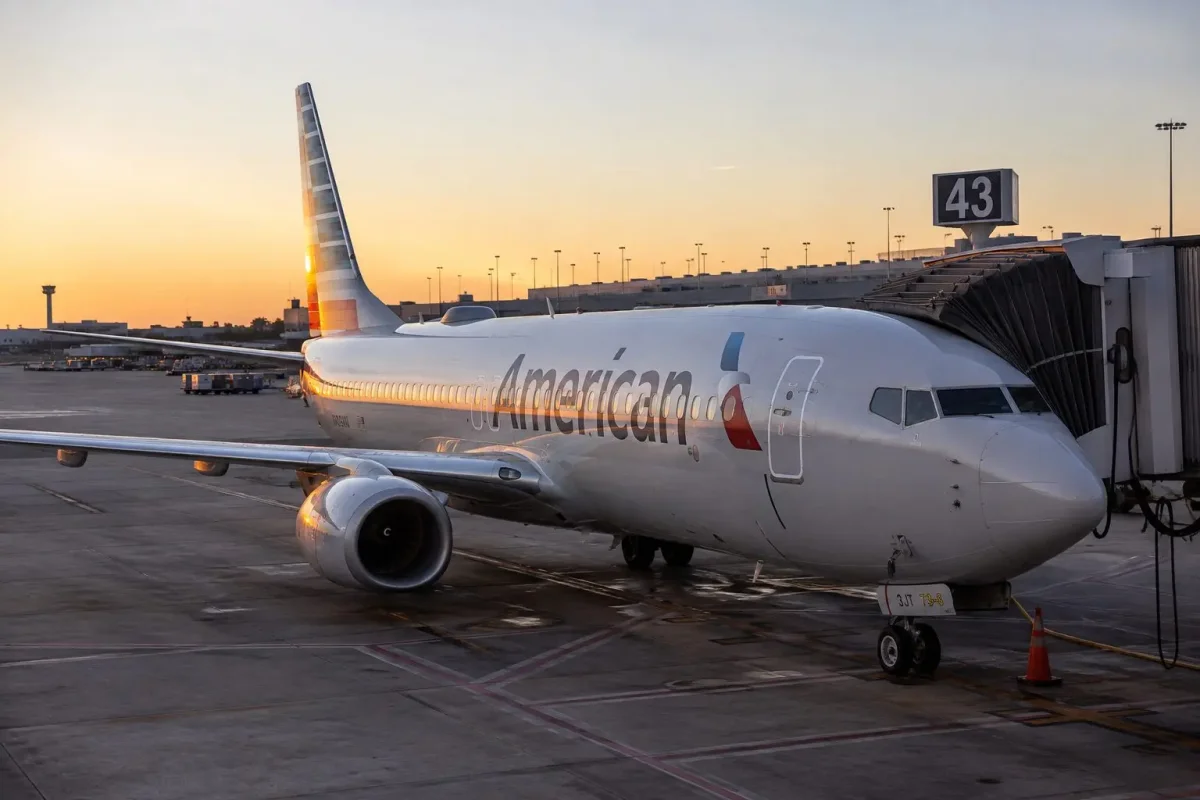
American Airlines Group Inc. (NASDAQ: AAL) closed Friday at $15.94, down 0.56% on the day, but the stock managed a 4.39% weekly gain, outperforming the S&P 500's 3.58% rise. The airline's shares have been volatile, with a 5% surge on Monday followed by declines of 3.3% and 0.6% on Thursday and Friday, respectively.
The market's mixed reaction comes as American faces a significant headwind from rising fuel costs. Since early July, the company's projected fuel expenses have climbed by $1.6 billion, a jump that represents roughly 15.2% of its $10.55 billion market capitalization as of Friday. This fuel cost increase is about 3.6 times the $444 million in market value the stock gained last week, underscoring the challenge of offsetting fuel price hikes.
In response, American has implemented strategic measures to protect premium cabin revenue. Starting August 25, the airline will restrict direct upgrades from coach to business class on nine key domestic routes, including New York–Los Angeles and Boston–Los Angeles, as well as six Hawaii flights from Dallas, Phoenix, or Chicago. Instead, eligible Main Cabin passengers will be upgraded to premium economy on these routes. Paid premium-economy bookings and flights without that cabin will still qualify for business upgrades, and previously approved upgrades remain valid unless the itinerary changes.
The move is designed to increase the availability of business seats for purchase, potentially boosting yields. However, it may frustrate some frequent flyers who previously enjoyed a simpler upgrade path. The airline's second-quarter results showed premium passenger unit revenue up 13.4%, while Main Cabin unit revenue rose 8.8%, a spread of 4.6 points. Managed corporate revenue also posted a strong 26% increase.
American's fuel recovery efforts have been substantial. The airline offset almost 50% of its second-quarter fuel cost increase through fare increases, matching United's recovery rate, though lagging Delta's 60% and exceeding Alaska's minimal recovery. The company reported record second-quarter revenue of $16.7 billion, up 16.3%, with adjusted net income of $99 million, or 15 cents per share. Fuel costs surged 83% to over $2.2 billion in the quarter.
Looking ahead, American projects an adjusted loss per share of 70 cents to 10 cents for the third quarter. For the full year, guidance ranges from a loss of 65 cents to a profit of 65 cents per share, with the midpoint at breakeven. CFO Devon May noted that if the company had guided on the same day as Delta, it would have raised its forecast, but a rapid shift in fuel price assumptions forced a more cautious outlook.
Wall Street analysts remain divided on the stock. Recent price targets range from $13 to $24, with three analysts maintaining Buy or Overweight ratings and Goldman Sachs reiterating a Sell. The median price target is $19, implying roughly 19% upside from Friday's close. Analysts overall rate the stock as Overweight, with an average target of $19.76.
Investors will be watching fuel market data next week, with the EIA's Short-Term Energy Outlook due Tuesday and weekly petroleum statistics Wednesday. July inflation data and retail sales will also provide insight into consumer demand and pricing power. The disappointing jobs report on Friday added another layer of uncertainty to the economic outlook.