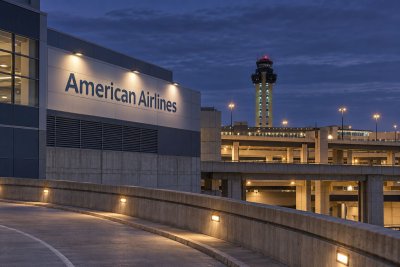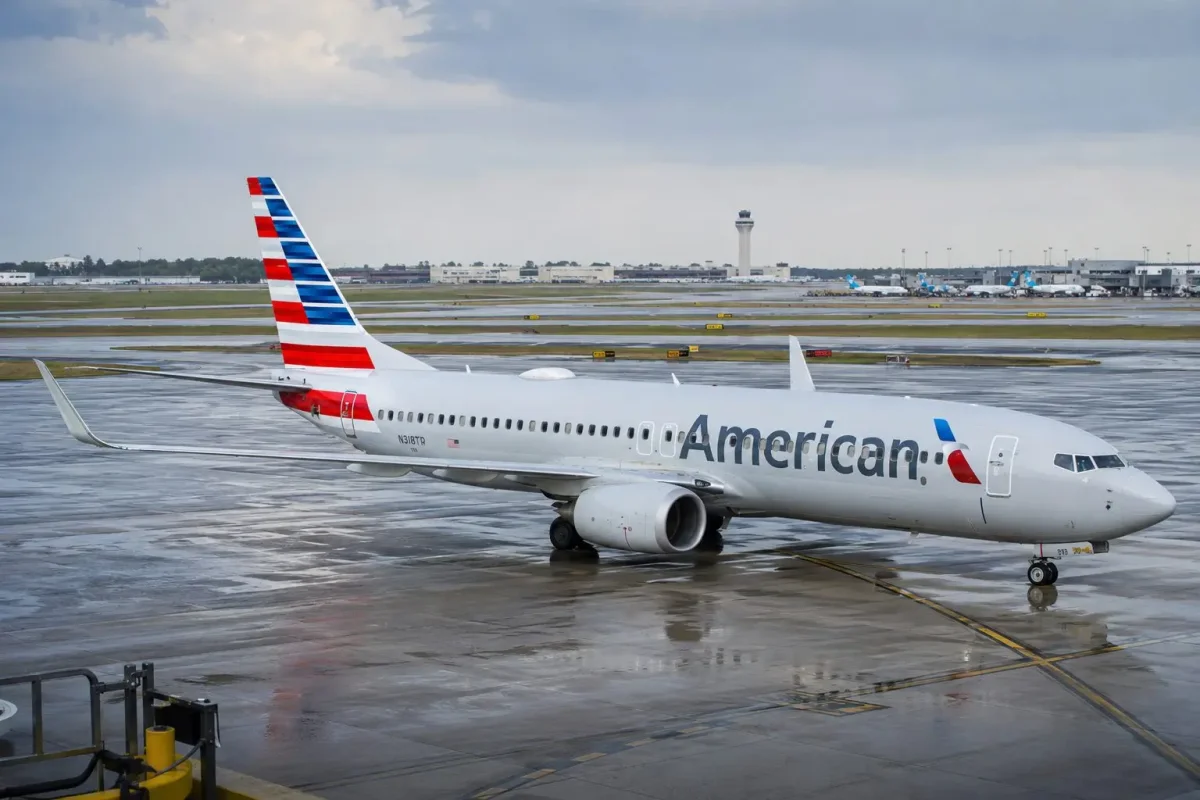
American Airlines Group Inc. (AAL) saw its stock climb on Tuesday, closing at $14.09, up 48.5 cents from the previous session. The shares traded in a range of $13.64 to $14.38, with volume approaching 150 million shares. The move came as the broader market showed mixed results, with the Dow Jones Industrial Average adding 0.17%, while the S&P 500 slipped 0.26% and the Nasdaq Composite dropped 0.97% amid a sell-off in technology stocks.
Google Sustainable Aviation Fuel Agreement
The gains followed the announcement of a three-year sustainable aviation fuel (SAF) certificate deal between American Airlines and Google. Under the agreement, Google will purchase SAF certificates covering 35 million gallons of sustainable fuel, which is expected to reduce CO2-equivalent emissions by nearly 300,000 metric tons. The deal uses a book-and-claim system, where American will physically use the lower-carbon fuel at Chicago O'Hare International Airport, and Google will receive credit for the greenhouse gas savings to offset its corporate travel emissions.
American and Google described this as the largest public SAF certificate deal between an airline and a corporate buyer to date. The sustainable fuel is produced from waste feedstocks such as used cooking oil. Jill Blickstein, American's Chief Sustainability Officer, called the partnership "a critical step forward," while Kate Brandt, Google's sustainability chief, emphasized that the long-term agreement sends "a vital demand signal" for the sustainable aviation fuel market.
Fuel Cost Pressures Intensify
Despite the positive news on the sustainability front, the primary focus for investors remains the rising cost of jet fuel. According to the U.S. Transportation Department, U.S. airline fuel costs surged 78% year-over-year in April to nearly $6.5 billion, with average fuel prices reaching $4.11 per gallon. This has put significant pressure on airline margins, as fuel is one of the largest operating expenses for carriers.
Brent crude oil prices fell about 3% on Tuesday, hitting a seven-week low after a pause in attacks between Iran and Israel. However, Brent still closed at $91.45 a barrel, while U.S. crude ended at $88.20—levels that remain high enough to squeeze airline profitability. American Airlines CEO Robert Isom stated at a Bernstein investor event in late May that the airline is not making any changes to its 2026 forecast, despite expectations that higher fuel prices will add $4 billion to $5 billion in costs this year. He noted that corporate travel has risen 13% from a year ago and described leisure demand as "incredibly" strong.
Industry Comparison
American's stock performance on Tuesday mirrored gains across the airline sector, rather than reflecting a company-specific catalyst. Delta Air Lines (DAL) rose 3.78%, United Airlines (UAL) advanced 4.09%, and Southwest Airlines (LUV) climbed 5.24%. However, American continues to lag behind Delta and United in terms of profitability—a gap that has widened with higher fuel expenses. United CEO Scott Kirby recently told Reuters that "air travel is not a commodity," suggesting that airlines offering superior technology, service, reliability, and product can differentiate themselves beyond just seat prices.
Outlook and Risks
The risk to American's financial outlook remains significant. A further jump in oil prices or a slowdown in demand due to higher airfares could squeeze the carrier even more. The airline has already trimmed its 2026 earnings guidance to a range of a loss of 40 cents per share to a profit of $1.10, down from its previous forecast of $1.70 to $2.70 per share. While the Google deal provides a positive narrative around emissions reduction, the day-to-day reality for American and its peers continues to revolve around classic airline economics: fuel costs, airfares, and whether summer travel demand will be strong enough to close the gap. For now, traders are sticking with the familiar story of fuel price volatility and margin pressure.