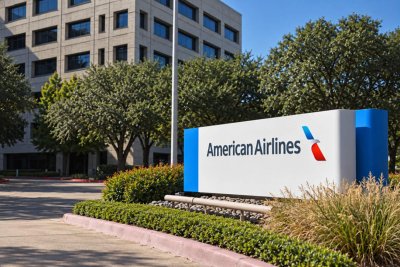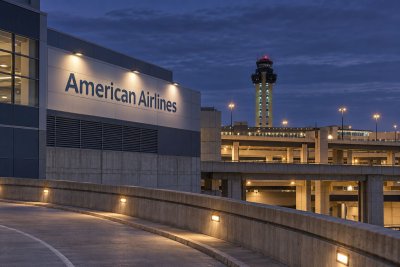
American Airlines (NASDAQ: AAL) has taken the first tangible step in its ambitious hub transformation at Dallas Fort Worth International Airport (DFW). On May 27, the carrier, in partnership with the airport, unveiled a new nine-gate pier in Terminal C, marking the first completed component of a comprehensive rebuild. While four of the gates represent a net capacity increase, the remaining five are replacements for gates removed during construction. This opening provides investors with an early glimpse into the operational strategy that will underpin the airline's long-term commitment to its largest hub.
Terminal F: A Billion Bet on Hub Density
The real test, however, lies ahead. The separate Terminal F program has expanded significantly from an initial 15 gates to a sprawling 31-gate complex, with a budget now pegged at $4.02 billion. Under an airport agreement extending through 2043, American is slated to occupy every one of these gates. This is not a quick earnings catalyst; it is a long-duration wager that DFW will remain the engine of American's network. The scale of the investment underscores the airline's confidence in the hub-and-spoke model, even as it faces headwinds from rising fuel costs and operational complexities.
Operational Efficiency: The Core of the Strategy
The newly opened Terminal C pier is designed with efficiency in mind. It features electronic boarding gates, higher ceilings, and a layout intended to reduce passenger congestion. American highlighted that Terminal C averaged nearly 200 mainline departures daily during its summer schedule, while DFW as a whole handled 67 million American customers in 2025 and was scheduled for up to 930 daily departures this summer. However, the addition of just four net new gates is modest in the context of American's existing operations. The real value lies in better utilization: more saleable departures, fewer gate conflicts, and improved recovery from schedule disruptions.
American has already made operational changes, shifting from nine large daily flight banks to 13 this year, spreading traffic more evenly throughout the day. The airline reports this has reduced misconnects, gate changes, and delays, though it has not yet provided detailed financial data to quantify the revenue or cost benefits. Terminal F is designed to amplify these gains. With approximately 60% of DFW passengers connecting, the new international processing facilities, widebody capacity, and improved baggage systems could enhance the utility of American's entire network, not just local Dallas demand.
Construction Timeline: Near-Term Scorecard for Investors
DFW's April board papers offer a more precise timeline than promotional materials. The board approved a $300 million increase to the Terminal F and Skylink construction contract, raising its ceiling to $2.063 billion. The official resolution calls for the first 10 gates to open in May 2027, with an additional five by the end of that year, and the remainder in later phases. The contract completion date is set for August 29, 2028, though the broader terminal program extends beyond that. These milestones provide measurable checkpoints for investors. Missing the first 10-gate opening would push revenue opportunities further out while airport costs continue to accrue. Conversely, on-time delivery would not automatically prove an attractive return; American must fill the added capacity at fares that cover airport rents, landing fees, staffing, and operations.
Financial Implications: Not an Immediate Cash Burden
The $4.02 billion figure should not be misread as an immediate cash outlay for American. Terminal F is an airport capital program financed through DFW's airline agreements and bond structures. Nevertheless, it is substantial relative to the carrier's own spending. In the first six months of 2026, American reported capital expenditures and aircraft deposits of $1.6 billion, operating cash flow of $4.7 billion, and long-term debt (including current maturities) of $28.6 billion. The company's ability to manage this large-scale project without straining its balance sheet will be closely watched.
The Bull Case: Network Density and Synergies
Proponents of the DFW expansion point to network density as the strongest argument. American already serves more than 230 destinations from DFW. Adding gates at its largest hub creates new connection combinations without building a customer base from scratch. Concentrating facilities also makes technology, lounges, and baggage systems more effective across a very large schedule. This is a classic hub-and-spoke advantage: more connecting traffic drives higher load factors and better asset utilization.
The Bear Case: Concentration Risk and Cost Pressures
The counterargument is equally clear: concentration risk. Thunderstorms or air-traffic control constraints at DFW can propagate disruptions across the network, and adding flights may magnify these issues before operational improvements offset them. Moreover, the cost environment is unforgiving. American's average fuel price rose 44.5% to $3.44 per gallon in the first half, lifting fuel and related taxes by $2.6 billion year-over-year. In such a climate, a bigger hub must improve productivity, not merely increase fixed commitments.
American's shares closed at $13.10 on September 14, up about 0.7% from Friday's close. That move does not establish a verdict on the DFW strategy. The useful evidence will be operational: the May 2027 gate opening, completion of the 31-gate buildout, sustained on-time performance improvements from the 13-bank schedule, and proof that extra capacity lifts revenue faster than airport and staffing costs.