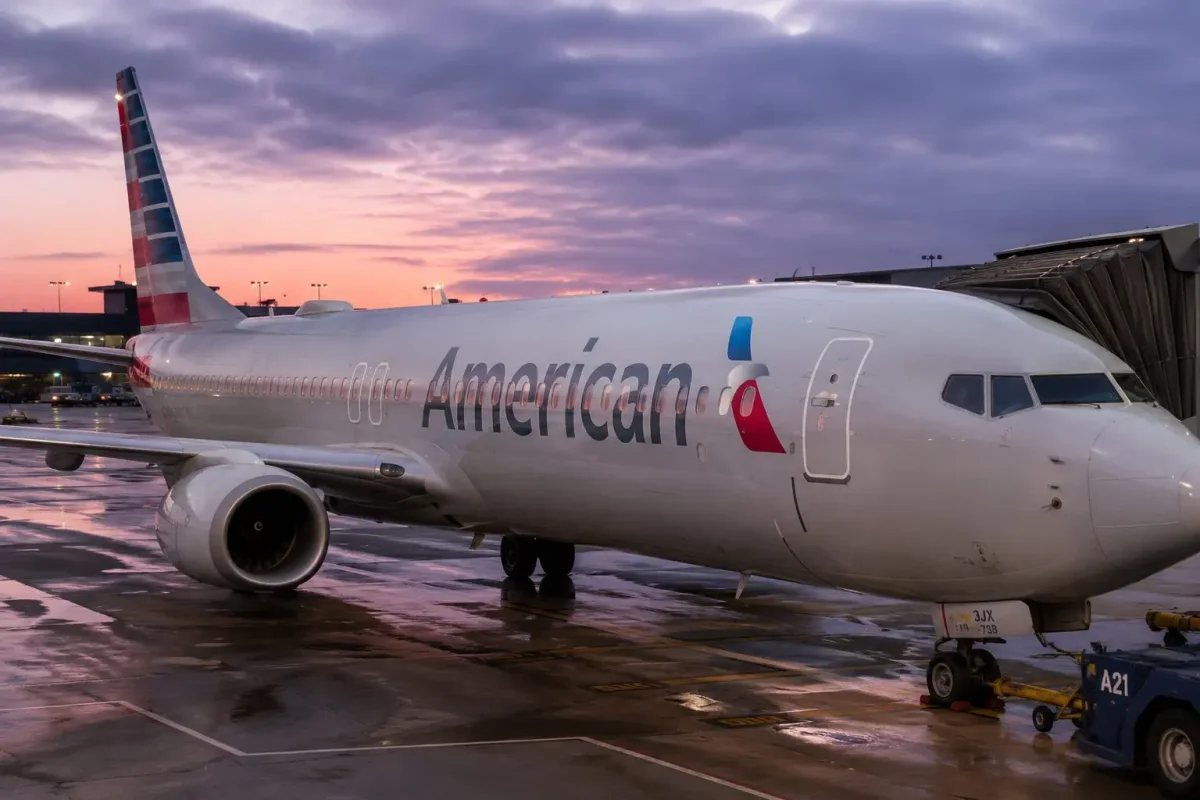
American Airlines Group Inc. (NASDAQ: AAL) is set to release its second-quarter earnings on Thursday, with analysts forecasting record revenue of $16.70 billion but only minimal adjusted earnings of approximately $0.03 per share. This outlook reflects the airline's struggle to convert top-line growth into bottom-line profit, as rising fuel costs and operational expenses continue to squeeze margins.
The projected adjusted net income of roughly $20 million represents a margin of just 0.1%, a sharp decline from the 4.4% adjusted net margin recorded in the same period last year. In Q2 2025, American reported adjusted earnings of $628 million on revenue of $14.39 billion. The year-over-year revenue growth of about 16% is overshadowed by an estimated 96.8% drop in adjusted earnings per share.
Revenue Growth Amidst Cost Pressures
American's management had previously guided for Q2 sales growth of 13.5% to 16.5%, with capacity expansion of 4% to 6%. Nonfuel unit costs were expected to rise 2% to 4%, while fuel costs were projected around $4 per gallon. The airline aimed to recover nearly half of the fuel cost increase through higher fares and ancillary revenue, targeting unit revenue growth of over 10%. CEO Robert Isom stated in April that the company was "on track for another record in the second quarter."
However, margin conversion remains a significant challenge. United Airlines Holdings Inc. (NASDAQ: UAL), a close competitor, posted a 16% revenue increase to $17.7 billion in Q2, with adjusted earnings per share of $1.99. United successfully offset about 50% of its higher fuel costs and achieved unit-revenue growth of 12.1%. American's comparable fuel cost recovery efforts have not translated into comparable profitability.
Balance Sheet Concerns
American's high debt load amplifies the earnings pressure. At the end of March, the company carried $34.7 billion in debt, against liquidity of $10.8 billion. This debt is roughly 3.5 times the company's equity value of $10.01 billion as of Monday's close. Shares of AAL ended Monday at $15.14, up 1.1%, after a 11.6% decline over the previous week.
Despite the financial headwinds, American continues to invest in customer experience. On Monday, the airline unveiled upgraded premium amenities at Dallas Fort Worth International Airport (DFW), including a new Flagship check-in and a 37,000-square-foot Admirals Club lounge. DFW handles more than 30% of American's connecting passengers and luggage. Chief Customer Officer Heather Garboden emphasized the company's commitment to "investing in every stage of the premium travel journey at DFW." The company did not disclose specific project costs or expected returns.
Outlook and Risks
Fuel prices remain the key variable. Brent crude oil fell 1.1% to $88.26 early Tuesday, despite ongoing geopolitical risks in the Middle East. United reported that July's fuel price increase alone added $575 million to its projected Q3 expenses. American's official Q2 guidance ranges from a loss of $0.20 per share to a gain of $0.20, while full-year guidance spans a $0.40 loss to $1.10 in adjusted earnings. FactSet consensus has improved, with Q2 EPS averaging $0.03 (up from a loss of $0.02 a month ago) and full-year EPS at $0.61 (up from $0.01).
Analysts will closely watch American's conference call on Thursday at 7:30 a.m. CDT for updates on Q3 fuel expectations, fare recovery, capacity plans post-summer, debt reduction progress, and premium revenue growth. Key risks include a further rise in oil prices that could offset fare increases, softer demand limiting pricing power, and operational disruptions from storms or air-traffic issues. The company's high leverage offers limited buffer against these uncertainties.