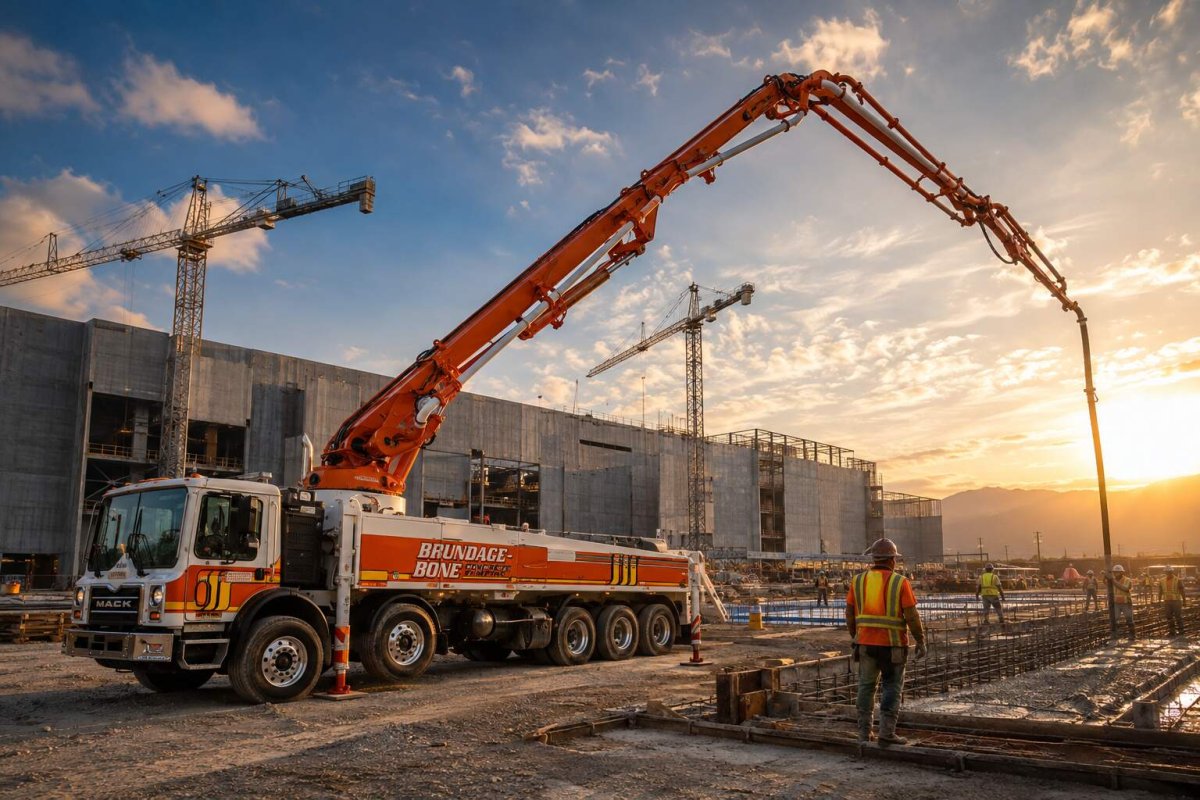
Concrete Pumping Holdings, Inc. (NASDAQ: BBCP) saw its shares surge 19% on Friday, climbing to $10.77, after the company announced its first-ever dividend and raised its financial guidance. The stock opened at $10.91, dipped to $9.69 within the first 15 minutes of trading, but quickly recovered to hold most of its gains. The $1.72 per-share increase added roughly $86 million to the company's market value, a figure that underscores the market's enthusiasm for the new payout and the improved outlook.
The newly declared dividend of $0.13 per share, payable on October 2 to shareholders of record on September 18, marks a significant shift in the company's capital allocation strategy. Based on the current share count of approximately 50.4 million, the annualized cost of the dividend is estimated at $26.2 million. That represents about 52% of management's free cash flow guidance of $50 million for fiscal 2026, leaving roughly $23.8 million for other purposes. However, this residual is a ceiling rather than a pool of spare cash, as the company's free cash flow definition excludes certain unavoidable cash outlays.
The yield on the new dividend, which was initially cited at 5.6% based on a recent share price near $9.29, has now compressed to approximately 4.8% following the stock's rally. Investors buying at Friday's price will need to factor this lower yield into their return expectations, while also watching for the board's commitment to maintain the payout in future quarters.
Strong Operating Quarter Underpins Optimism
The dividend announcement was accompanied by robust fiscal third-quarter results. Revenue grew 12.6% year-over-year to $116.8 million, while adjusted EBITDA rose 13.3% to $30.4 million. Earnings attributable to common shareholders improved to $0.09 per diluted share, up from $0.07 in the prior-year period. Gross margin slipped 30 basis points to 38.7%, pressured by higher fuel costs.
U.S. concrete-pumping revenue climbed 9.9% to $76.2 million, driven by large commercial and infrastructure projects, particularly data centers. The Eco-Pan waste-management segment saw revenue increase 13.5% to $21.9 million, with adjusted EBITDA growing even faster thanks to pricing and improved labor efficiency. In the U.K., revenue rose 23.9% to $18.7 million, including $3.1 million from the Templant acquisition, but adjusted EBITDA fell to $3.2 million from $3.9 million as higher fuel, repair, and maintenance costs ate into gains.
Guidance Raised, Leverage Still a Focus
Concrete Pumping lifted its full-year revenue outlook to a range of $425 million to $435 million, and now expects adjusted EBITDA of $103 million to $108 million. Free cash flow is projected at approximately $50 million, up from the prior $45 million estimate. The company's guidance does not incorporate any meaningful recovery in housing or light commercial construction, leaving room for upside if those markets improve.
Debt reduction remains a priority. As of July 31, the company had $425 million in total debt and $43 million in cash, resulting in net debt of $382 million. The leverage ratio improved to 3.6 times from 3.8 times, and management reiterated its near-term target of 3 times. The new dividend adds another claim on cash flow, but the company's accelerated equipment spending—$17.1 million expected in the fiscal fourth quarter due to new emissions regulations—is planned ahead of the first full dividend year.
Analyst coverage is limited, with only three firms providing recent ratings. Texas Capital maintains a Buy rating with a $15 price target, implying about 39% upside from Friday's intraday price. Baird and William Blair both rate the stock Hold, with Baird setting a $12 target. The lack of a broad consensus suggests investors should weigh the company's operational momentum against the capital allocation trade-offs.
Risks remain balanced. Continued data-center construction could keep the U.S. fleet busy and support pricing, while a housing recovery would add demand not currently in the forecast. On the downside, fuel inflation and potential operational disruptions in the U.K. could pressure margins. The dividend, while a positive signal, will require sustained free cash flow generation to remain sustainable.