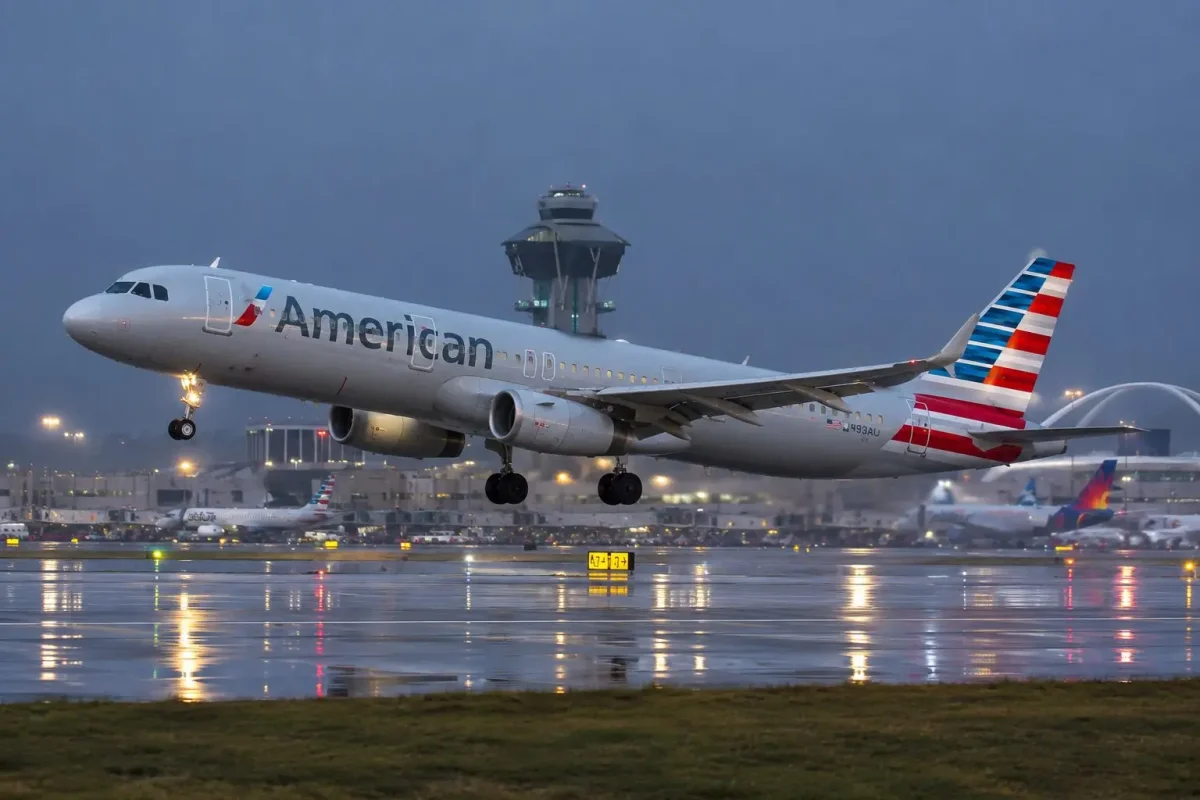
American Airlines Group (NASDAQ:AAL) saw its shares decline 2.1% to $16.24 during Thursday's trading session, as investors digested a second-quarter earnings report that revealed fuel costs had consumed the vast majority of revenue growth. The stock's movement comes amid a broader market focus on the airline's ability to manage rising operating expenses.
Fuel Costs Outpace Revenue Gains
In the second quarter, American's fuel expenses surged by $2.218 billion year-over-year, while operating revenue increased by $2.343 billion. This means the rise in fuel costs accounted for 94.7% of the total revenue increase, leaving little room for profit expansion. Despite record sales, net income plummeted 88.2% to $71 million, and the adjusted pretax margin contracted sharply to approximately 0.9% from 6.0% a year earlier.
The company's financials for Q2 2026 showed operating revenue of $16.735 billion, up 16.3% from $14.392 billion in the same period last year. Fuel costs jumped 83.3% to $4.881 billion, representing 29.2% of revenue compared to 18.5% previously. These figures were calculated by reporters using unaudited data from the company.
Analyst Sentiment and Price Targets
Wells Fargo (NYSE:WFC) analyst Christian Wetherbee maintained a Hold rating on American Airlines with a price target of $17, implying a potential upside of just 4.7% from the current share price. This target falls below the average analyst target of $19.79. Among 14 analysts covering the stock, eight have a Buy rating, five a Hold, and one a Sell. Other notable recommendations include UBS (NYSE:UBS) with a Buy and $18 target, and Morgan Stanley (NYSE:MS) with a Buy and $24 target, suggesting a 47.8% upside.
Industry and Market Context
The broader airline sector also faced pressure on Thursday. Delta Air Lines (NYSE:DAL) outperformed peers with a modest 0.2% decline, while Southwest Airlines (NYSE:LUV) posted the steepest loss, falling 2.9%. United Airlines (NASDAQ:UAL) slipped 1.4%, and the U.S. Global Jets ETF (NYSEARCA:JETS) declined 1.9%. Energy markets added to investor caution, with Brent crude climbing $3.09 to $82.54 per barrel and U.S. crude rising $2.49 to $77.71, amid reports that an Iranian committee was considering proposals on Hormuz shipping limits.
Earnings Outlook and Fuel Sensitivity
American Airlines projects full-year adjusted EPS between a loss of $0.65 and a gain of $0.65, a downward revision from its earlier guidance of a $0.40 loss to $1.10 profit. For the third quarter, the company expects an adjusted loss ranging from $0.70 to $0.10 per share, contrasting with analyst consensus of a $0.28 profit. The airline also forecasts Q3 revenue growth of 16% to 19% and an average fuel price of approximately $3.75 per gallon, compared to the August 3 spot price of $3.506 per gallon.
Chief Financial Officer Devon May told Reuters that the fuel recovery rate was "obviously not 100%," and the company's fuel expense projections for the remainder of 2026 have increased by nearly $1.6 billion since early July. American notes that every one-cent rise in fuel costs results in an additional $46 million in annual expenses.
Sustainable Fuel Initiative
In a separate development, Infinium announced that American Airlines used its eSAF (electro-sustainable aviation fuel) on a passenger flight from Corpus Christi to Dallas/Fort Worth, marking the first U.S. commercial-airport supply of SAF produced without biobased feedstocks. The mixed fuel complied with Jet A standards. Project Roadrunner is expected to produce over 5 million gallons annually starting in 2027, though the contracted volume and pricing for American have not been disclosed. CEO Robert Isom stated, "Scaling SAF production at lower prices is essential."
Risks and Outlook
Key risks include a broader disruption in the Strait of Hormuz, which could drive jet fuel prices higher before fare increases can offset costs, and weaker demand that may hinder American's ability to pass on expenses. The economics of eSAF remain unclear pending volume and pricing details. For now, the immediate challenge is converting the 16% to 19% revenue growth in the third quarter into improved margins. A slight shift in fuel prices could quickly erode the stock's perceived gains.