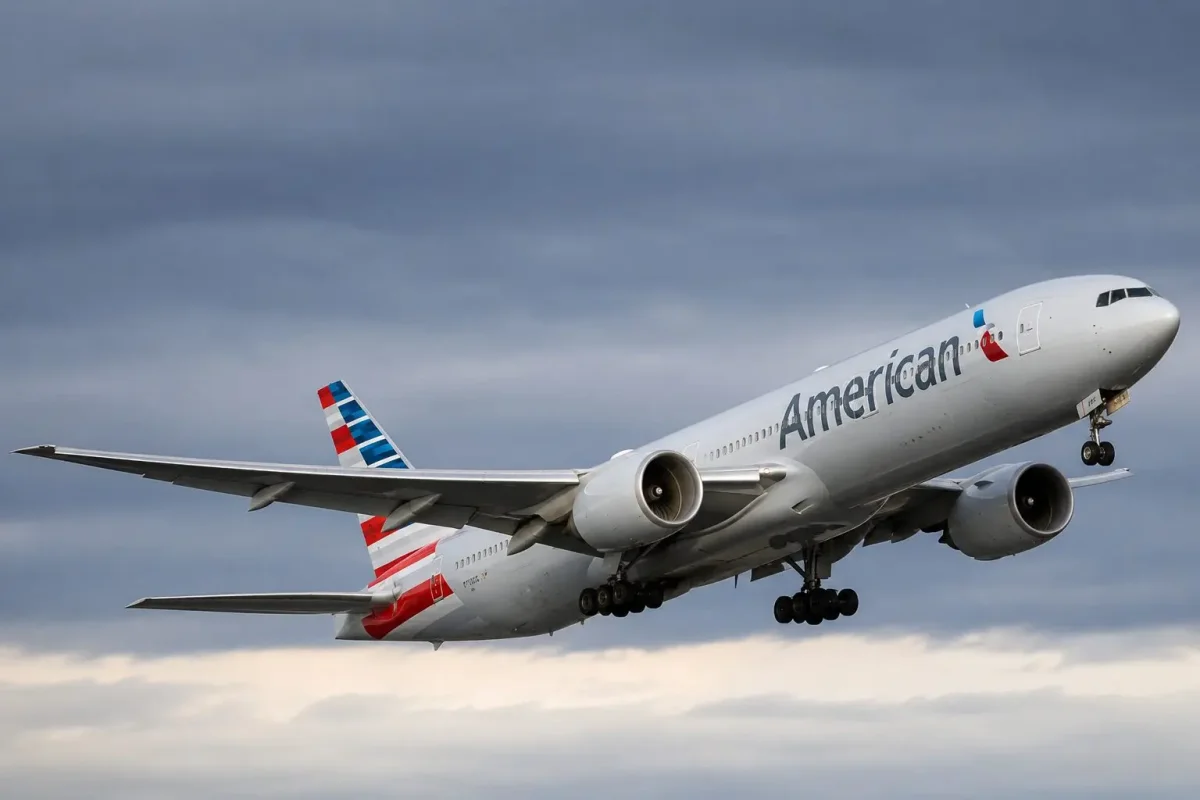
American Airlines Group (NASDAQ:AAL) shares traded above the consensus Wall Street price target in pre-market action Tuesday, reaching $17.92, a 6% premium to the average 12-month analyst estimate of $16.90. The move comes as Brent crude oil prices slipped to near pre-conflict levels, providing a significant cost relief for the unhedged carrier.
The stock's advance reflects a broader market reassessment of airline valuations amid declining fuel expenses. For American Airlines, each $1 change in jet fuel per gallon translates to roughly $4.5 billion in annual operating costs, according to company filings. With jet fuel prices dropping from over $170 per barrel to an average of $119.17 in mid-June, the annualized swing could exceed $5.4 billion, based on Reuters calculations.
Fuel sensitivity and valuation
American Airlines does not hedge fuel costs, as noted in its first-quarter 10-Q filing. The company stated that each one-cent increase in jet fuel per gallon would add approximately $45 million to its annual fuel bill in 2026. With a barrel containing 42 gallons, the recent decline of more than $50 per barrel represents a potential $1.21 per gallon savings, translating to over $5.4 billion on an annualized basis if sustained.
Analysts caution that airline profits may not immediately reflect these savings, as tickets were sold before the fuel drop. “Airline profits can shift since tickets were sold before the fuel drop,” said Morningstar’s Nicolas Owens. Cerity Partners’ Michael Ashley Schulman added that falling oil is “part of the story.”
Price target landscape
Among 15 analysts covering American Airlines, the consensus splits evenly with seven buy ratings, seven holds, and one sell. The highest target stands at $24.00, while the lowest is $10.00. Recent upgrades include Citigroup raising its target to $22 from $14, Barclays to $19 from $16, and Jefferies to $16 from $15.
The stock trades near its 52-week high of $18.05, set just Monday, and is less than 1% below that level. At $17.92, the price-to-sales ratio is 0.22 on annual revenue of $54.63 billion. However, the trailing P/E of 57.8 reflects slim earnings, a contrast to Delta Air Lines (NYSE:DAL) at 13.6 and United Airlines (NASDAQ:UAL) at 12.1.
Market context and outlook
Brent crude for August delivery slipped 1% to $72.40 a barrel early Tuesday, more than 20% below last month’s close, while WTI traded at $70.18. Tim Waterer at KCM Trade described the market as “cautiously hopeful but still hedging its bets.” Neil Crosby at Sparta Commodities noted traders are not yet counting on a significant rebound in Chinese demand.
Higher airfares are providing a buffer. U.S. domestic airfares rose 4.7% in the first quarter to $428 on an inflation-adjusted basis, according to the Bureau of Transportation Statistics. American Airlines posted record first-quarter revenue of $13.9 billion but reported a GAAP net loss of $382 million. Total debt stood at $34.7 billion. The company guided second-quarter adjusted EPS in a range from a 20-cent loss to a 20-cent gain, with full-year earnings expected to be roughly flat compared to 2025, even with over $4 billion in additional fuel costs.
CEO Robert Isom stated, “Demand for our product is growing,” as the carrier navigates a complex fuel environment. With the stock now above the average analyst target, the focus shifts to whether earnings can catch up to support further multiple expansion.