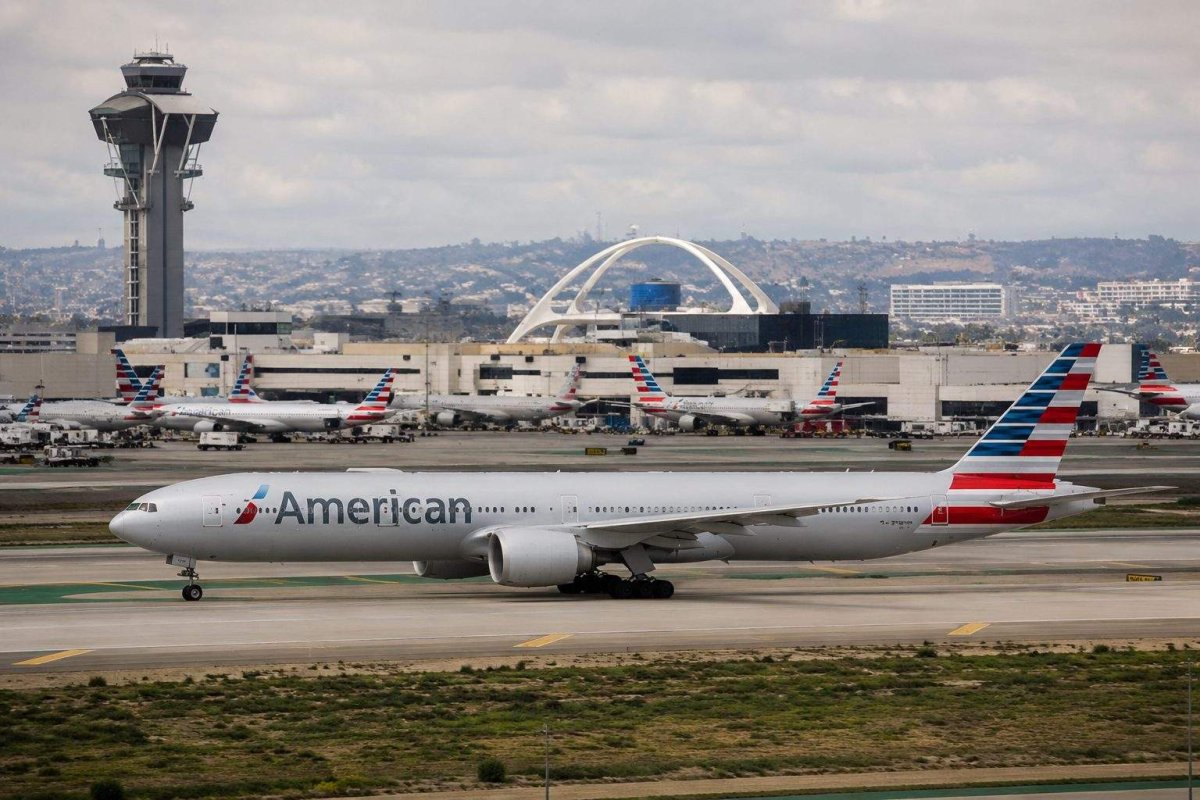
An American Eagle regional jet bound for Kansas City International Airport (MCI) was evacuated on the tarmac Friday afternoon after reports of smoke or an unusual odor in the passenger cabin. The Bombardier CRJ-900, operated by PSA Airlines and carrying 76 passengers and four crew members, landed safely around 3:35 p.m. local time before the evacuation was ordered.
Emergency Response and Evacuation
According to the Federal Aviation Administration (FAA), the crew of Flight 5318 reported smoke in the cabin immediately after landing. The aircraft, which originated from Ronald Reagan Washington National Airport (DCA), came to a stop on a taxiway, prompting the captain to order an evacuation. Airport fire and rescue teams responded swiftly, and the airfield was closed for approximately 15 minutes as passengers were assisted to safety.
All individuals exited without injury, and passengers were transported by bus to the terminal. American Airlines issued a statement expressing regret for the inconvenience and emphasizing that safety remains the company's top priority.
Passenger Accounts and Congressional Presence
Among those aboard was U.S. Representative Tracey Mann (R-KS), who posted on social media from the tarmac thanking first responders, pilots, and airport staff for a safe evacuation. Passengers described the incident as tense but orderly. Gary Wolfe told local outlet KMBC that the plane landed normally before suddenly stopping, followed by the captain's evacuation order. Brittany Wilkerson recounted the uncertainty as passengers weighed whether to jump or stay near the aircraft, fearing a potential fire.
Investigation and Safety Context
The Kansas City Fire Department reported that crews were unable to locate the source of the smoke or odor. The FAA has launched an investigation, noting that details remain preliminary. The incident coincides with renewed scrutiny of in-flight smoke events. Earlier this week, the National Transportation Safety Board (NTSB) urged airlines to enhance pilot training for smoke-related emergencies, following a 2023 Southwest Airlines flight that filled with smoke after a bird strike.
Aviation safety expert and former United Airlines pilot Steve Arroyo told the Associated Press that smoke in the cockpit is a critical, time-sensitive emergency, and that realistic training builds essential muscle memory. The NTSB has indicated that the FAA receives near-daily reports of in-flight smoke emergencies, though Friday's event involved cabin smoke specifically.
Market and Regulatory Implications
The incident raises potential operational and regulatory questions for American Airlines (AAL) and PSA Airlines. If investigators identify a mechanical, electrical, or air-system cause, the airline and regulators could face renewed scrutiny over maintenance practices. Conversely, if no source is found, the event may remain an isolated but well-handled emergency. The broader airline sector, including competitors like Southwest Airlines (LUV) and Delta Air Lines (DAL), may also see increased attention on smoke-related safety protocols.
As of now, no injuries were reported, and the primary focus remains on determining the cause. The FAA's investigation will be closely watched by industry stakeholders and safety advocates alike.