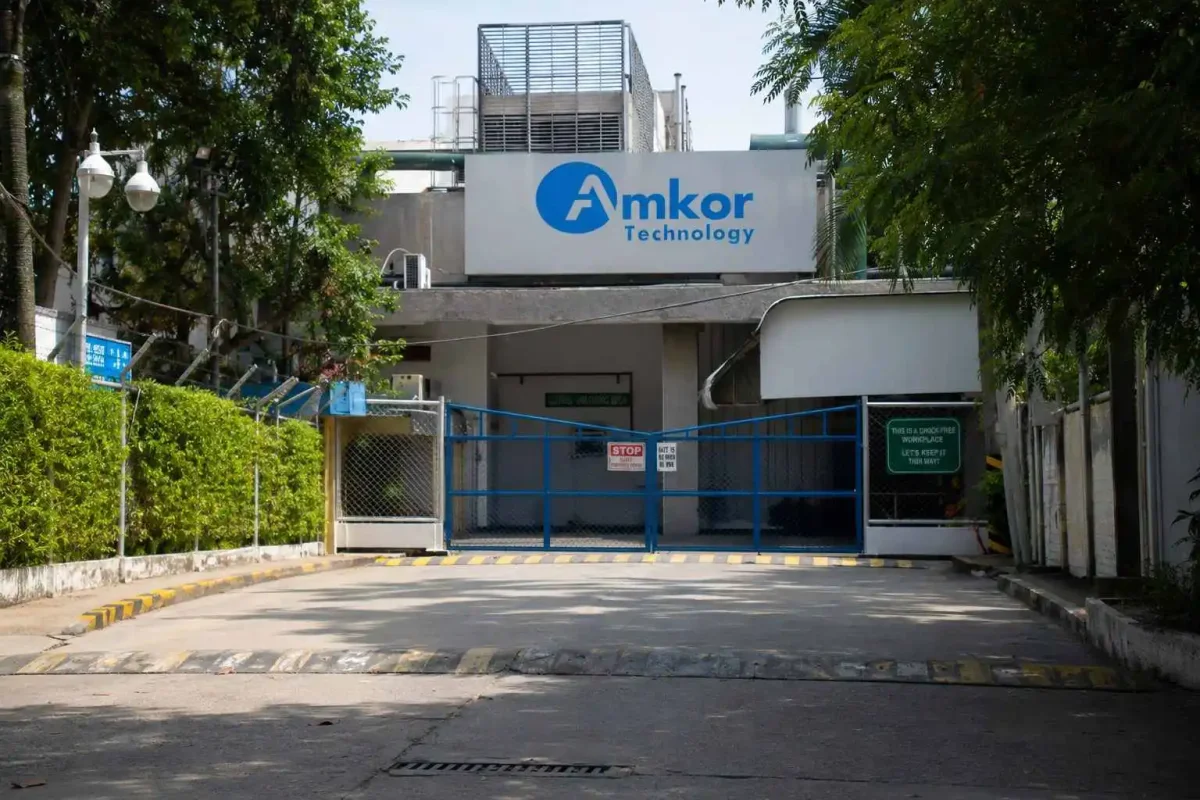
Amkor Technology (NASDAQ:AMKR) delivered a second-quarter performance that topped Wall Street estimates, yet its stock declined sharply on Monday after the company provided a third-quarter revenue outlook that fell short of analyst consensus. The mixed results highlighted the tension between improving operational efficiency and near-term demand uncertainties.
Strong Q2 Results
For the quarter ended June 30, Amkor reported revenue of $1.898 billion, surpassing the FactSet consensus of $1.813 billion by approximately 4.7%. Earnings per share (EPS) came in at $0.70, exceeding the $0.48 estimate by a remarkable 46%. The robust bottom-line performance was driven by a significant expansion in gross margin, which widened by 480 basis points year-over-year to 16.8%. Operating income more than doubled to $200 million, reflecting improved fixed-cost absorption and a favorable shift in product mix. Materials costs declined 30 basis points as a percentage of sales, while combined labor, depreciation, and other manufacturing expenses fell 450 basis points.
Q3 Guidance Disappoints
However, the company's outlook for the third quarter tempered investor enthusiasm. Amkor projects revenue in the range of $1.95 billion to $2.05 billion, with a midpoint of $2.00 billion. That is 4.8% below the FactSet consensus of $2.10 billion. On a more positive note, the company's EPS guidance midpoint of $0.77 is 22% above the $0.63 estimate. Gross profit is expected to reach $380 million, up 19.3% sequentially, with gross margin improving to 19.0%.
Market Reaction
Shares of Amkor fell 6.5% during Monday's regular trading session to close at $60.71, underperforming the Nasdaq Composite, which slipped only 0.18%. The stock continued to decline in after-hours trading, sliding approximately 3.5% to around $58.60. The sell-off reflected investor disappointment over the revenue shortfall, despite the earnings beat and margin improvements.
Key Drivers and Segment Performance
Advanced products accounted for $1.557 billion, or 82% of total sales. The communications segment remained the largest contributor at 42% of revenue, followed by computing and automotive-industrial, each representing 22%. Chief Executive Kevin Engel highlighted "record second-quarter revenue and strong profitability," noting record sales in both computing and automotive-industrial segments.
Customer concentration decreased year-over-year, with the top 10 customers representing 66% of sales, down from 72% a year earlier. Nevertheless, the company remains heavily dependent on a few key clients.
Nvidia Contract and Financial Position
Last week, Amkor secured a multi-year agreement with Nvidia Corporation (NASDAQ:NVDA) valued at $1.5 billion. The deal includes an undisclosed prepayment aimed at expanding U.S. capacity. Following the announcement, Amkor shares surged 17% in after-hours trading, but the premium had dissipated by Monday's close. The third-quarter guidance suggests the contract will contribute revenue over multiple periods, though the company has not yet disclosed the production schedule.
On the financial front, Amkor generated $382 million in operating cash flow during the first half of the year, while capital expenditures totaled $688 million. Long-term debt rose to $2.335 billion from $1.283 billion at year-end, and cash and short-term investments stood at approximately $2.5 billion, nearly matching total debt.
Outlook and Risks
Amkor expects full-year 2026 capital expenditures between $2.5 billion and $3.0 billion, underscoring the capital-intensive nature of its business. The company faces risks related to execution and capacity utilization; if demand softens, costly production capacity could become underutilized. Investors will be watching Apple Inc. (NASDAQ:AAPL) earnings on Thursday for clues on smartphone demand, given that communications make up 42% of Amkor's sales.
The stock's near-term direction may hinge on margin performance. Achieving the 19% gross margin target in the third quarter would validate the current operating leverage story, while any shortfall could reignite concerns about the capital cycle.