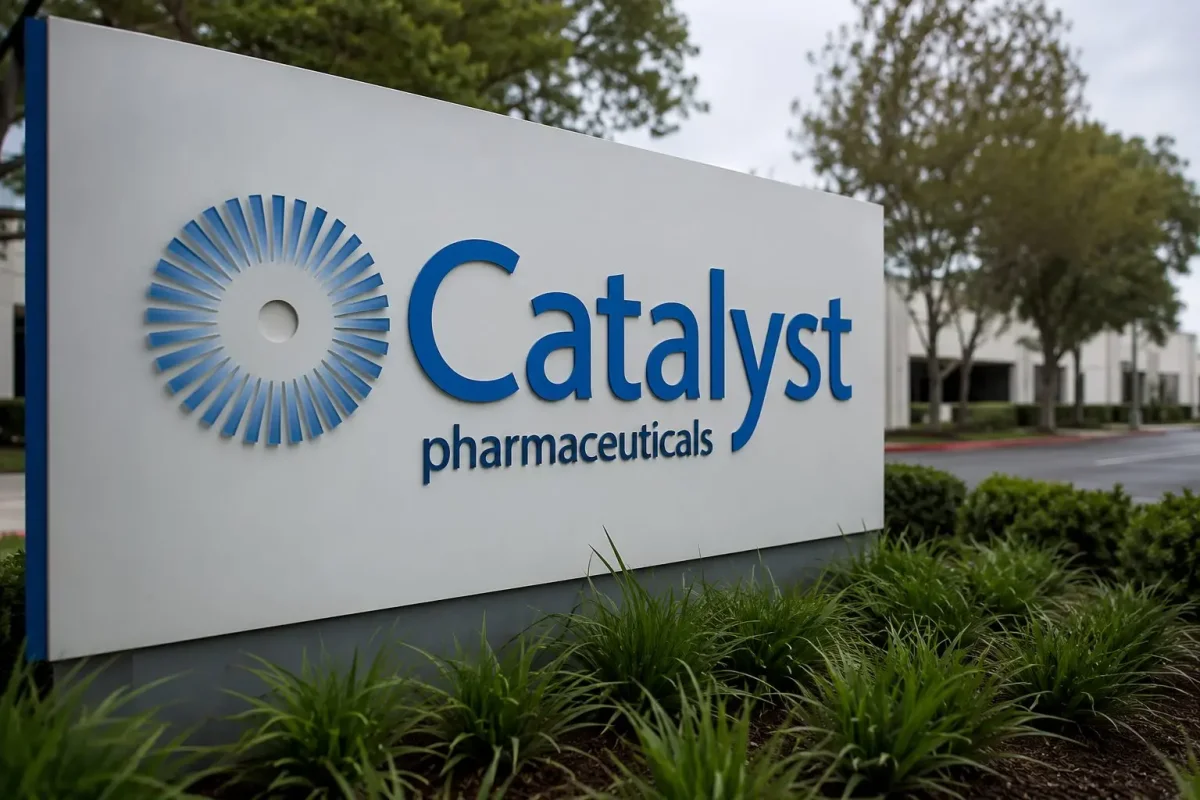
Angelini Pharma has successfully finalized its $4.1 billion acquisition of Catalyst Pharmaceuticals (NASDAQ:CPRX), taking the rare-disease drugmaker private. The deal, which closed before the U.S. market opened on Wednesday, July 15, 2026, provides Catalyst shareholders with $31.50 per share in cash.
The headline purchase price overstates the true cost of the transaction. After stripping out Catalyst's estimated net cash of $861 million as of June 30, 2026, the implied enterprise value stands at approximately $3.24 billion. This equates to roughly 9.0 times the company's projected 2026 adjusted EBITDA, a key measure of operating profitability.
Catalyst shares had already priced in the outcome ahead of the announcement, closing at $31.49 on Tuesday, just one cent below the buyout price. Trading was halted after the after-hours move, and shares are expected to be suspended from trading on Thursday. Former holders will not retain any stake in Catalyst's projected internal growth.
The financing structure of the deal makes the cash adjustment significant when comparing this transaction to other pharmaceutical takeovers. According to Catalyst's proxy statement, Angelini has the flexibility to use both its own financing proceeds and the cash held by Catalyst at closing. The $861 million net cash estimate, which includes projected second-quarter free cash flow, is a management estimate and not a final closing figure.
The financial breakdown of the deal is as follows: the announced equity value of $4.100 billion represents 11.4 times expected 2026 adjusted EBITDA. After subtracting the estimated net cash of $861 million (21% of equity value), the implied operating value of $3.239 billion translates to 5.1 times 2026 revenue and 9.0 times 2026 adjusted EBITDA. Looking ahead to 2027, the same operating value equates to 4.5 times revenue and 7.0 times adjusted EBITDA.
Catalyst's latest quarterly results provide insight into the profit multiples. While overall product sales grew only 5.6%, revenue from the key drugs Firdapse and Agamree surged 28.2% to $135.6 million. However, Fycompa sales plummeted 61.3% following the loss of exclusivity for the epilepsy drug. Operating income rose 15.6%, and the royalty rate on U.S. Firdapse sales decreased to 6% from a peak of 18.5%, boosting the unit's cash generation capacity.
Catalyst's board based its decision on a merger scenario projecting $635 million in revenue and $359 million in adjusted EBITDA (after stock compensation) for 2026. Management's forecast envisioned revenue reaching $983 million by 2030, driven primarily by Firdapse and Agamree. Notably, the board did not risk-adjust these projections. The forecast model shows Firdapse contributing about 72% of 2026 revenue, with Agamree at 23%. Annual revenue growth is expected to be around 11.5% through 2030, with adjusted EBITDA margins improving from 57% to 71%. Fycompa is projected to decline to just $14 million, underscoring that the deal's value rests largely on two franchises.
J.P. Morgan Securities, part of JPMorgan Chase & Co. (NYSE:JPM), valued Catalyst using a discounted cash flow analysis at $29 to $33.50 per share. The agreed price of $31.50 sits just 25 cents above the midpoint. The proxy statement also listed seven analyst targets with a median of $35, about 11% higher than the deal price, indicating the sale landed above J.P. Morgan's mid-range but below broader analyst expectations.
At the deal's announcement in May, Catalyst CEO Rich Daly described the transaction as offering “immediate and certain cash value” for shareholders. Angelini CEO Sergio Marullo di Condojanni stated that acquiring Catalyst would help the Italian group become a “relevant global player in neurological rare diseases.” The acquisition also provides Angelini with a high-margin U.S. cash flow stream to fuel its expansion plans.
However, the outlook is not without risks. Management had already revised down its March forecast from December projections, citing weaker Firdapse uptake, potential new Medicare rebates, increased generic competition, and the risk that the SUMMIT trial for Agamree might not support a broader label. The same model predicts Firdapse sales will decline 51% by 2035, with total revenue falling 34% that year. The purchase price multiple of 9.0 times could also shift depending on the final cash position at closing.