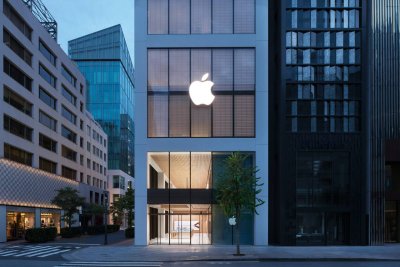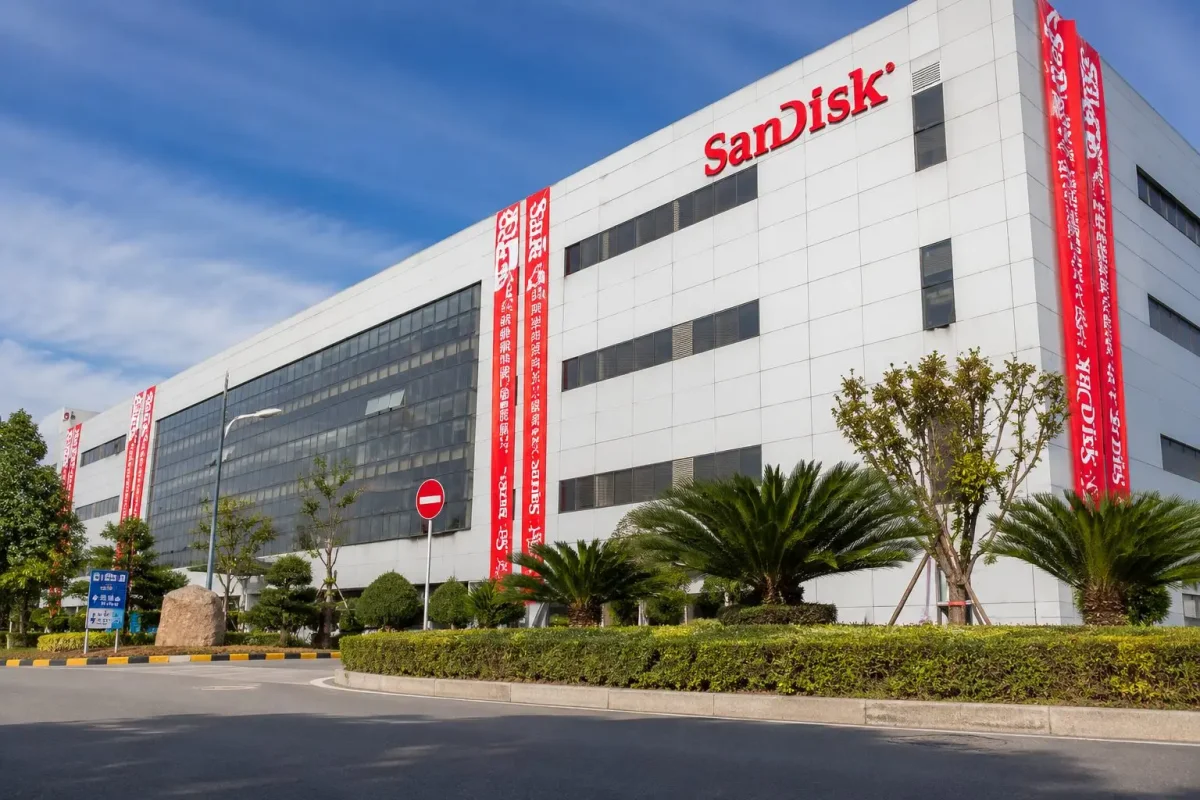
Sandisk Corporation (NASDAQ: SNDK) saw its shares climb sharply in premarket trading on Monday, rising 3.62% to $2,263.89, following a statement from Apple CEO Tim Cook that memory price increases are now unavoidable. The move, which adds to a prior session gain of 11.54%, reflects a sector-wide repricing triggered by Cook's comments rather than any new announcement from Sandisk itself.
Apple's Warning Exposes NAND Pricing Power
In an interview with the Wall Street Journal, Cook acknowledged that the pricing environment for memory components has become unsustainable, effectively confirming that higher costs are being passed through to one of the world's largest hardware buyers. This buyer-side validation is exactly what memory bulls have been waiting for: concrete evidence that NAND suppliers hold significant pricing leverage. Gene Munster noted that the "price hike conversation" is driving chip stocks higher, as investors interpret Cook's comments as a signal that component cost increases are no longer hidden in supplier presentations.
Valuation Reframed: Trailing vs. Forward Earnings
At the premarket price, Sandisk trades at a trailing price-to-earnings ratio of approximately 75.95x based on the last twelve months' earnings per share of $28.77. However, when measured against the company's guided Q4 non-GAAP EPS midpoint of $31.50—which annualizes to $126—the forward P/E drops to roughly 18.0x. This dramatic compression highlights the central question for investors: is the current earnings run-rate sustainable, or does it represent a cyclical peak?
Sandisk's Recent Results Support the Bull Case
Sandisk's April quarter results revealed revenue of $5.95 billion, up 97% sequentially, with GAAP net income of $3.615 billion and non-GAAP diluted EPS of $23.41. Datacenter revenue alone surged to $1.467 billion, a 233% sequential increase, driven by higher pricing and demand for high-capacity storage. CEO David Goeckeler described the period as a "fundamental inflection point," emphasizing "structurally higher and more durable earnings power."
Supply Constraints Underpin the Rally
Industry data from TrendForce indicates that major NAND suppliers are prioritizing high-bandwidth memory (HBM) and advanced-layer 3D NAND, which is squeezing supply for mature-node products. Cumulative first-half contract prices for NOR Flash and SLC NAND have risen more than 100%, with no significant capacity expansion expected in the second half. This tight supply-demand dynamic explains why a single comment from Apple can move a NAND-heavy name like Sandisk so sharply.
Street Analysts See Further Upside
Mizuho's Jordan Klein noted that memory costs have increased 80% to 90% since the end of 2025, and that investors may still "under-appreciate demand and pricing trends into '27/'28." For retail traders, Sandisk is no longer just a post-spin storage stock; it is trading as a proxy for scarce manufacturing capacity.
Technical and Fundamental Risks Remain
From a technical perspective, if Sandisk loses the $2,029.00 level—the prior session's low—the Apple-driven breakout could lose momentum. A fall back through the prior week's close of $1,980.10 would suggest the move has failed. Fundamentally, NAND remains a cyclical market, and Sandisk's own filings highlight exposure to pricing trends, demand swings, and manufacturing commitments. Any sign of demand elasticity or contract-price fatigue would hit a stock now priced for durability.
What to Watch Next
The next major catalyst is Micron's fiscal Q3 report on June 24. Traders will look for confirmation that memory pricing, AI storage demand, and customer pass-through are still tightening rather than peaking. If Micron validates the same cycle, Apple's comment may be remembered as the moment the memory trade went mainstream.
Disclaimer: This article is for informational purposes only and does not constitute investment advice. Investors should conduct their own research before making any investment decisions.