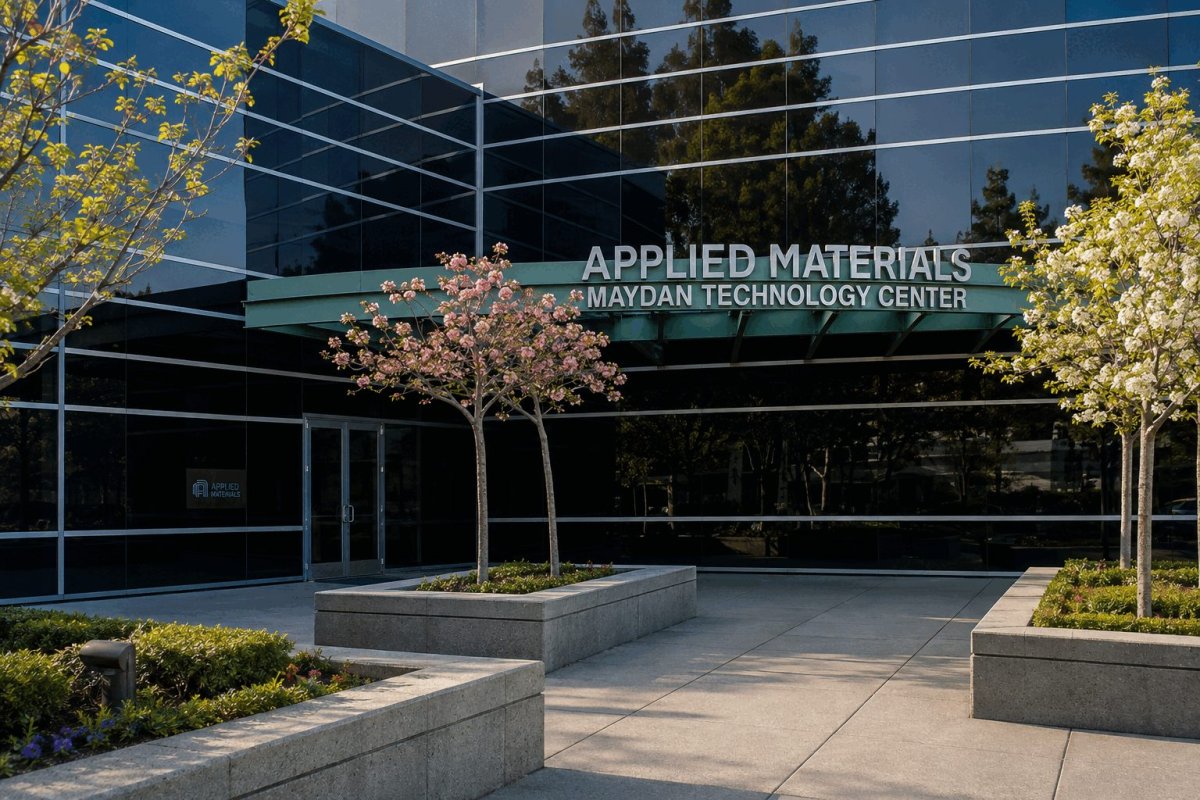
Applied Materials (NASDAQ:AMAT) delivered a fiscal third-quarter earnings beat and issued a fourth-quarter revenue forecast that surpasses analyst expectations, yet the market responded with a sell-off, highlighting the high bar set by AI-driven optimism.
On Thursday, the semiconductor equipment maker projected fiscal Q4 revenue in the range of $9.75 billion to $10.75 billion, with a midpoint of $10.25 billion. That midpoint is 7.4% above the LSEG consensus of $9.54 billion, and even the low end of the range exceeds the consensus by $210 million, or 2.2%. The upper end implies a 12.7% potential gain over the consensus figure.
Market Reaction: A Case of 'Buy the Rumor, Sell the News'?
Despite the strong guidance, shares of Applied Materials dropped nearly 3% in after-hours trading to $519.70, following a 2.5% decline during the regular session. The stock had nearly doubled over the course of 2026, and investors may be questioning whether the AI-driven equipment cycle can sustain its momentum.
Options pricing ahead of the report suggested a potential swing of about 7% in either direction, so the early drop was less severe than feared, but the negative sentiment was notable. The company's solid earnings beat—adjusted EPS of $3.50 on revenue of $9.12 billion, versus FactSet expectations of $3.40 and $9.00 billion—was not enough to lift the stock.
Guidance Highlights and Growth Trajectory
The Q4 guidance midpoint indicates a sequential revenue increase of 12.4% from the just-reported quarter, and a 50.7% jump from the $6.80 billion posted in the same period last year. The company also guided to adjusted earnings of $4.02 per share, which is 8.4% above the FactSet consensus of $3.71.
This growth is part of a broader upward trend. The company's revenue has climbed from $7.30 billion in fiscal Q3 2025 to $7.91 billion in Q2 2026 (a sequential gain of 8.4%), and then to $9.12 billion in Q3 2026 (up 15.3% sequentially). The projected Q4 midpoint of $10.25 billion would represent another 12.4% sequential increase.
AI Demand and Industry Tailwinds
Management had signaled this acceleration earlier. In May, CFO Brice Hill noted that AI growth was “now in full force,” prompting the company to expand its build schedules, inventory, and logistics capabilities. The demand is not just a one-quarter phenomenon; industry association SEMI forecasts semiconductor equipment sales to rise 9% in 2026 and 7.3% in 2027, driven by the need for advanced logic, memory, and packaging processes in AI accelerators.
Applied Materials also increased its quarterly dividend by 15% in May, returning $765 million to shareholders in dividends and buybacks during fiscal Q2. However, the company's valuation is increasingly tied to the durability of the equipment cycle.
Analyst Sentiment and Risks
Wall Street remains largely bullish. According to Visible Alpha, 10 of 12 analysts tracked before the report had buy ratings, with an average price target of $689, implying more than 30% upside. Recent actions include UBS (Buy, $705), Needham (Buy, $740), TD Cowen (Buy, $700), and Mizuho (Outperform, $650), while Morgan Stanley holds an Equal Weight rating with a $647 target.
Nevertheless, risks persist. A temporary slowdown in AI investment as customers digest existing capacity could dampen orders. Additionally, export controls, tariffs, and the concentration of large orders could affect revenue timing. The company's wide guidance range of $1 billion underscores the uncertainty around customer delivery schedules.
In summary, Applied Materials' outlook points to exceptionally high demand, but the market's muted reaction suggests that investors now expect such performance as the baseline. The question is whether the AI-driven supercycle can continue to exceed those rising expectations.