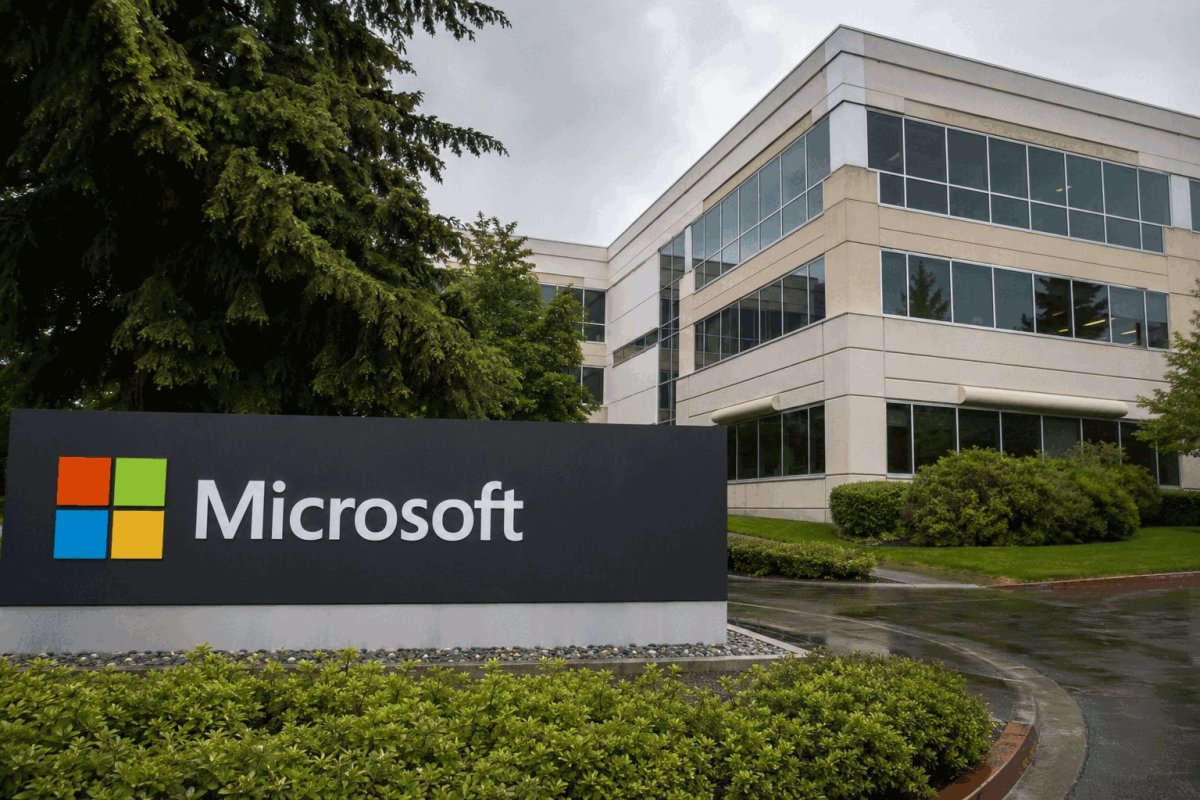
Microsoft Corporation (NASDAQ:MSFT) experienced a sharp decline on Monday, August 17, 2026, with shares falling 3.04% to close at $480.35. This drop erased an estimated $111.8 billion in market capitalization, a figure that represents 96.4% of the company's fiscal 2026 capital spending on property and equipment. The selloff occurred amid a broader rotation in the technology sector, as investors favored AI hardware over software companies.
The trading session saw Microsoft's stock range between $478.41 and $492.66, closing near the low end of that range. Volume was notably light, with approximately 28.25 million shares changing hands, 25.2% below the 20-session average of 37.75 million. This suggests the decline was driven by positioning rather than panic selling.
The broader market showed relative resilience, with the Dow Jones Industrial Average falling 0.51% and the Nasdaq Composite declining 0.31%. Microsoft's $15.05 drop contributed approximately 89 points to the Dow's decline, accounting for about one-third of the index's total loss.
Software vs. Hardware: A Sector Divide
The selloff was not uniform across technology. Software peers such as ServiceNow (NYSE:NOW), Adobe (NASDAQ:ADBE), and Oracle (NYSE:ORCL) all declined, while semiconductor stocks like Micron Technology (NASDAQ:MU) and Applied Materials (NASDAQ:AMAT) rallied. This divergence highlights a growing investor preference for companies directly benefiting from AI infrastructure spending.
- ServiceNow: -5.08%
- Adobe: -3.78%
- Microsoft: -3.04%
- Oracle: -2.57%
- Micron: +4.13%
- Applied Materials: +5.55%
Strong Fundamentals, But Cash Flow Pressure
Despite the market's reaction, Microsoft's operating performance remains robust. In the June quarter, revenue grew 18% year-over-year to $90.0 billion, with operating income also up 18% to $40.6 billion. Azure revenue surged 43%, and commercial backlog expanded 84% to $678 billion. CEO Satya Nadella highlighted that Azure surpassed $100 billion in annual revenue for the first time, and Microsoft 365 Copilot reached over 30 million paid seats.
However, the company's cash flow story is more complex. While operating cash flow grew 34.4% to $182.94 billion in fiscal 2026, capital spending jumped 79.6% to $115.95 billion, leaving estimated free cash flow down 6.5% at $66.99 billion. The capital spending-to-operating cash flow ratio rose to 63.4% from 47.4% a year earlier, underscoring the heavy investment burden.
Analyst Views and Market Outlook
Some investors remain optimistic. Richard Clode of Janus Henderson told Reuters that "today's capex is tomorrow's sales," expecting hyperscaler profits to eventually outpace spending. On the other hand, an ECB blog warned of a likely correction in elevated U.S. tech valuations, though timing was uncertain.
Wall Street's consensus price target for Microsoft stands at $555.77, implying 15.7% upside from Monday's close. Targets range from $515 (BMO Capital) to $650 (Wells Fargo), reflecting varied views on AI-driven growth.
Microsoft shares have fallen 5.1% since August 10, despite post-earnings strength. Investors will watch the $478.41 low as a key support level, with a recovery above $492.66 potentially signaling a reversal. The ongoing rotation between software and hardware stocks will be critical in determining near-term direction.