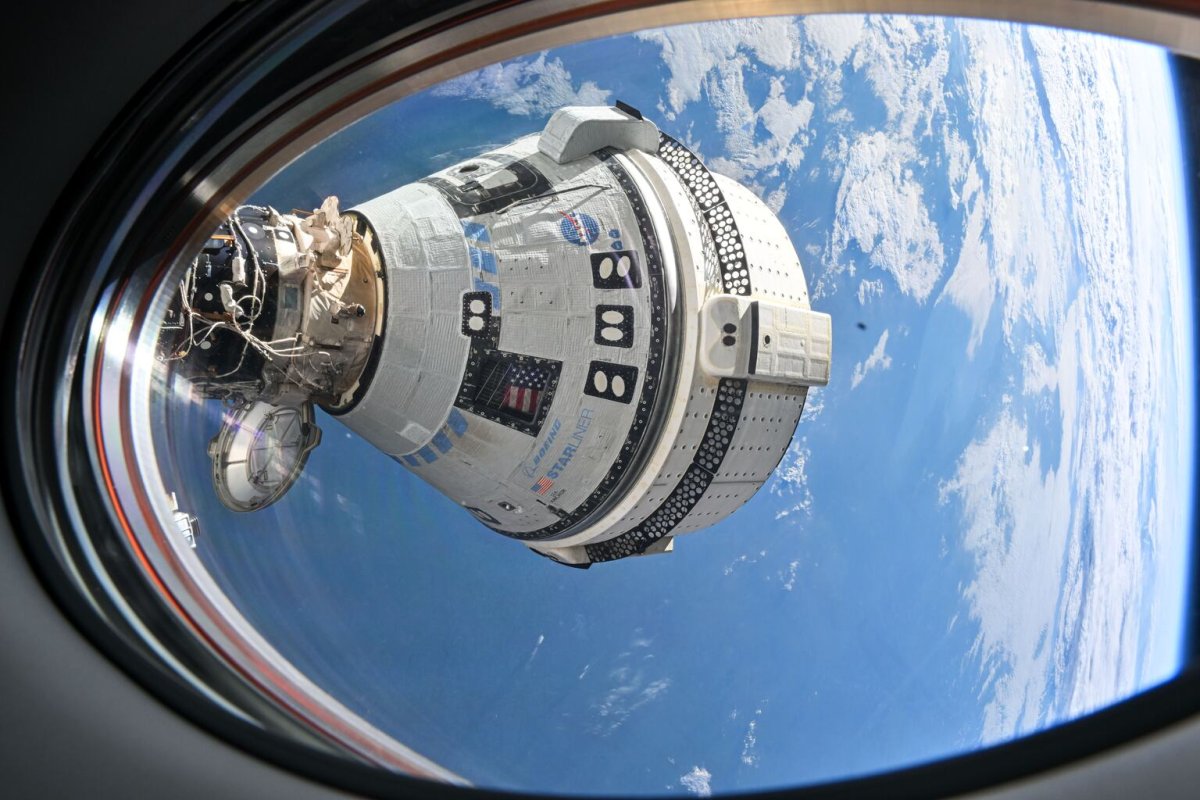
NASA has set its sights on a December 2026 or January 2027 launch window for the next Starliner mission, designated Starliner-1. This uncrewed cargo flight to the International Space Station (ISS) is more than a routine resupply run; it serves as a critical engineering evaluation of thermal and propulsion system modifications. The agency is using this mission to gather essential data that will inform a later, more comprehensive redesign of the service module's thruster valves.
A Deliberate Sequence: Testing Before Redesign
The mission's timing is strategic: Starliner-1 will fly before the planned service-module thruster-poppet redesign is complete. NASA expects the uncrewed flight to provide the performance data needed for that future modification and for the eventual human-rating certification. A crewed Starliner-2 mission is now targeted for 2028, contingent on successful certification milestones.
What the Uncrewed Flight Must Prove
The central challenge involves heat buildup around the service module's reaction-control thrusters. During the 2024 Crew Flight Test, five of these thrusters malfunctioned as the spacecraft approached the ISS. Investigators traced the issue to a combination of the local thermal environment and valve design. Repeated short firings can trap heat in the thruster enclosures, causing a Teflon poppet seal inside a propellant valve to deform. This distortion restricts oxidizer flow, reducing thrust during critical maneuvers. While Starliner managed to dock in 2024, that incident highlighted the need for robust fixes.
Boeing has already modified the service module's thermal configuration for Starliner-1. Flight controllers will run targeted propulsion demonstrations and enforce tighter operating limits near the station. This controlled approach aims to replicate demanding conditions without risking a crew.
Starliner Certification Checkpoints
- Flight: Uncrewed ISS cargo mission; target December 2026 or January 2027
- Thermal Change: Service-module modifications tested in orbit
- Valve Poppets: Full redesign follows flight; mission supplies performance data
- Crew RCS: Twelve valve replacements plus corrosion controls
- Telemetry: Faster chamber-pressure sampling for service-module thrusters
- Crew Return: Starliner-2 planned for 2028, subject to certification
- Launcher: Atlas V first; Vulcan human-rating supports later flights
Sources: NASA, Boeing’s mission update, and United Launch Alliance. Dates are targets, not launch commitments.
Data Plan: The Key to Validation
The data collection strategy is as crucial as the hardware changes. Boeing will sample service-module thruster chamber pressure more frequently, allowing engineers to observe how performance degrades during a firing sequence. This real-time data can be compared with ground models to establish safer operational margins. The propulsion layout makes this comparison particularly important: the service module houses 28 RCS thrusters (each rated at 85 pounds-force) and 20 larger engines for orbital maneuvers. The crew module has 12 separate RCS thrusters for flight after separation. A clean mission must differentiate hardware behavior from software commands and thermal effects.
The Failure Chain Behind the Test
The 2024 problems were not isolated to a single component. Starliner developed helium leaks before launch, lost five service-module thrusters during rendezvous, and a separate crew-module thruster failed during uncrewed descent, removing redundancy in a critical system. NASA's investigation produced 61 recommendations covering technical and program-management areas, including proof that the poppet-extrusion cause was corrected and formal disposition of remaining propulsion risks.
NASA's Office of Inspector General noted in June that Starliner remained uncertified after three test flights, citing unexpected issues with varying mission risk levels. Flying before the final poppet redesign is a deliberate test strategy, but it complicates interpretation. A successful flight would validate thermal changes and operating limits on the current valve configuration, but it would not directly prove the later hardware design. NASA will need to show that the new valve preserves the observed gains without introducing new failure modes.
A Layered Fix, Not One Replacement Part
The service-module poppet is just one part of the correction plan. Boeing will also replace valves on all 12 crew-module reaction-control thrusters and implement new handling procedures to address corrosion from residual hydrazine and atmospheric exposure. Additional changes cover batteries, parachutes, and flight instrumentation. NASA will provide upgraded batteries, while Boeing will revise a parachute joint. These items underscore that human-rating is a system-level decision, not a pass-fail test of a single valve.
The new mission also differs from a routine cargo run. Boeing's September 28 update states that some mitigations require in-flight demonstration. NASA intends to stress the thrusters and collect qualification data. Cargo gives the flight practical value, but engineering evidence is its decisive output.
Launch Vehicle Dependency
Starliner-1 is expected to use an Atlas V, the capsule's established launcher. Future flights must transition to United Launch Alliance's Vulcan as the Atlas fleet phases out. Vulcan can reach the station's 51.6-degree orbit and has ample mass capability, but human certification requires more than lifting capacity. NASA must assess structural loads, ascent environments, abort interfaces, and crew-safety processes for the integrated rocket and capsule. This work can proceed in parallel with Starliner's own certification, but it remains a critical path item for crewed missions.
As the aerospace community watches, Starliner-1 will be a pivotal test of Boeing's ability to recover from past setbacks and deliver a reliable spacecraft for NASA's commercial crew program.