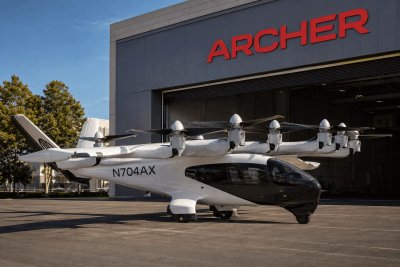
Archer Aviation Inc. saw its shares slip below the $7 mark in premarket trading on Wednesday, following a close at $6.74 the previous session. The stock ended Tuesday down 1.46% on volume of approximately 48.6 million shares, as market participants focused on the company's financial trajectory and regulatory progress.
The electric vertical takeoff and landing (eVTOL) aircraft developer reported first-quarter revenue of just $1.6 million, alongside a net loss of $217.7 million. Adjusted EBITDA, which the company further modifies, came in at negative $172.5 million. Despite these figures, Archer holds $1.78 billion in cash, cash equivalents, and short-term investments, providing a cushion as it navigates the path to commercialization.
CEO Adam Goldstein characterized the quarter as a “banner” period, emphasizing that Archer is “far more than an air taxi company.” The firm aims to launch U.S. passenger service this year under the White House’s eVTOL Integration Pilot Program, with an eye toward the 2028 Los Angeles Olympics. However, the company’s cash burn rate remains a central concern, with second-quarter adjusted EBITDA losses projected between $170 million and $200 million.
Analyst sentiment remains cautiously optimistic. Cantor Fitzgerald reduced its price target on Archer to $11 from $13, while maintaining an Overweight rating. The revised target still implies roughly 75% upside from Tuesday’s closing price of $6.29. The firm pointed to Archer’s plans for initial passenger flights later this year as a key catalyst.
Peer companies in the eVTOL space also faced headwinds. Joby Aviation traded at $11.87, down 0.9%, while Eve Holding slipped 1.2% to $3.38. Broader market conditions were mixed, with U.S. stock futures showing a varied picture amid rising oil prices tied to renewed Middle East tensions.
Archer’s most recent risk disclosure highlighted 46 distinct risks, with finance and corporate risk topping the list. The company still needs to achieve aircraft certification, scale production, meet safety standards, build commercial operations, and secure ongoing funding—all while revenue remains nascent. These factors collectively cloud the near-term outlook.
For investors, the key question is whether Archer can convert regulatory milestones into tangible revenue before its cash reserves dwindle. Delays in certification or higher-than-expected costs could lead to dilution or additional funding needs, pressuring the stock further. Currently, Archer trades as a high-beta bet on regulatory and operational execution rather than a traditional aerospace earnings play.