Archer Aviation (ACHR) saw its stock price drop sharply on Tuesday, declining 7.16% to close at $5.32, following news that ARK Invest had sold a significant number of shares. The stock was indicated at $5.19 in premarket trading on Wednesday, reflecting continued bearish sentiment.
ARK Invest Sale Weighs on Sentiment
The immediate catalyst for the decline was not a corporate announcement from Archer, but rather portfolio rebalancing by ARK Invest. The investment firm, led by Cathie Wood, sold 2,222,392 Archer shares on Monday across three of its exchange-traded funds: ARKK, ARKQ, and ARKX. Based on Archer's closing price of $5.73 on Monday, the sale was valued at approximately $12.72 million. While ARK's trade notifications are labeled as informational and not a recommendation, the market often interprets such high-profile selling as a negative signal.
The reversal was particularly sharp given that Monday had seen a modest rebound, with Archer shares rising 3.43%. However, Tuesday's sell-off more than erased those gains, with 56.5 million shares changing hands. The stock is now trading well below its May 29 close of $6.81, representing a decline of nearly 22% in less than two weeks.
Competitive Landscape Heats Up
Adding to the pressure, competitor Vertical Aerospace announced that its latest full-scale prototype completed a maiden piloted flight in the U.K. on June 5, doubling the company's flight-test capacity ahead of a Critical Design Review. While Vertical's progress does not directly affect Archer's FAA certification timeline, it underscores the competitive dynamics in the electric vertical takeoff and landing (eVTOL) sector. Investors are increasingly focused on which company can achieve certification and operational milestones first.
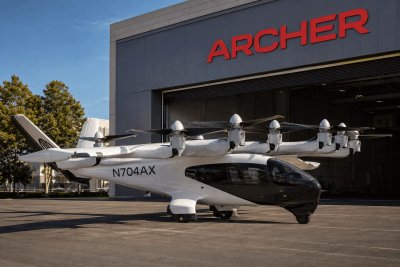
Archer remains a story centered on certification and cash burn rather than conventional revenue. Its Midnight aircraft recently became the first eVTOL to close Phase 3 of the FAA's four-phase Type Certification process, a key step toward regulatory approval. CEO Adam Goldstein has sought to broaden the narrative, highlighting Archer's work in defense and AI software, as well as planned U.S. operations and the LA28 Olympics opportunity.
Financial Pressures Remain
The company's financials explain why the stock is highly sensitive to risk. In the first quarter, Archer reported revenue of just $1.6 million, a net loss of $217.7 million, and an adjusted EBITDA loss of $172.5 million. The company expects a second-quarter adjusted EBITDA loss of $170 million to $200 million. Despite ending March with approximately $1.78 billion in cash and short-term investments, Archer has not generated significant revenue and anticipates continued losses. The company will need to rely on existing cash, pre-delivery payments, equity issuances, and debt financings until it can generate meaningful revenue.
This financial backdrop makes large shareholder moves like ARK's sale particularly impactful. In a mature company, such a sale might be overlooked, but for Archer, where the equity story hinges on achieving certification before cash runs low, visible selling can amplify concerns about dilution, timing, and market viability.
Looking Ahead
On the positive side, Archer has been selected for eight eVTOL Integration Pilot Program projects by the FAA and U.S. Department of Transportation, including projects in New York/New Jersey, Texas, and Florida. The program aims to generate operational data for future rules, with public operations expected to begin by summer 2026. However, the bear case remains clear: Archer has not yet completed FAA Type Certification, and Phase 4 will require rigorous testing and analysis. The company itself warns that there is no assurance its current capital will be sufficient or that additional financing will be available on acceptable terms.
For now, the next major catalyst will be Archer's ability to demonstrate concrete operational progress under the eIPP program while advancing through FAA certification. Until then, every large shareholder move risks being interpreted as a vote of confidence—or lack thereof—on the company's timeline.