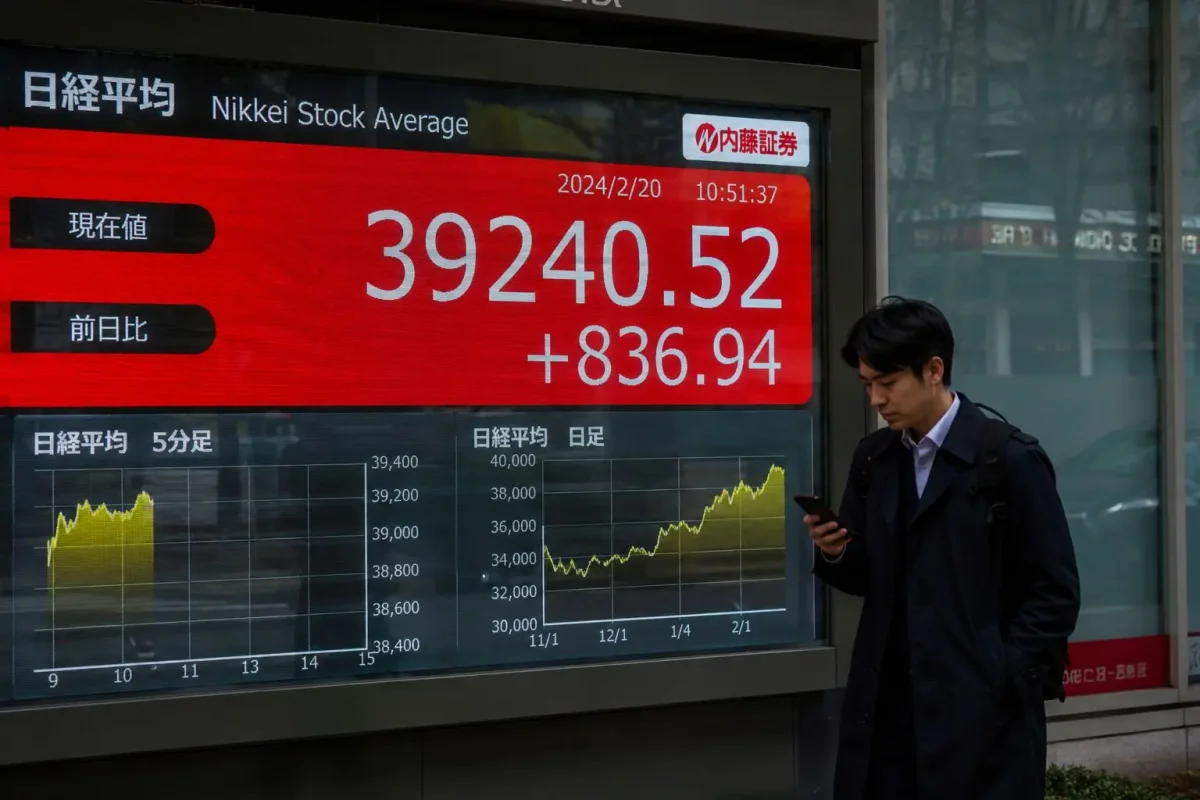
Asian equity markets closed broadly higher on Friday, with Japan's Nikkei leading the charge as investors focused on potential progress in US-Iran peace talks. The MSCI Asia-Pacific index excluding Japan rose 0.8%, while the Nikkei surged 2.8%, edging closer to its all-time peak. Markets in Taiwan, Hong Kong, Shanghai, and India also posted gains, as traders looked past elevated oil prices and a strengthening dollar.
Oil prices remained elevated, with Brent crude trading near $105 a barrel, while the yen continued to weaken, hovering around 159 per dollar. The combination of high energy costs and a soft yen has left the broader rally vulnerable to sudden reversals, particularly if diplomatic efforts falter or geopolitical tensions escalate in the Strait of Hormuz, a critical chokepoint for global oil and LNG shipments.
Regional Market Performance
Hong Kong's Hang Seng index and the Shanghai Composite each advanced 0.9%, while South Korea's Kospi and Australia's S&P/ASX 200 added 0.4% apiece. Taiwan's Taiex ended the session up 2.2%, and India's Sensex climbed 0.6%. The broad-based gains came after a choppy week for oil markets and lingering unease in the bond market, as investors searched for more concrete signals amid cautious central bank stances.
“Equity buyers showed up after a choppy week for oil and unease in the bond market, as investors started to see something firmer to price in, even if confidence levels are still not especially high,” said Chris Weston, head of research at Pepperstone. He noted that while caution around central banks still hung over the market, it did not prevent buying from picking up.
Japan Outperformance and Inflation Data
Japanese stocks outperformed their regional peers, even as new data showed core consumer price inflation slowed to 1.4% in April from a year earlier, marking the smallest gain in four years. Core CPI, which excludes fresh food costs, came in below expectations. Abhijit Surya, senior APAC economist at Capital Economics, expects inflation to pick up again soon, which should keep the Bank of Japan on course for policy tightening sooner rather than later.
Tech Stocks and AI Momentum
Technology stocks contributed to the rally, with Nvidia's strong earnings results earlier in the week steadying nerves around artificial intelligence hardware. Asian chip suppliers, including Samsung Electronics, SK Hynix, and Micron, continued to benefit from tight supply and rising demand driven by growing AI investments, according to Reuters Breakingviews.
Lenovo gave Hong Kong stocks a notable boost after the PC maker reported a 27% jump in fiscal fourth-quarter revenue to $21.6 billion, surpassing analyst estimates. The stock surged as buyers moved to lock in orders ahead of price hikes tied to a memory-chip shortage.
India Markets and Sector Highlights
In India, the Nifty 50 ticked up 0.6% and the Sensex added 0.7% in morning trading, supported by gains in HDFC Bank and ICICI Bank, both of which climbed around 2%. “Macro noise is repeatedly interrupting resilient micro fundamentals,” said Anuj Jain, co-founder of Green Portfolio PMS. He highlighted crude prices, inflation, and geopolitics as key factors for the markets.
Geopolitical Risks and Currency Moves
Peace hopes could unravel quickly. Washington and Tehran remain divided on Iran's uranium enrichment and the Strait of Hormuz, with Pakistan acting as an intermediary. “I'm not really that convinced” the sides are moving closer, said IG's Tony Sycamore. US Secretary of State Marco Rubio acknowledged “some good signs” from talks but cautioned that a potential Iranian tolling system in Hormuz could undermine any diplomatic agreement.
The dollar held near six-week highs, while the yen stayed around 159 per dollar, a level where traders watch for potential Japanese intervention. That puts Asia's rally on shaky ground, as another jump in crude could push up inflation, increase the likelihood of tighter monetary policy, and pressure the high-growth tech stocks that have driven most of the gains.