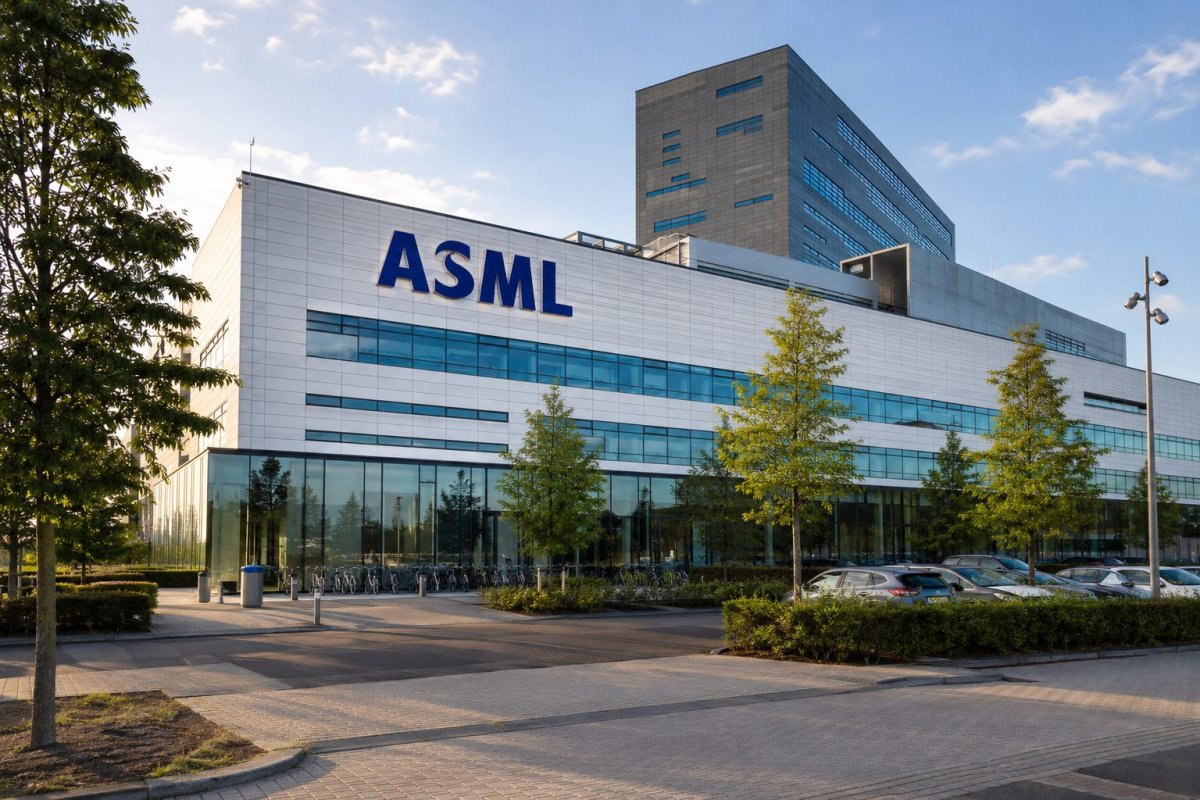
ASML Holding N.V. (AMS:ASML) demonstrated notable resilience on Wednesday, edging up 0.39% to €1,547.80, even as its major European semiconductor peers declined. Infineon Technologies AG (ETR:IFX) and STMicroelectronics N.V. (EPA:STMPA) each fell more than 1% during the session, underscoring ASML's relative strength in a challenging market environment.
The modest gain comes at a critical juncture for the Dutch lithography giant. The company's full-year guidance implies that second-half sales must outpace the first half by a substantial 38% to 49%. This ambitious target is now under pressure from a rising interest rate environment, as European government bond yields climbed to multi-year highs on Wednesday. Germany and France saw borrowing costs reach levels not seen in 15 to 18 years, following a global bond selloff on Tuesday that pushed U.S. 10-year and 30-year Treasury yields to near 4.71% and 5.28%, respectively.
Execution Challenge Ahead
ASML's operational performance in the second quarter provided a solid foundation. Total net sales rose 6.4% sequentially to €9.326 billion, driven by an 11.0% increase in installed-base sales and a 28.4% jump in new lithography system deliveries. Gross margin expanded by one percentage point to 54.0%, while net income grew 5.8% to €2.918 billion.
However, the second half presents a steeper climb. With first-half revenue at €18.093 billion, ASML must generate between €24.907 billion and €26.907 billion in the latter half to meet its annual guidance of €43 billion to €45 billion. Achieving the midpoint would represent a 43% sequential increase, a significant acceleration that will test the company's execution capabilities.
Guidance Bridge
- Q3 guidance: €11.0 billion to €12.0 billion (18% to 29% over Q2)
- Implied Q4: €12.907 billion to €15.907 billion
- Implied H2: €24.907 billion to €26.907 billion (38% to 49% higher than H1)
- FY 2026 guidance: €43.0 billion to €45.0 billion, with gross margin between 54% and 56%
Chief Executive Christophe Fouquet highlighted accelerating customer capacity planning and described order intake during the first half as "extremely strong." ASML plans to expand its 2027 low-NA EUV and immersion DUV capacity by roughly 30% compared to 2026, positioning for sustained demand.
High-NA EUV Progress
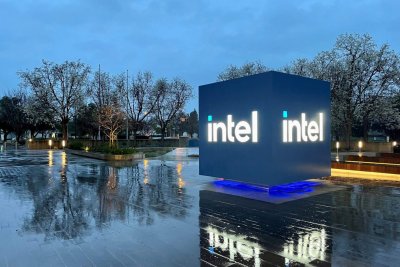
A key risk-reduction milestone came as Intel Corporation (NASDAQ:INTC) commenced high-volume manufacturing on certain Panther Lake layers using ASML's high-NA EUV technology. According to ASML, yields are in line with its current NXE platform, easing concerns about the technology's adoption curve. However, broader implementation remains dependent on customer economics.
Analyst Sentiment and Valuation
Wall Street remains largely optimistic. In a July poll, 40 of 44 analysts issued positive ratings, with an average price target of €1,995, implying a potential 28.9% upside from Wednesday's close. Targets range from €1,291 to €2,500, reflecting a wide dispersion of expectations.
Degroof Petercam analyst Michael Roeg described July's report as "blow-out results across the board," while Marc Hesselink noted that reduced lithography bottlenecks have benefited the wider equipment supply chain, shifting market focus from orders to deliveries.
Risks and Considerations
Despite the optimism, ASML shares remain 4.0% below the €1,613 level seen after July's upgraded outlook and trade beneath all disclosed buyback prices from late June through early July. The weighted average repurchase prices ranged from €1,587.15 to €1,696.17, with current prices 2.5% to 8.7% below those levels.
Investors should monitor Q3 sales, gross margin, and key capacity targets. The back-loaded nature of the second-half guidance introduces execution risk, including potential delays in system acceptance, supplier constraints, or customer postponements. Export controls remain a significant overhang, and higher bond yields could pressure valuations despite earnings growth.
Wednesday's relative strength underscores confidence in ASML's scarcity premium, but the scale of the buyback suggests that even the company's own confidence has limits.