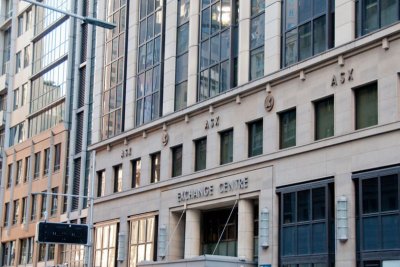
The Australian stock market ended the week on a cautious note, with the S&P/ASX 200 (INDEXASX:XJO) declining 0.50% to close at 8,796.70 on Friday. The benchmark slipped 0.11% over the week, marking its second consecutive weekly loss as mining sector weakness overshadowed a sharp rally in energy stocks.
Mining Sector Drags on Index
The materials sector was the primary drag on the index, falling 2.91% and contributing an estimated 65.7 points to the downside. BHP Group ASX:BHP, the largest component of the ASX 200 with an 11.27% weight in index-tracking funds, dropped 2.71% to A$57.54. The mining giant alone accounted for approximately 27 points of the index decline. Rio Tinto ASX:RIO also fell 2.39%, reflecting ongoing concerns about demand from China, the country's largest trading partner.
Energy Stocks Rally on Oil Surge
In contrast, the energy sector provided a notable offset, gaining 1.66% and adding about 5.9 points to the index. This followed a 4.59% surge in Brent crude oil prices to US$88.10 per barrel, driven by supply concerns and geopolitical tensions. Woodside Energy ASX:WDS climbed 2.9%, and Santos ASX:STO advanced 1.7%, highlighting the sector's benefit from higher oil prices.
Wall Street Weakens Sentiment
The subdued performance on Wall Street added to the cautious mood. The S&P 500 fell 1.01%, while the Nasdaq Composite lost 1.40%, reflecting broad-based selling in technology and growth stocks. “It’s a very shaky environment right now,” said Michael James of Rosenblatt Securities, underscoring the risk-off tone in global markets.
Key Events Ahead
Investors are now focused on critical economic data and policy decisions in the coming week. China is set to review its loan prime rates on Monday, with all 23 analysts surveyed expecting both the one-year and five-year rates to remain unchanged at 3.00% and 3.50%, respectively. China's second-quarter economic growth was the weakest in over three years and missed expectations, raising concerns about demand for commodities and mining exports.
In Australia, the June labour force report is scheduled for release on Thursday at 11:30 AEST. This data is expected to be the primary domestic catalyst for interest rate expectations, with the Reserve Bank closely monitoring employment trends.
Market Outlook and Risks
The divergence between mining weakness and energy strength highlights the delicate balance in the ASX 200. While oil prices provide a tailwind for energy stocks, the materials sector's larger weight means that any sustained downturn in miners could keep the index under pressure. Analysts note that the ASX 200 has traded near the 8,800 level for six consecutive weeks, indicating a lack of clear direction.
“It is the ASX 200’s sixth consecutive week near this 8,800 level,” market analyst Tony Sycamore told AAP, suggesting the index is in a holding pattern awaiting fresh catalysts.
Key risks include potential disruption in the Strait of Hormuz, which could further boost oil prices but weigh on transport and rate-sensitive stocks. Conversely, any easing of geopolitical tensions could see energy gains reverse. An unexpected move from China on rates or a surprise in Australian jobs data could also shift the market outlook significantly.