Alphabet Inc. (NASDAQ: GOOGL) saw its shares rise 1.7% on Thursday following the announcement that Google would maintain pricing for its Gemini API product, a move that puts the company's cloud computing margins under the microscope. The stock closed regular trading at $342.48 and was last quoted at $342.69 in after-hours trading, up from Wednesday's closing price of $337.12. Trading volume for the session reached approximately 17.5 million shares.
Gemini 3.8 Flash Launch and Pricing Strategy
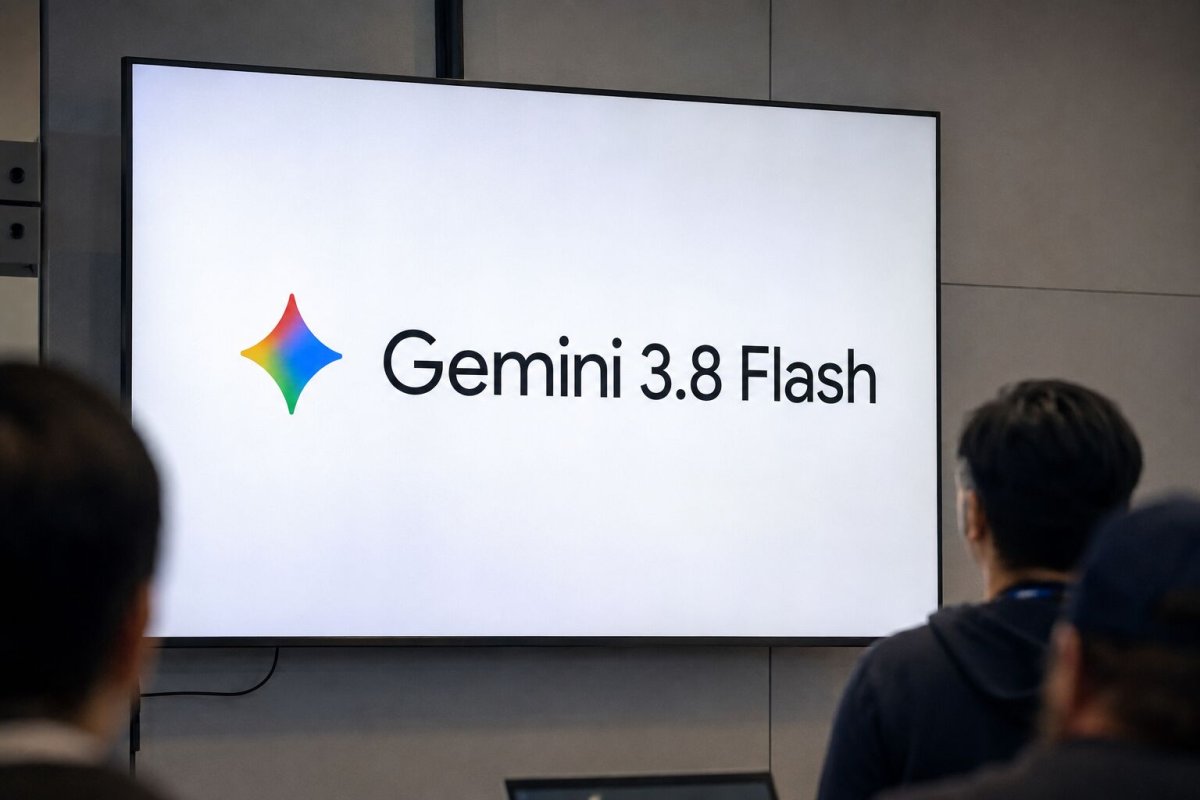
Google introduced Gemini 3.8 Flash, its latest AI model, with improved benchmark scores while keeping the introductory pricing of its predecessor, Gemini 3.7 Flash. The API pricing remains at $0.75 per million input tokens and $3.75 per million output tokens through December 31, 2026. Starting January 1, 2027, those rates are set to double to $1.50 and $7.50, respectively. This pricing structure is designed to encourage early adoption, with the anticipated price increase offering a future revenue opportunity.
The model supports a wide range of input formats, including text, images, video, audio, and PDFs, and can process up to 1,048,576 tokens in a single input and generate up to 65,536 tokens in output. It also includes capabilities for code execution and function calls.
Cloud Margin and Financial Performance
Google Cloud has been a major growth driver for Alphabet, with revenue surging 82% year-over-year to $24.77 billion in the June quarter. Operating income for the segment more than tripled to $8.81 billion, pushing the operating margin to 35.6%, up from 20.7% in the same period last year. This robust financial performance provides Alphabet with flexibility in pricing its AI offerings, but the sustained margin gains are crucial for investor confidence.
The company's capital expenditure for the June quarter totaled $44.92 billion, while operating cash flow stood at $39.07 billion, resulting in a negative free cash flow of $5.86 billion. These infrastructure investments are expected to continue, offsetting some of the gains from cloud profitability.
Investor Sentiment and Market Context
Investors are closely monitoring two key metrics: Gemini usage and cloud margin. If usage grows without solid unit economics, the case for the launch could be weakened. Conversely, if margins continue to improve, the decision to keep prices steady may appear more calculated. The company has highlighted that more complex tasks could require additional reasoning steps and token usage, which may affect overall costs.
Alphabet CEO Sundar Pichai emphasized that the company's AI investments are "redefining what's possible" across its operations. In the second quarter, Gemini models processed 22 billion API tokens per minute, and nearly 90% of Fortune 100 companies have adopted Gemini Enterprise.
Benchmark Results and Competitive Positioning
Google reported that Gemini 3.8 Flash achieved a 54.9% score on the HLE-Verified benchmark, while the Flash Cyber variant recorded a 47.2% pass@1 result on CWE-Bench, slightly below the leading frontier model's 47.8%. The company also noted that the model succeeded in over 70% of its vulnerability-discovery tests across 20 languages and produced 2.6 times more correct Chrome patches than larger commercial models in its internal tests. These results, however, are company-reported and may not predict real-world customer workloads.
The decision to hold prices steady comes amid growing competition in the AI space, with rivals like Microsoft and Amazon also vying for market share. Alphabet's ability to balance pricing, usage growth, and profitability will be critical in the coming quarters.
As the January 2027 price increase approaches, investors will be watching to see if the strategy pays off. The company's strong cloud performance provides a solid foundation, but the sustainability of its AI monetization remains an open question.