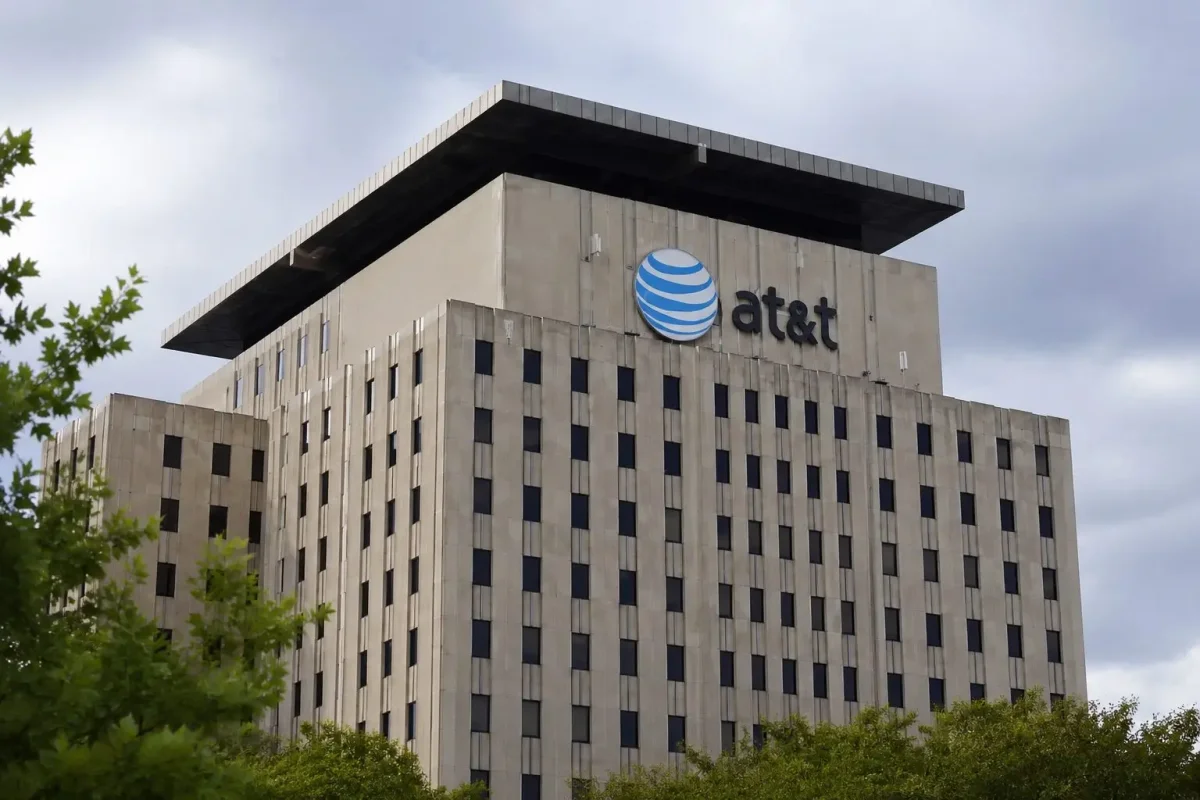
AT&T (T) shares faced renewed selling pressure early Friday, extending a two-day decline that has erased significant market value. The stock last traded at $22.77 ahead of the New York Stock Exchange opening, following an analyst downgrade that highlighted growing competitive risks from satellite internet services.
Oppenheimer Downgrade
Oppenheimer analyst Timothy Horan lowered his rating on AT&T to Perform from Outperform and removed his previous $32 price target. In a research note, Horan warned that satellite broadband providers such as SpaceX's Starlink and Amazon's Project Leo are becoming credible threats to traditional telecom operators. "We think longer-term broadband subscriber growth and eventually mobile is at risk," Horan said, as reported by Barron's. He added that "pricing for services like Starlink is now on par with legacy broadband," which undermines AT&T's core argument that fiber offers a superior, stickier product.
Market Context
The selloff in AT&T was part of a broader telecom sector downturn. Verizon (VZ) slid 3.82% on Thursday, while T-Mobile (TMUS) fell 2.44%. The weakness came despite a record close for the Dow Jones Industrial Average and a 0.41% gain in the S&P 500. The Nasdaq Composite edged down 0.09%, pressured by weakness in semiconductor stocks. Global markets also showed caution, with U.S. futures declining ahead of the monthly payrolls report. Saxo's Charu Chanana described the mood as "quite a risk-off today," according to Reuters.
AT&T's Counter Strategy
In response to the satellite threat, AT&T is doubling down on its fiber network. The company announced on June 3 that it will offer customers four new fiber speed tiers starting June 7. Customers who bundle AT&T wireless and home internet services can save up to $420 per year. Jenifer Robertson, executive vice president and general manager of AT&T Consumer, said the plans are "packed with value, savings, and powered by a network that performs."
Financial Performance
AT&T reported solid first-quarter results, with 584,000 net additions in advanced connectivity internet, including 292,000 fiber adds. The company also added 294,000 postpaid phone subscribers. AT&T now passes more than 37 million fiber locations and remains on track to reach over 60 million by the end of 2030. Free cash flow for the quarter stood at $2.5 billion after capital spending.
Satellite Direct-to-Device Venture
In May, AT&T, Verizon, and T-Mobile announced an agreement in principle to form a joint venture aimed at eliminating wireless dead zones using satellite direct-to-device technology. AT&T CEO John Stankey said the goal is to make it simple for customers to stay connected "no matter where you are." The initiative underscores the increasingly blurred lines between traditional telecom and satellite services.
Investor Implications
The key risk for AT&T is that if Starlink and Amazon's Leo accelerate price cuts and expand beyond rural markets, the company may be forced to offer deeper discounts or increase capital spending to protect subscriber growth. Such a scenario could pressure the cash flow AT&T relies on for debt reduction, dividends, and share buybacks. Conversely, if satellite services remain complementary and fiber bundles retain customers, the recent selloff may prove overdone.
Investors will have opportunities to assess the competitive landscape when CFO Pascal Desroches speaks at the Mizuho Technology Conference on June 9, and during the second-quarter earnings call scheduled for July 22.