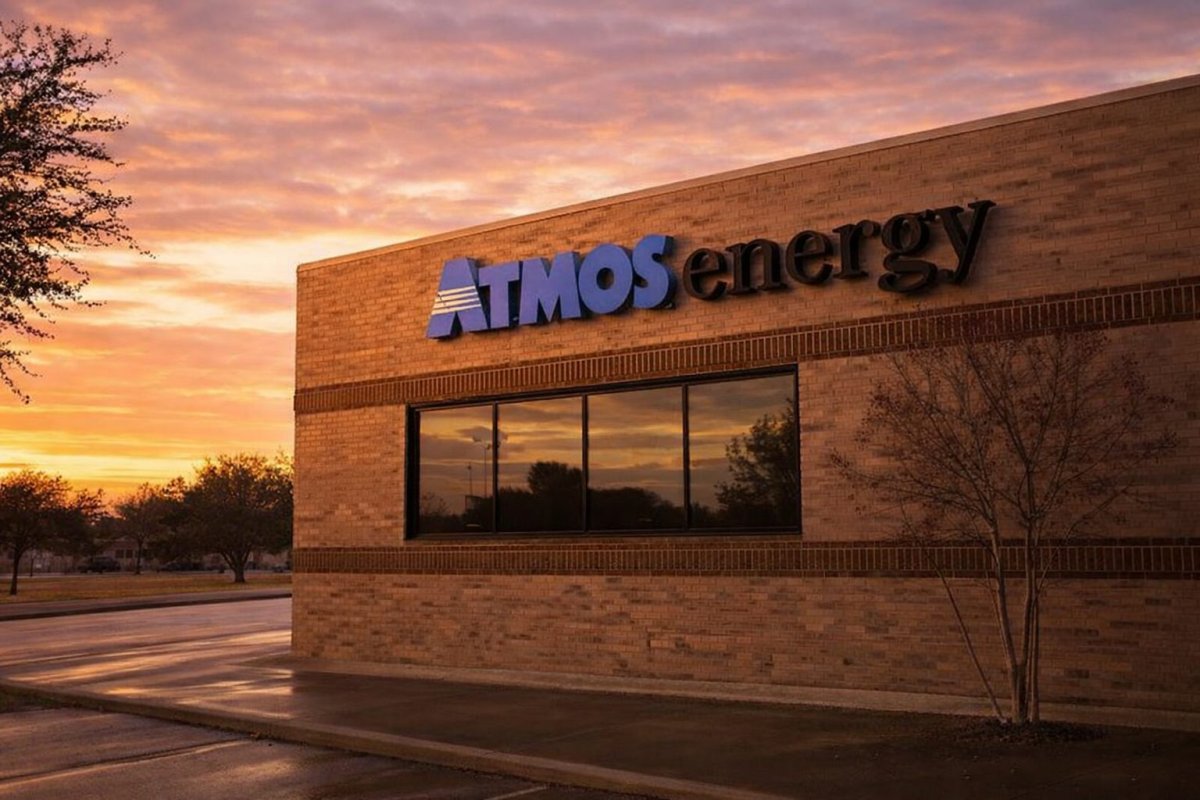
Atmos Energy Corporation has successfully negotiated maturity extensions for its two primary revolving credit facilities, securing continued access to a combined $3 billion in liquidity. According to a filing with the Securities and Exchange Commission dated March 30, 2026, the Dallas-based natural gas distributor extended the maturity dates of its two $1.5 billion credit lines to March 28, 2029, and March 28, 2031, respectively. The one-year extensions were formally executed on March 27.
Financial Strategy Amid Capital-Intensive Cycle
The credit extension aligns with the utility's ongoing, significant investment phase. In February, Atmos leadership outlined capital expenditures of approximately $4.2 billion for fiscal year 2026, supported by around $4.6 billion in available liquidity. Chief Executive Officer Kevin Akers has consistently emphasized that over 85% of the company's investments are directed toward enhancing system safety and reliability. Chief Financial Officer Chris Forsythe recently reaffirmed the company is on track to meet its capital spending target for the year.
Growth and Customer Expansion
Atmos continues to experience robust customer growth, a key driver of its capital plans. Akers noted the company added nearly 54,000 new customers in the twelve months ending December 31, with roughly 42,000 of those additions located within its core Texas market. This expansion necessitates sustained investment in infrastructure, making reliable access to capital through instruments like revolving credit facilities critical for executing its long-term strategy.
Regulatory and Legal Scrutiny Intensifies
The financial maneuvering occurs against a backdrop of heightened regulatory and legal scrutiny. Authorities are investigating a home explosion in Lake Dallas, Texas, on March 19. While the leveled residence reportedly had no active gas service hookup, a subsequent lawsuit alleges that migrating gas from Atmos Energy infrastructure caused the blast. The company has stated that its system checks in the Lake Dallas area following the incident indicated normal operations. The ongoing investigation and litigation present a potential source of financial and reputational risk, though the company maintains its systems are functioning properly.
Credit Facility Details and Market Context
The credit facilities were originally established on March 28, 2024, with Crédit Agricole Corporate and Investment Bank serving as the administrative agent alongside a syndicate of lenders. These are standard revolving credit facilities designed to provide working capital and meet near-term financial obligations. The latest 8-K filing indicates the company chose to extend the maturity dates rather than increase the total borrowing capacity, a move viewed as a prudent reinforcement of its existing financial framework rather than an expansion of leverage.
Earnings Resilience and Sector-Wide Spending
Atmos has demonstrated financial resilience despite external pressures. The company reported a 14.5% increase in first-quarter profit, driven by higher demand across its distribution and pipeline segments. Management has reaffirmed its fiscal 2026 earnings guidance, projecting a range of $8.15 to $8.35 per share. Atmos is not alone in its substantial capital outlays; peers like ONE Gas have outlined roughly $800 million in planned 2026 expenditures focused on system integrity, while Southwest Gas is pursuing a $1.7 billion expansion project in the Great Basin region through 2028.
Unresolved Uncertainties and Forward Outlook
While the credit extension bolsters Atmos Energy's financial flexibility, significant uncertainties remain. The official cause of the Lake Dallas explosion has not been disclosed by investigators. The outcome of the probe and the associated lawsuit could lead to substantial legal costs, repair expenditures, and increased regulatory oversight if fault is determined. For now, the company is proceeding with its multi-billion dollar capital investment program, betting that its focus on safety and system modernization will support long-term growth and stakeholder confidence.