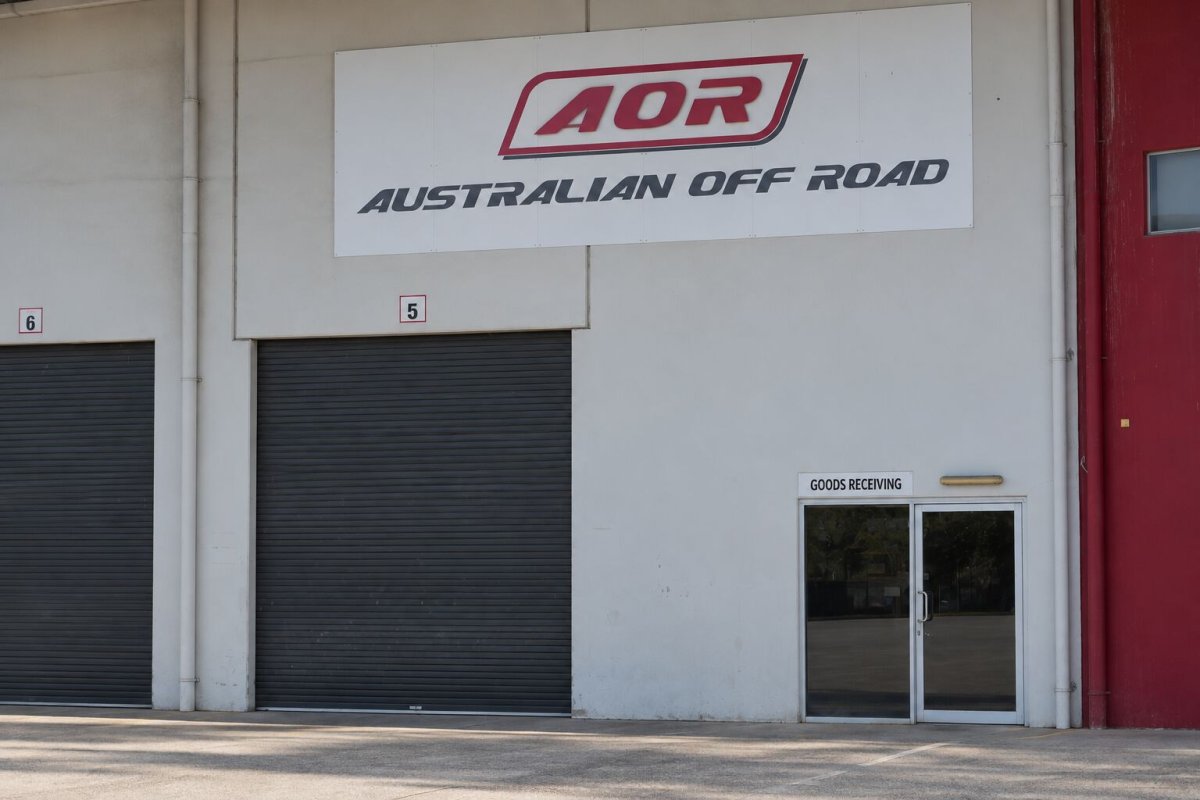
Australian Off Road (AOR), the Queensland-based caravan manufacturer trading under Rhost Pty Ltd, has formally entered voluntary administration after a period of operational silence that saw its Caloundra factory go quiet, its website disappear, and customers lose contact with the company. The appointment of administrators shifts the focus from whether AOR has permanently closed to what creditors—including those who paid deposits—can recover from the insolvent entity.
According to reports from ABC News, Nick Keramos and Bill Karageozis of DVT Mcleods have been appointed as administrators. The company, which has been in business for 26 years, confirmed the development on its restored Facebook page. At the time of the appointment, AOR employed approximately 100 staff members.
Despite the administration, Rhost Pty Ltd remains listed as an active Australian private company on the Australian Business Register, with business names including AOR Service, Australian Off Road, Australian Offroad Campers, and Trax Adventure Company. However, an active ABN status does not indicate solvency; the administrator appointment is the controlling event that dictates the company's financial and operational future.
Deposits Become Creditor Claims
Customers who prepaid for a caravan or left a deposit for an undelivered order are now classified as creditors. According to ASIC's consumer guidance, these customers may be owed money by the insolvent company. Whether the administrators honor deposits depends on the circumstances and any decision to continue trading. Voluntary administration is not liquidation; the administrators now control Rhost, investigate its finances, and decide whether to trade, sell, or close the business while creditors consider its future.
Customers are advised to preserve all contracts, receipts, invoices, payment records, and correspondence, and to follow claim instructions provided by DVT Mcleods. Credit-card buyers should also promptly inquire with their card issuer about the possibility of a chargeback, though eligibility is transaction-specific.
Timeline and Creditor Meetings
The first formal deadline is imminent. ASIC mandates that a first creditors' meeting be held within eight business days of the appointment, and the subsequent decision meeting is generally due within 25 business days, unless a court grants an extension. Creditors have the option to return the company to directors, approve a deed of company arrangement, or vote for liquidation.
Recent advertising by AOR, which promoted more than A$9,000 in extras for caravans scheduled for the 2027 travel season, raises questions about the number of incomplete orders, the amount of customer money attached to them, and which legal entity received it. As of Tuesday evening, no public creditor total or deposit balance had been disclosed.
Industry Context and Market Pressures
AOR founder and co-director Steve Budden attributed the failure to rising wages, copied designs, and the difficulty of competing with imported products on price. National data supports the import-pressure narrative but contradicts any notion that Australians have abandoned caravanning. The Caravan Industry Association of Australia reports that Australia imported 23,244 caravan trailers and related components in 2025, a 16% increase from 2024. Additionally, 47,997 recreational vehicles entered the national supply register in the 12 months through June 2026, with June entries down 1.8% year-over-year, led by a 6.4% decline in towable units.
Travel demand remains robust, with Australians taking 17.7 million overnight caravan and camping trips in the year through March 2026 and spending A$13.1 billion. This suggests that a manufacturer can fail due to cost structures, pricing, order book, and working capital mismatches even while the broader travel and camping sector remains active.
Listed investors may look to Tourism Holdings (ASX: THL, NZX: THL) as a relevant comparison. In a May 29 update, THL noted challenging vehicle-sales conditions and the closure of its Australian manufacturing operations, consolidating them into New Zealand. While THL is a global rental, retail, and manufacturing group rather than a direct AOR peer, its restructuring underscores the importance of production footprint and inventory discipline across the RV value chain.
The counterargument to industry-wide distress is the large installed fleet and continued travel spending. The risk for local manufacturers is narrower: imports can gain share while fixed factory costs remain in Australia. For Rhost's customers and employees, that debate is secondary to the administrators' first notice, which should disclose the meeting timetable and the process for lodging claims.
