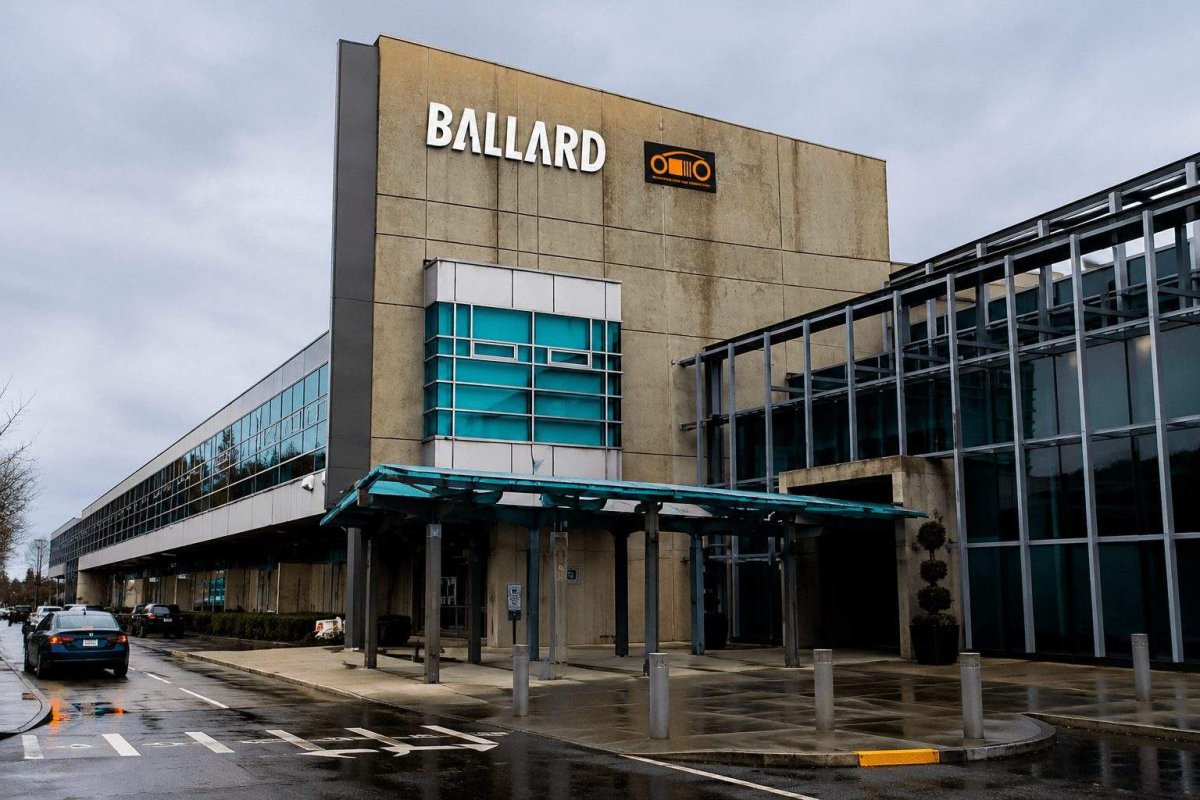
Ballard Power Systems Inc. (BLDP) saw its shares surge on Friday after a regulatory filing revealed that China's Weichai Group had trimmed its ownership stake, leading to a shift in board composition. The Vancouver-based fuel-cell company's Nasdaq-listed shares climbed 8.5% to $4.48 on heavy volume, with approximately 29.6 million shares changing hands, as investors reacted to the governance changes and the potential for reduced overhang.
Weichai's Stake Reduction and Board Impact
According to a May 15 filing, Weichai-affiliated holders now control 34,999,826 Ballard shares, equivalent to 11.61% of the outstanding stock. This reduction came after a series of open-market sales that pushed the holding below the 15% threshold outlined in a 2018 agreement. That pact had granted Weichai the right to nominate directors as long as it maintained at least a 15% stake. With that condition no longer met, two Weichai-nominated directors—Michael Chen and Huajie Wang—resigned from Ballard's board, effective May 13.
Ballard's board chair, Jim Roche, expressed gratitude for Weichai's historical support and thanked the departing directors for their contributions to advancing fuel-cell commercialization in China and globally. The company's statement emphasized a continued collaborative relationship despite the governance shift.
Market Reaction and Stock Supply Concerns
The market's response was notably positive, with Ballard shares trading as high as $4.72 during the session, up from an opening price of $3.93. However, the move also refocused attention on stock supply dynamics. Weichai Hong Kong filed a Form 144 indicating a proposed sale of up to 15,028,886 shares, with plans to continue selling in open-market transactions under Rule 144. The company disclosed that it sold 6,878,886 shares from May 8 through May 12 at an average price of C$5.78 per share, generating roughly C$39.7 million. Additional sales on May 13 and May 14 brought the total sold over the past 60 days to 11,131,886 shares.
Financial Performance and Operational Progress
Ballard began the week with improved financial results, though the path to sustained profitability remains challenging. The company reported first-quarter revenue of $19.4 million, a 26% increase from the prior year, alongside a gross margin of 14% and a robust cash position of $516.8 million in cash and cash equivalents. Chief Executive Marty Neese highlighted progress toward positive cash flow, citing cost controls that helped lift margins. He noted the company is "on the right path," but management refrained from providing 2026 revenue or net income guidance, reflecting the early-stage nature of the hydrogen fuel-cell market.
Commercial Wins and Sector Context
On the commercial front, Ballard secured key contracts in the bus segment. Solaris selected Ballard's FCmove-SC engine for its next-generation hydrogen bus, while Wrightbus named Ballard for its StreetDeck Hydroliner Gen 3.0 platform. These fuel-cell engines convert hydrogen into electricity, with water as the primary emission, aligning with broader decarbonization trends.
The hydrogen sector presented a mixed picture. Plug Power reported first-quarter revenue of $163.5 million and targets positive EBITDAS in the fourth quarter. Bloom Energy posted revenue of $751.1 million and raised its 2026 guidance to a range of $3.4 billion to $3.8 billion. These developments underscore both the opportunities and uncertainties in the nascent hydrogen economy.
Risk Factors and Outlook
The primary risk for Ballard remains the potential for continued selling by Weichai, which could create an overhang as the company asks investors to focus on order wins, margin improvements, and reduced cash burn. Ballard has indicated that 2026 revenue will be weighted toward the second half of the year, leaving execution risk if customer deployments slip. Weichai retains influence as a large shareholder, but its anti-dilution rights are only in effect as long as it holds at least 10% of Ballard's common shares. Consequently, the next few disclosed trades may be as significant as the board resignations themselves in shaping investor sentiment.