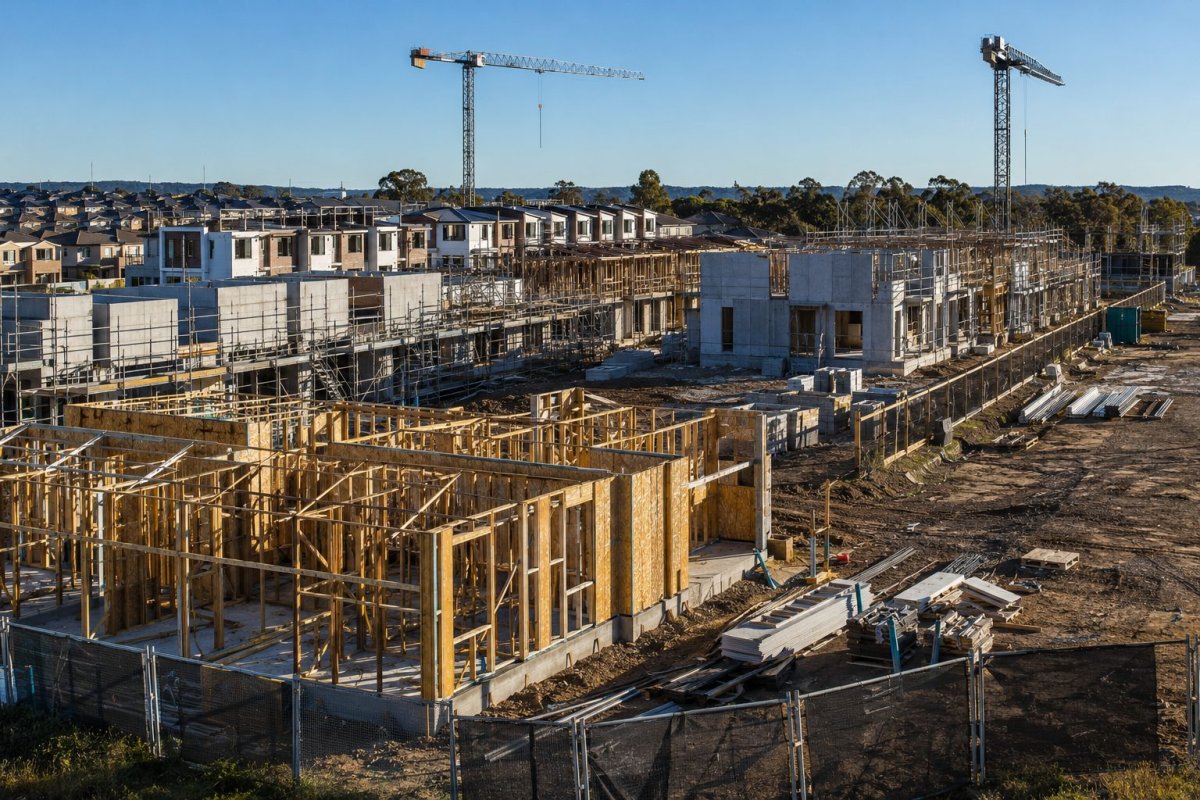
Australia's private credit sector is facing a pivotal test as property developer Bathla Group enters voluntary administration, burdened by A$3.2 billion in liabilities as of June 2025. The collapse, which has sent ripples through the financial community, underscores the vulnerabilities lurking within the rapidly expanding private credit market, particularly in property development.
Regulatory filings, as reported by ABC News, reveal that Bathla, a privately held developer, has appointed Teneo as administrator for its entities, including Universal Property Group and Raj & Jai Construction. The administrator is tasked with stabilizing operations and preserving project continuity. The company, which employs 226 staff, focuses on affordable housing, townhouses, and apartments, with a pipeline of over 5,000 homes across New South Wales, South Australia, and Victoria.
Centuria Capital Group (ASX: CNI) disclosed a direct loan to Bathla totaling A$4.5 million, a figure that represents just 0.14% of Bathla's declared liabilities. However, the Centuria Bass Credit Fund holds six separate facilities with Bathla, though the aggregate value of these loans was not specified in the July disclosure. This fund-level exposure is more significant than the direct loan, as it involves multiple secured positions.
Investor reaction was muted on the day of the announcement, with Centuria shares closing down 0.37% on August 25. This limited decline suggests that the market did not view the administration as a major shock to Centuria's balance sheet. Notably, the stock had already fallen approximately 17.5% between July 22 and August 24, from A$1.655 to A$1.365, indicating that prior concerns had already been priced in.
The broader implications for the private credit market are substantial. Australia's corporate regulator, ASIC, has warned that stress in property development could expose weaknesses in concentration, valuation, and liquidity within private credit funds. An ASIC survey of 22 managers overseeing 52 funds, with assets totaling approximately A$76 billion, highlighted risks from softening presales, unsold inventory, project delays, and reduced refinancing activity. These factors could reveal concentration risks and valuation gaps in property credit portfolios.
Centuria has stated that each of its six fund facilities is secured by a first mortgage. The portfolio includes two construction loans, one of which remains exposed to ongoing construction, while the other facilities are backed by land or unsold completed assets. Some security pools are partially cross-collateralised, providing a layer of protection. However, these safeguards do not eliminate timing risk. Recoveries in private credit depend on project completion, achieved sale prices, and refinancing capabilities. Investors may request redemptions before collateral sales are completed, creating liquidity pressures.
The Reserve Bank of Australia (RBA) maintains that systemic risk is limited, estimating that private credit accounts for less than 2% of assets in the financial system, with non-bank lenders representing close to 6%. Nonetheless, the RBA acknowledges that restricted visibility hampers timely risk evaluation, a concern echoed by industry analysts.
Beyond the financial sector, the Bathla collapse could impact housing supply. The restructuring may delay project completions in western Sydney, adding strain to the federal government's target of building 1.2 million new homes by 2030. This dual transmission—through financial markets and housing supply—amplifies the significance of the case.
Investors are advised to monitor the initial creditors' meeting, expected on September 4. Key details to watch include the administrator's breakdown of secured debt, project cash requirements, and any specific haircuts disclosed. These will provide a clearer picture of the recovery prospects than the headline liability figure alone. The outcome will be a bellwether for the resilience of Australia's private credit market in the face of property sector stress.
