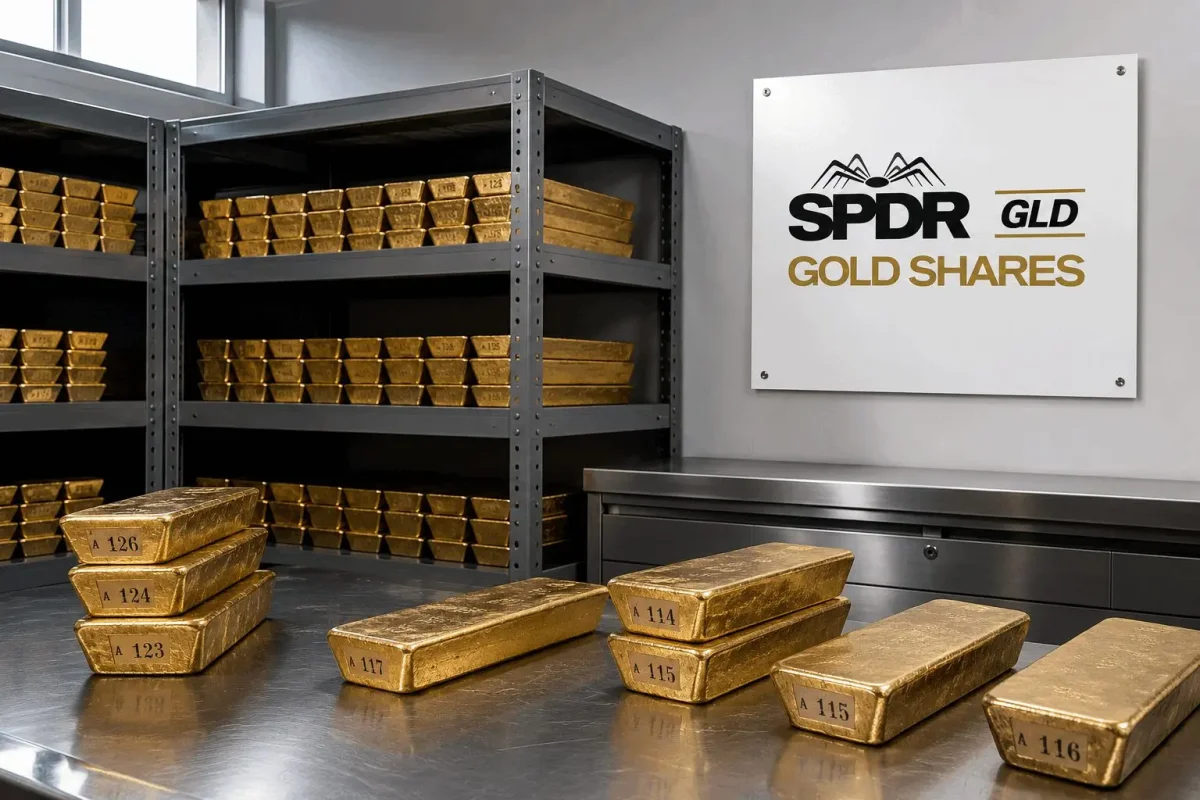
NEW YORK, August 14, 2026 – A remarkable discovery of gold coins, nuggets, and numbered bars hidden within a bricked-up cellar wall at a disused brewery in Sint-Gillis-Dendermonde, Belgium, has captured headlines. Valued at approximately €9 million ($10.43 million), the hoard is a striking find for the construction workers who stumbled upon it. Yet, in the context of the global gold market, it represents a mere fraction of a percent—equivalent to just 23.5 standard COMEX futures contracts.
The discovery, reported by The Guardian, has drawn attention not for its market impact—which is negligible—but for the intrigue surrounding its origin and ownership. Authorities are investigating how the treasure came to be hidden and who it rightfully belongs to. Student worker Kobe, who was part of the crew that made the find, told The Guardian, "It turned out to be a bit more than we thought."
Scale of the Find vs. Global Gold Market
To put the Belgian hoard into perspective, the implied fine-gold weight is approximately 2,346 troy ounces (73.0 kg), based on the disclosed value, an exchange rate of €1 to $1.1584, and the current gold futures price of $4,444.60 per ounce. That equates to 23.5 standard COMEX contracts, each representing 100 troy ounces. By comparison, as of 11:29 EDT, COMEX had seen 101,250 contracts exchanged—roughly 10.1 million ounces—meaning the Belgian find accounts for just 0.023% of that intraday volume. Even more striking, the World Gold Council estimates total above-ground gold at 219,891 tonnes, making the hoard a mere 0.000033% of all the gold ever mined.
Gold Market Moves Higher
Gold futures edged up 0.55% to $4,444.60 per ounce on Friday, supported by a softer U.S. dollar. Spot gold was up 0.6% at $4,376.02. Investors have scaled back expectations for further Federal Reserve rate hikes following softer inflation data and a drop in July payrolls. The probability of a September rate hike has fallen to 31%, down from about 55% the previous week. Jim Wyckoff of American Gold Exchange described the weaker dollar as a "friendly outside market" for gold, a sentiment echoed by Reuters.
These macroeconomic factors far outweigh any supply news from Belgium. According to the World Gold Council, global gold demand reached 1,269 tonnes in the second quarter, with central banks adding 288.9 tonnes and gold-backed ETFs losing 44.8 tonnes. The Belgian hoard represents roughly 0.006% of that quarterly demand—a negligible amount.
Analyst Forecasts Diverge Sharply
Bank projections for gold prices continue to diverge significantly, ranging from a cautious $4,375 to an aggressive $6,300 per ounce. J.P. Morgan maintains a bullish stance with a target of $6,300 for the fourth quarter of 2026, implying a 41.7% upside from current levels. Wells Fargo is similarly optimistic, forecasting $6,100–$6,300 by end-2026, while UBS sees $6,200 by September 2026. On the more conservative end, HSBC is neutral with a $4,450 target, and Bernstein is cautious, expecting $4,375 in the second half of 2026, a slight downside. Wells Fargo attributes its bullish outlook to declining short-term rates and ongoing central bank interest, while Bernstein cites real yields and anticipates only modest ETF withdrawals.
For investors seeking direct exposure, physically backed instruments like SPDR Gold Shares (NYSEARCA:GLD) offer a straightforward avenue, though performance is tied to bullion values, associated fees, and tracking accuracy. The Belgian reserve does not alter this dynamic.
Underlying Demand Remains Robust
Underlying demand for gold remains strong. A June survey revealed that 89% of reserve managers expect global central-bank gold reserves to increase, with a record 45% indicating plans for their own institutions to purchase gold. This institutional appetite is a key driver of the metal's long-term trajectory.
However, risks persist. A stronger dollar, increased real yields, or a renewed outlook for rate hikes could pressure gold prices. Conversely, rising tensions in the Middle East may boost safe-haven demand, while climbing oil prices could fuel inflation concerns and prompt central banks to tighten policy.
The Belgian gold stash is a captivating tale of hidden wealth, but for investors, the key takeaway is scale. A cellar may contain great riches without making a ripple in the vast ocean of the global gold market. The real story lies in the divergent forecasts that will shape trading strategies in the months ahead.