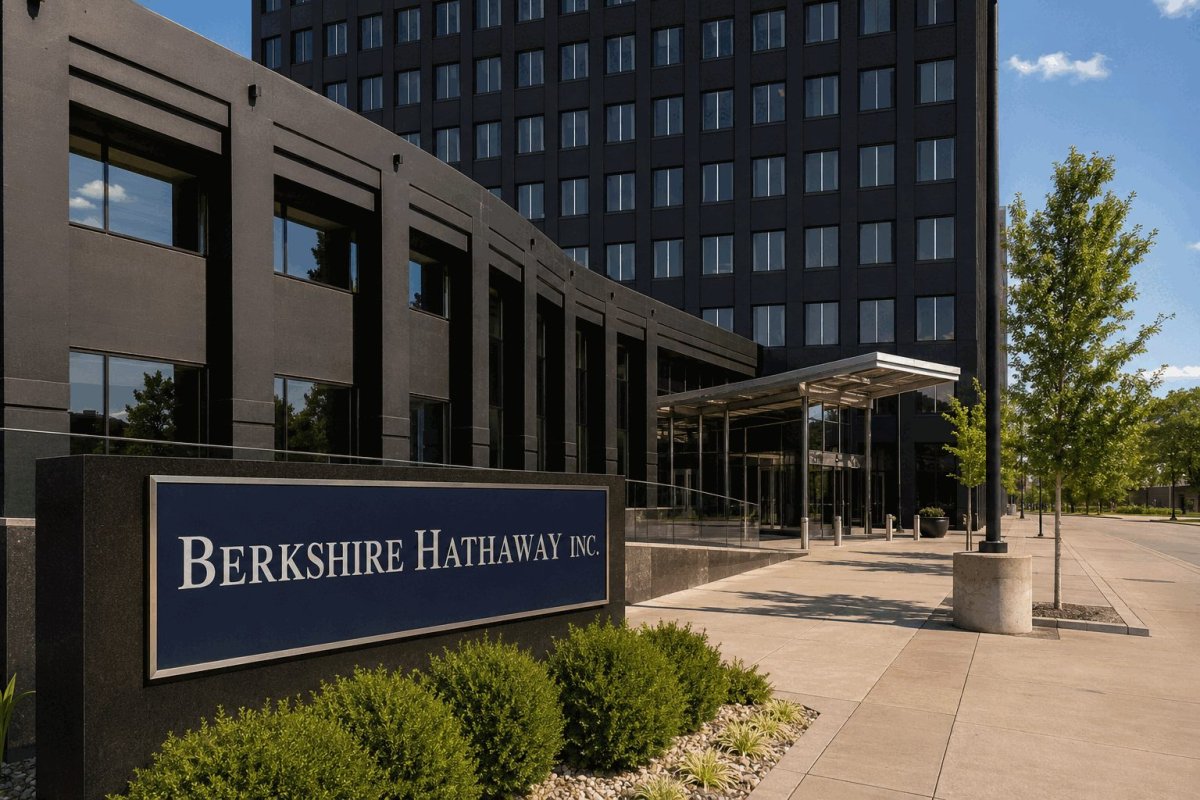
Berkshire Hathaway's Class B shares closed Friday at $495.82, marking a 1.63% decline over the past five trading sessions. The stock's slide brings it within 1.83% of the average price the company paid for buybacks during the first quarter, a threshold that could signal renewed repurchase activity.
The proximity to that level is notable because CEO Greg Abel resumed buybacks in March and has since accelerated the pace. Under Berkshire's policy, repurchases are authorized only when the CEO, in consultation with Chairman Warren Buffett, determines that the share price is below a conservatively assessed intrinsic value. The policy does not guarantee a floor, and buybacks can be halted at any time without notice.
Weekly Price Action
Over the week, the stock showed a steady decline:
- Aug. 17: $498.23, down 1.15%
- Aug. 18: $502.96, up 0.95%
- Aug. 19: $499.62, down 0.66%
- Aug. 20: $496.86, down 0.55%
- Aug. 21: $495.82, down 0.21%
Friday's performance lagged the broader market, as the S&P 500 gained 0.43% and the Dow rose 0.98%. The S&P 500 still recorded its first weekly loss since July.
Valuation Indicators
The recent decline has pushed Berkshire's valuation metrics lower. As of Friday, the stock traded at 1.43 times book value, below its 12-month average of 1.47. The trailing price-to-earnings ratio stood at 12.46, a figure that is particularly volatile due to investment gains.
Key capital and valuation figures:
- Friday close: $495.82
- Q1 average buyback price: $486.92
- Price-to-book ratio: 1.43×
- Q2 share repurchases: $4.5 billion
- July buybacks: $3.3 billion
- Cash and Treasury holdings (June 30): $364.7 billion
Strong Operating Performance
Despite the share price weakness, Berkshire's underlying business remains robust. Operating profit in the second quarter rose 16% year-over-year to $12.98 billion. Revenue increased 10% to $101.81 billion. Net income more than doubled, aided by investment gains.
However, GEICO's profit declined 45% in the quarter, and Berkshire made its first net equity purchases in 14 quarters, acquiring $23.5 billion in stocks while divesting $3.7 billion. Alphabet Inc. (NASDAQ:GOOGL) became Berkshire's third-largest equity holding, valued at approximately $37.8 billion as of June 30.
Capital Allocation Strategy
Abel has emphasized stewardship in his shareholder communications. Recent buybacks have increased the ownership stake of ongoing shareholders in Berkshire's assets. The pace of repurchases, combined with the equity purchases, has reduced cash reserves from $380 billion earlier in the year to $364.7 billion.
Analyst Views Diverge
Wall Street remains divided on Berkshire's valuation. UBS analyst Brian Meredith issued a Buy rating with a $604 price target, implying 21.8% upside. A broader S&P Global poll of four analysts averages $547.67, while MarketBeat's three analysts have an average target of $542.50.
UBS argues that the non-insurance businesses justify a higher multiple. Others caution about GEICO's profit slump, deployment risks, and uncertainty in the post-Buffett era.
Outlook
Investors will watch whether the stock holds the $487-$496 range. A sustained move below the Q1 repurchase average could heighten attention on ongoing buyback activity. Recovering above $503 would reclaim Tuesday's closing level.
Risks include catastrophe losses, lower short-term interest rates, rail volume fluctuations, and equity market volatility, all of which could impact earnings and intrinsic value estimates.