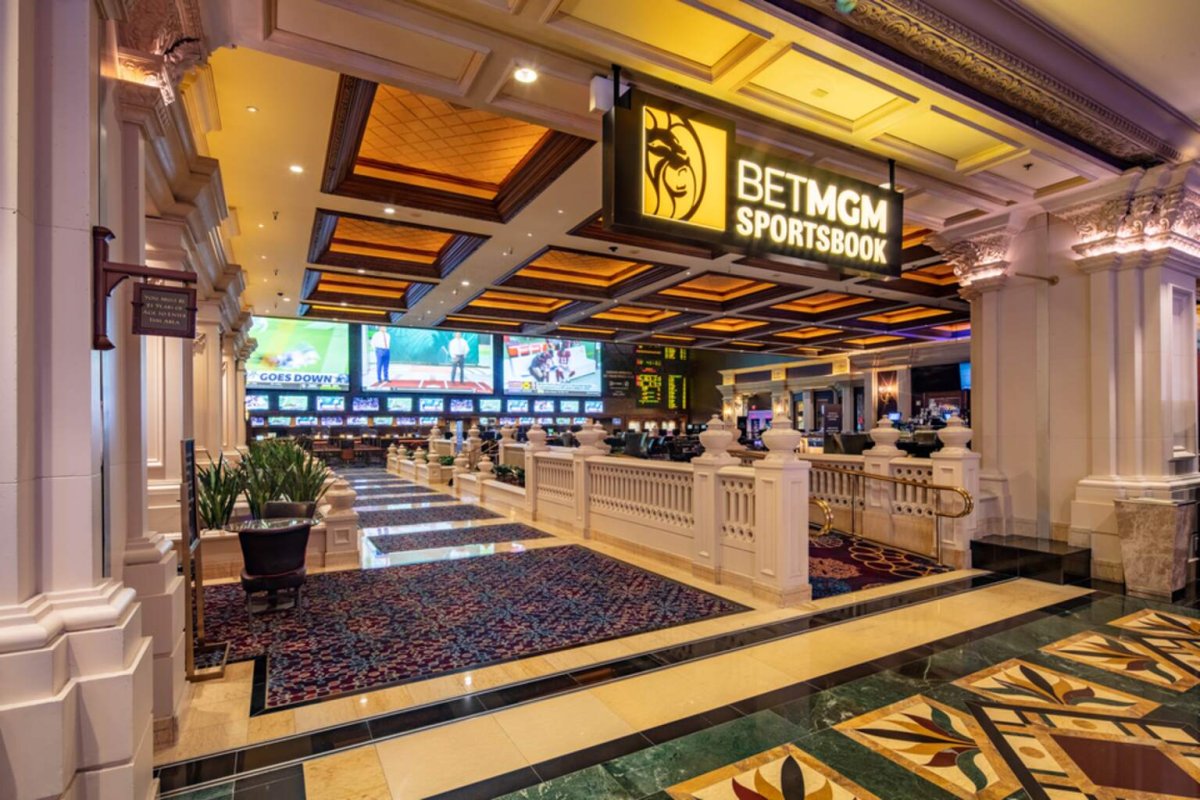
BetMGM is rolling out a new promotion that advertises up to $1,500 in bonus bets for new customers, but the fine print reveals a more limited offer. The deal, featured on the sportsbook's promotions page as of September 18, is designed to attract new accounts rather than provide instant cash. Eligible users who lose their first wager can receive up to $1,500 back in bonus bets, which must be used within seven days. This is not a refund of withdrawable funds, but rather a credit for future wagers.
The timing is strategic, as the NFL season kicks into high gear and online sportsbooks compete fiercely for market share. However, the underlying question for investors is whether such promotions can translate into long-term profitability. BetMGM is a 50/50 joint venture between MGM Resorts International (NYSE: MGM) and Entain, so the success of these offers directly impacts both parent companies' bottom lines.
Recent financial disclosures from BetMGM highlight a concerning trend: while the volume of online sports bets (handle) increased, sports revenue remained flat. In the second quarter, BetMGM recorded $3.49 billion in online sports wagers, a 2% rise year-over-year, but online sports net revenue stayed unchanged at $228 million. The company attributed this to "higher player generosity," meaning more favorable odds and promotions for bettors.
The gap between gross and net revenue is widening. Gross gaming revenue as a percentage of handle improved to 10.3% from 9.8%, but net gaming revenue fell to 6.5% from 6.6%. This 3.8 percentage point spread, up from 3.2 points a year earlier, underscores the cost of aggressive promotions. While not all of this can be blamed on the new offer, it reflects the broader challenge of converting wagering volume into actual profit.
Investors are taking notice. On Friday, September 18, MGM Resorts shares closed at $37.81, down 1.3% from the prior session, while Entain's London-listed shares dropped 5.2% to 476.7 pence. Although these declines cannot be directly attributed to the promotion, they reflect market jitters about the competitive landscape and the sustainability of growth.
Digging deeper into BetMGM's Q2 results, total net revenue rose 3% to $711 million, propelled by an 8% increase in iGaming revenue to $483 million. However, contribution profit fell 11% to $171 million, and adjusted EBITDA declined 15% to $74 million. Monthly active users also slipped 3% to 875,000. Management has guided for 2026 revenue in the $2.9 billion to $3.1 billion range and adjusted EBITDA between $300 million and $350 million, but now expects results toward the lower end of those ranges.
Proponents of the promotion argue that it targets high-quality customers. BetMGM reported that first-half handle per active user increased 18%, and net gaming revenue per active user rose 17%, even as the user base contracted. The company's 2026 football rollout includes weekly bonuses, injury protection, price boosts, expanded cash-out options, and a free-to-play game. The new-customer offer is not available in all states, and its short expiry limits the maximum accounting cost relative to the advertised amount.
A successful football season would be reflected in sports net-revenue growth catching up with handle, a stable gross-to-net hold gap, and improved contribution. Cross-selling sportsbook customers into the larger iGaming segment could also justify acquisition spending. Conversely, the risk is that generous offers boost engagement without generating meaningful incremental revenue, and competitive pressures make it difficult to scale back.
The next key checkpoint is Entain's Q3 trading update on October 15. Investors should look for any fresh disclosures on BetMGM's sports revenue, market share, or profitability, rather than treating the $1,500 headline as a sign of growth. As the football season unfolds, the true test will be whether BetMGM can convert its promotional spending into sustainable returns.