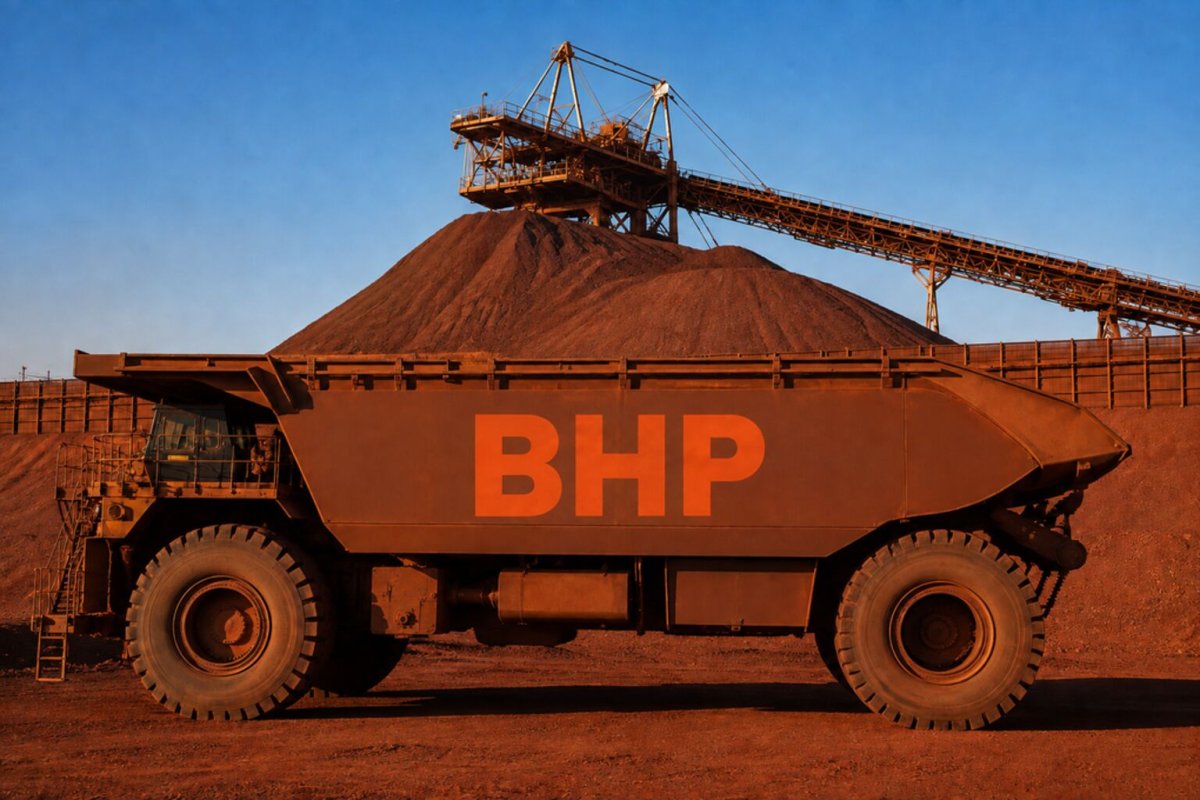
MELBOURNE – BHP Group (ASX:BHP) has thrown a spotlight on its Western Australian iron ore operations, hinting at a possible partnership that could reshape its earnings profile. The miner's brief statement, released after Friday's market close in Sydney, lacked concrete terms, leaving investors to parse the implications. Shares had already slipped 2.4% to A$62.25, and the market's reaction on Monday will be a key indicator of sentiment.
The disclosure, just three sentences long, said BHP is exploring a partnership involving part of its Western Australia Iron Ore (WAIO) business. It emphasized that WAIO remains 'central' to the company's portfolio and that BHP is 'fully committed' to the asset. However, no counterparty, asset boundary, ownership percentage, or financial details were provided.
The missing specifics are critical because WAIO is a cash-generating powerhouse. In fiscal 2026, WAIO generated underlying EBITDA of US$14.667 billion on revenue of US$23.726 billion, representing a margin of 61.8%. This single division accounted for 44.5% of BHP's group underlying EBITDA of US$32.947 billion. The asset also produced US$12.479 billion in operating profit and held US$17.119 billion in net operating assets, with capital expenditure of US$3.048 billion.
BHP's return on capital employed for WAIO was a robust 41% in FY2026. The company typically holds 85% stakes in its four main WAIO joint ventures, with a smaller 65% interest in the POSMAC operation. A new partner could enter at various levels—mine equity, infrastructure, funding, or offtake rights—each leading to vastly different outcomes.
To put the scale in perspective, a 1% stake in WAIO would represent US$146.7 million in EBITDA, 5% would be US$733.4 million, and 10% would be US$1.467 billion. These are illustrative figures, not deal values, but they underscore the potential magnitude of any transaction.
BHP has previously used partnership capital within WAIO. In December, Global Infrastructure Partners, owned by BlackRock (NYSE:BLK), committed US$2 billion for a 49% stake in a trust linked to WAIO's power network. BHP retained 51% and operational control under a 25-year tariff arrangement. That deal, touted by former CEO Mike Henry as a way to secure capital while preserving control, could serve as a template for a broader partnership.
Friday's notice, however, does not explicitly tie the prospective partnership to that power structure. The wording is broad, leaving the door open for a range of possibilities. Investors are left to fill in the blanks on asset perimeter, partner identity, ownership, price, and control terms.
WAIO is also receiving fresh investment. BHP approved the US$900 million Ministers North project in July, which is expected to supply 20 million tonnes annually after ramp-up, with first ore due in FY2029. The company aims to sustain WAIO output above 305 million tonnes annually from late FY2028.
The immediate share-price reaction will hinge on three factors: scope, cash, and retained control. A funding partner could enhance capital flexibility without altering mine economics, while an equity partner would change the earnings claim and depend on price, governance, and future capital obligations.
Analysts caution that iron ore prices remain the largest swing factor, influenced by Chinese steel demand, freight costs, royalties, and mine costs. Any transaction could also trigger tax, regulatory, or partner-consent costs, potentially reducing the cash a buyer is willing to offer.
Until BHP provides clarity on the asset and its cash-flow rights, the market's last price before the disclosure—A$62.25—remains the benchmark. Monday's ASX session will be the first clean test of investor sentiment on this potentially transformative move.