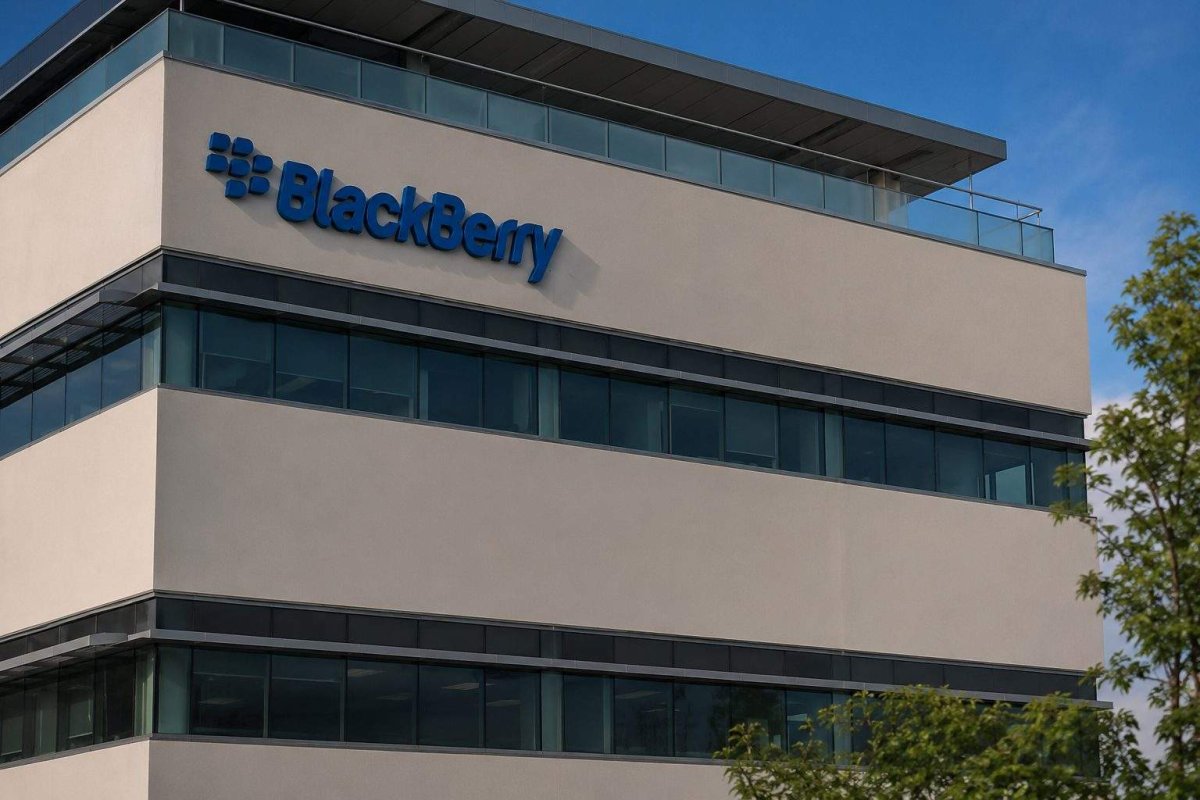
BlackBerry Ltd. saw its shares surge more than 16% on Friday, reaching new 52-week highs in both Toronto and New York trading. The Toronto-listed stock climbed to CA$10.93, while U.S.-listed shares hit $7.78, as investors renewed focus on the company’s automotive software and secure communications divisions.
Trading volume in Toronto was notably heavy, with approximately 4.65 million shares changing hands, near the stock’s average daily volume of 4.73 million. The rally placed BlackBerry among the top gainers in the Canadian technology sector, which helped push the S&P/TSX Composite to a record high on the same day.
The catalyst for the move was BlackBerry’s announcement that its AtHoc emergency communications platform had successfully completed 2026 Class D (High) FedRAMP recertification. FedRAMP is the U.S. government’s standardized program for assessing cloud service cybersecurity. Ramon Pinero, general manager of BlackBerry AtHoc, emphasized the recertification reflects the platform’s “security rigor,” while Dubhe Beinhorn, senior vice president for public sector, noted it supports “trusted and compliant communications infrastructure.” AtHoc is currently used by 80% of U.S. federal government agencies.
No new contract awards were disclosed alongside the news, but the recertification reinforces BlackBerry’s position in the government security market. The company also had a busy week of investor engagement, with CFO Tim Foote and QNX President John Wall scheduled to speak at CIBC’s Technology & Innovation Conference in Toronto on Thursday and at the Baird Global Consumer, Technology & Services Conference on June 2.
QNX, BlackBerry’s embedded operating system for vehicles and industrial applications, remains the core of the bull case. In its most recent quarterly report, BlackBerry posted QNX revenue of $78.7 million for the fourth quarter, a 20% year-over-year increase. The QNX royalty backlog—expected future revenue from design wins—stood at approximately $950 million, signaling strong long-term demand.
The broader market context also supported the rally, with automotive software names like Mobileye and Aurora Innovation also rising on Friday, while Nvidia slipped. Investor interest in autonomous and software-defined vehicles—cars whose functions are increasingly controlled by code—continues to drive demand for BlackBerry’s technology.
However, the stock now trades above the average analyst price target, leaving less room for error. Key risks include converting the QNX backlog into actual revenue, maintaining government security demand, and navigating potential weakness in automotive production. The next major milestones are BlackBerry’s annual meeting and first-quarter fiscal 2027 earnings, both scheduled for June 25, along with management’s June 2 conference appearance, which will provide further insight into the sustainability of this rally.