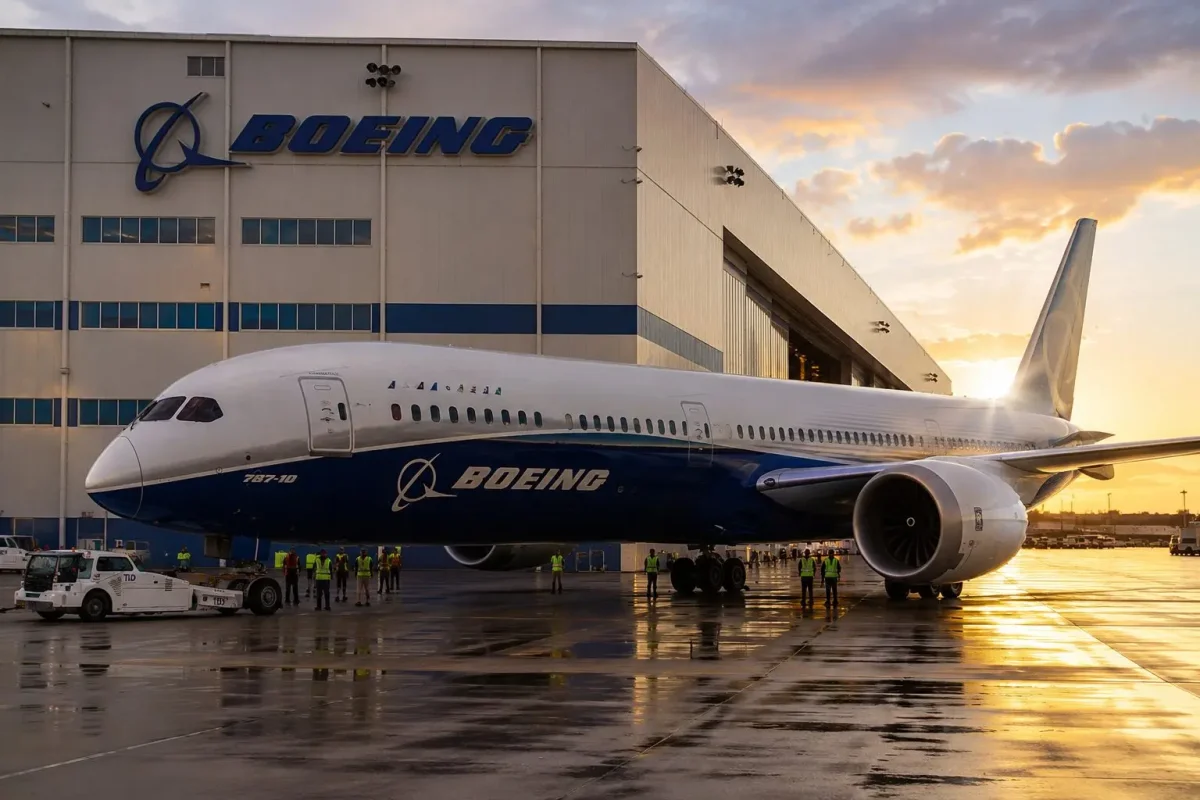
Boeing (NYSE: BA) shares surged 7.6% to $232.53 on Monday, following the Federal Aviation Administration's (FAA) certification of the 737 MAX 7. The regulatory green light, announced during regular U.S. trading hours, triggered a rally that added approximately $12.9 billion to the aerospace giant's market capitalization. With about 30 completed MAX 7 aircraft ready for delivery, the market's enthusiasm extended beyond the immediate milestone, focusing on the certification's implications for the larger and more commercially significant MAX 10.
The MAX 7 certification is seen as a pivotal step for Boeing's broader MAX recovery, particularly because the MAX 10—which carries nearly five times the backlog weight of the MAX 7—is now on a clearer path to approval. As of June, the MAX 7 accounted for roughly 6% of Boeing's MAX backlog (282 orders), while the MAX 10 represented at least 28% (over 1,300 orders). Monday's stock move appears to price in this read-through, as investors anticipate a similar regulatory milestone for the MAX 10.
In relative terms, Boeing outperformed its aerospace peers on the day. The stock gained 7.6% versus a 2.0% rise for GE Aerospace (NYSE: GE) and a 0.7% gain for RTX Corp. (NYSE: RTX). Southwest Airlines (NYSE: LUV), the launch customer for the MAX 7, saw its shares climb 3.9%, about half of Boeing's percentage gain. This performance gap underscores a company-specific catalyst, rather than a broad sector move.
The FAA's certification action amended Boeing's type certificate and production record, requiring updated software, flightcrew alerts, and redesigned engine anti-ice hardware. Inspectors will remain onsite at Boeing plants as part of ongoing oversight. The approval marks the culmination of a rigorous review process, and Boeing Commercial Airplanes CEO Stephanie Pope noted that the company is applying lessons from the MAX 7 to the MAX 10 program. The MAX 10 has already completed 976 certification flights and 2,060 flight hours, with final reviews still pending.
While the certification is a major milestone, its near-term financial impact may be limited. Southwest Airlines expects its first MAX 7 to enter service within months, but its published schedule through March 2027 does not include the aircraft. This suggests that delivery-related cash flows will materialize gradually, rather than immediately. Nonetheless, the certification removes a key production barrier, allowing Boeing to ramp up deliveries of the MAX 7 and potentially accelerate the timeline for the MAX 10.
The FAA has been gradually loosening production constraints on Boeing. The approved monthly output rate has risen from 38 aircraft in January 2024 to 42 in October 2025, and then to 47 in March 2026. Monday's action eliminates a separate variant-specific hurdle, further supporting the company's production recovery. This comes on the back of improved financial performance: Boeing reported second-quarter free cash flow of $631 million, a significant swing from a $200 million burn in the same period a year earlier. Revenue grew 8% to $24.56 billion, and commercial aircraft deliveries rose 14% to 171 units.
Despite these improvements, Boeing's profitability remains thin. The company reported a GAAP operating margin of 0.6% and a net loss of $428 million for the quarter. CEO Kelly Ortberg described operations as "more stable" and reiterated that key certification programs remain on plan. Consolidated debt stood at $45.9 billion at the end of the quarter.
Analysts have taken note of the improving outlook. BNP Paribas Exane analyst Matthew Akers upgraded Boeing to "outperform" from "underperform," raising his price target to $300 from $230. His 2027 free cash flow estimate of $7 billion is about $1 billion above consensus, implying roughly 29% upside from Monday's closing price.
The next test for Boeing will be execution on deliveries. Investors will closely watch the first MAX 7 handover and the timeline for MAX 10 approval. A certificate alone does not generate cash; it must be followed by customer acceptances and payments. Risks remain, including ongoing FAA oversight, the unresolved MAX 10 certification, and the absence of MAX 7 in Southwest's near-term schedule. Any fresh quality findings or delays could easily reverse Monday's gains.