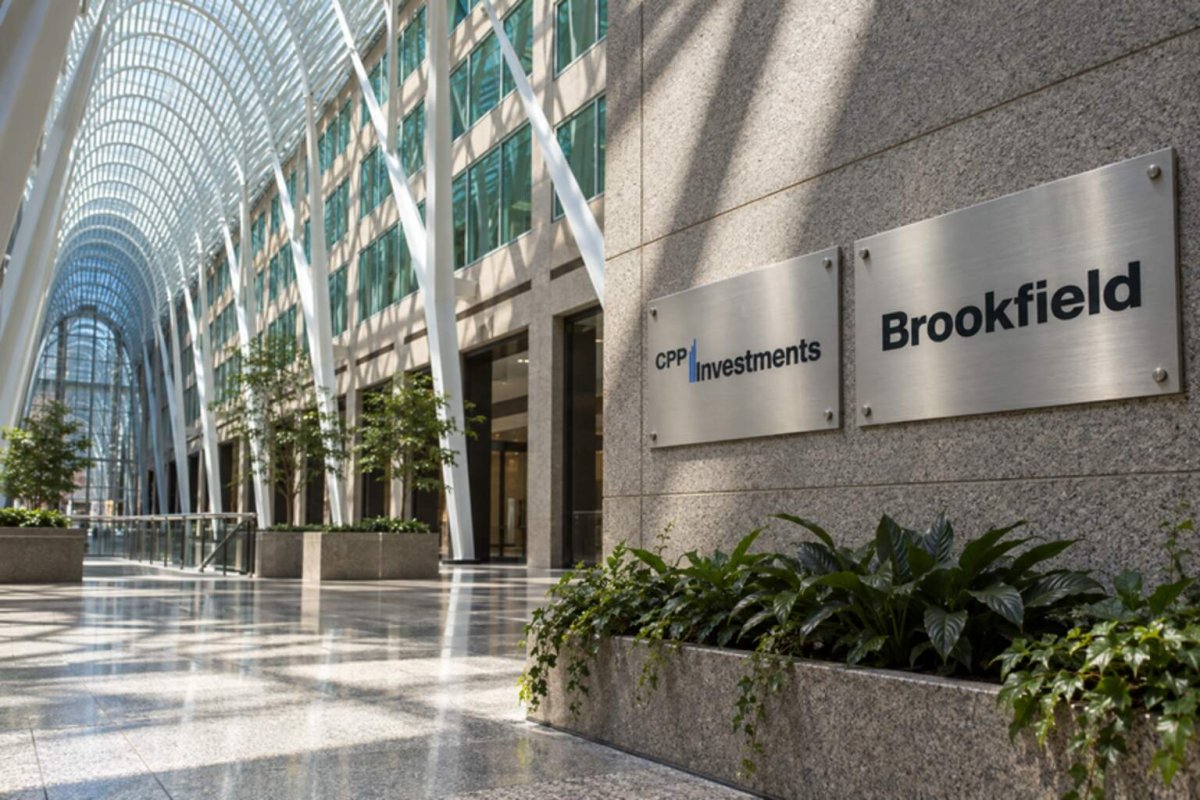
Brookfield Asset Management (BAM) and CPP Investments have officially launched the Maple Fund, a five-year initiative designed to channel up to C$50 billion in equity into large-scale Canadian infrastructure and strategic industries. However, despite the ambitious headline figure, the fund is not a pre-funded pool of capital. Each potential transaction will require separate approval from both organizations, and the partners have yet to name a first investment.
What the C Billion Figure Represents
The Maple Fund targets projects requiring more than C$5 billion in equity. Brookfield brings its development, operating, and execution expertise, while CPP Investments contributes long-duration capital. Other investors may participate in individual deals, potentially expanding the total capacity beyond the initial commitments.
Importantly, the C$50 billion ceiling is an authorization envelope, not a guaranteed deployment target. Both CPP Investments and Brookfield will independently assess each project under their existing governance processes. Either organization can also pursue opportunities alone or with other partners, and transactions will only be announced after definitive agreements are signed. In practical terms, the fund represents a framework for identifying and evaluating opportunities that must pass two separate investment committees.
Financial Implications for Brookfield
As of the Sept. 15 announcement, Brookfield Asset Management shares closed at $45.18 in New York on Wednesday, down 1.4% from $45.84, according to market data captured after the Sept. 16 close. The decline comes just ahead of the company's scheduled investor presentation, making the near-term focus less about the C$50 billion headline and more about management's ability to demonstrate a credible project pipeline and explain the economics for BAM.
Brookfield entered this partnership from a strong fundraising base. In its second-quarter results, BAM reported $672 billion in fee-bearing capital, up 19% year-over-year, and $163 billion in fundraising over the trailing 12 months. Quarterly fee-related earnings rose 20% to $808 million, while distributable earnings increased 15% to $707 million.
Fee-Bearing Capital and Accounting Hurdles
The Maple Fund release does not disclose management fees, carried interest, or a timetable for converting the framework into fee-bearing capital for Brookfield. BAM defines fee-bearing capital as committed, pledged, or invested capital that entitles it to fees. Without explicit commercial terms, adding the full C$50 billion to BAM's reported fee-bearing capital would be unsupported.
For CPP Investments, the potential C$25 billion share represents about 2.9% of its C$863.6 billion in assets as of June 30. This concentration is manageable for the pension manager while still being large enough to support several nation-scale projects if suitable returns and structures emerge.
Market Context and Execution Risks
The upside case for Brookfield is that its development platform can convert the partnership into proprietary large projects and attract co-investors, potentially generating management fees, operating income, and carried interest over time. The partnership also provides Brookfield with a well-capitalized counterparty for projects that might be too large for conventional private funds.
The counterargument is execution risk. Large infrastructure developments can spend years in permitting, procurement, financing, and construction before generating cash. The partners may approve less than the maximum, and failed projects would never become announced transactions. Canada's desire for more domestic investment does not remove BAM's obligation to earn an acceptable return or CPP Investments' duty to its contributors.
Next Steps and Investor Expectations
No sector allocation has been published beyond "critical infrastructure and strategic industries," leaving investors uncertain about potential exposure to power, transport, digital infrastructure, housing, or other areas. Treating any single category as a committed beneficiary would be premature.
The next dated checkpoint is Brookfield Asset Management's investor presentation, scheduled for 12:45 p.m. ET on Sept. 17. Any named Maple Fund pipeline, expected fee treatment, or deployment milestones would turn the framework into a more measurable catalyst for BAM. Without those details, the useful number is not C$50 billion—it is zero approved projects so far.